
Aeronautical Radio
Operator Certificate
Title image for the Aeronautical Radio Operator Certificate unit. A generic handheld VHF radio stands in the foreground of a small aerodrome with a runway, hangar and windsock. A light aircraft passes low across the field and calls: grey waves arrive at the radio and the word Listen appears. Then the push-to-talk button is pressed, blue waves go out from the radio and the word Transmit appears. A drone hovers calmly nearby. Decorative title artwork.
AROC Certificate Requirements
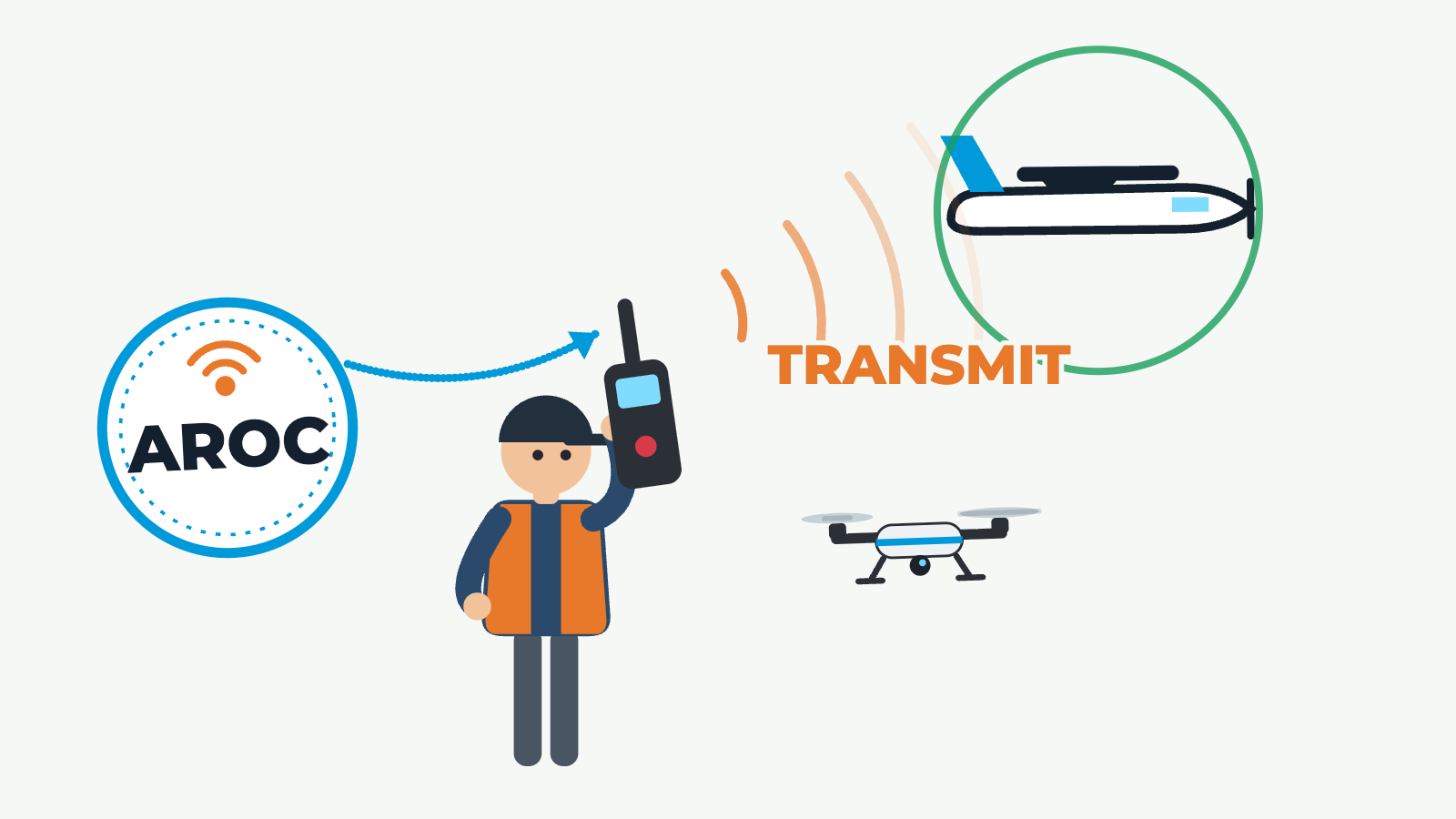
A 12 second loop. Three requirements appear one at a time and are each ticked: age 17 or over, training and assessment, and a current aviation English language proficiency assessment. They merge into a round AROC token issued by CASA. The token then moves aside and links to a person holding a VHF handheld radio. The person presses transmit and radio waves travel to an aircraft overhead, showing that the AROC lets the holder transmit on frequencies used for the safety of air navigation. The holder control swaps the person between a UAV operator with a drone, a ground handler with a baggage cart, and a marshalling attendant with wands. This is a conceptual scene, not a picture of the official certificate. The still frame shows the transmission reaching the aircraft.
An Aeronautical Radio Operator Certificate (AROC) allows the holder to transmit on radio frequencies used for ensuring the safety of air navigation. Ground handlers, aircraft marshalling attendants, and UAV operators operating in certain circumstances are all required to hold an AROC.
The requirements for obtaining the certificate, along with eligibility criteria, are contained in the Civil Aviation Safety Regulations 1998 (CASR) Part 64. The training requirements and syllabus are contained within CASR Part 61.
To be eligible, a candidate must:
- Be at least 17 years old
- Have received training and assessment from a pilot instructor, a registered training organisation (RTO), or an otherwise CASA-approved person
- Hold a current aviation English language proficiency assessment
Once you complete the AROC training, pass the assessment, and meet the above requirements, CASA will issue your AROC.