
RBAK - Basic Aviation Knowledge
Remote Pilot Station and Control Link
Identify the remote pilot station features that support control, telemetry, software, antennas and non-payload communications.
Lesson references
- Last reviewed
- 2026-05-18
- Lesson references
- RePL Study Guide pp. 175-183; Part 101 MOS C10 p. 93.
The remote pilot station is part of the aircraft system
The transmitter, command and control link, flight controls, antennas, software, telemetry and power supply form the working connection between the remote pilot and aircraft.
A weak tablet battery, wrong firmware, damaged antenna or poor controller setup can become an aircraft problem in flight.
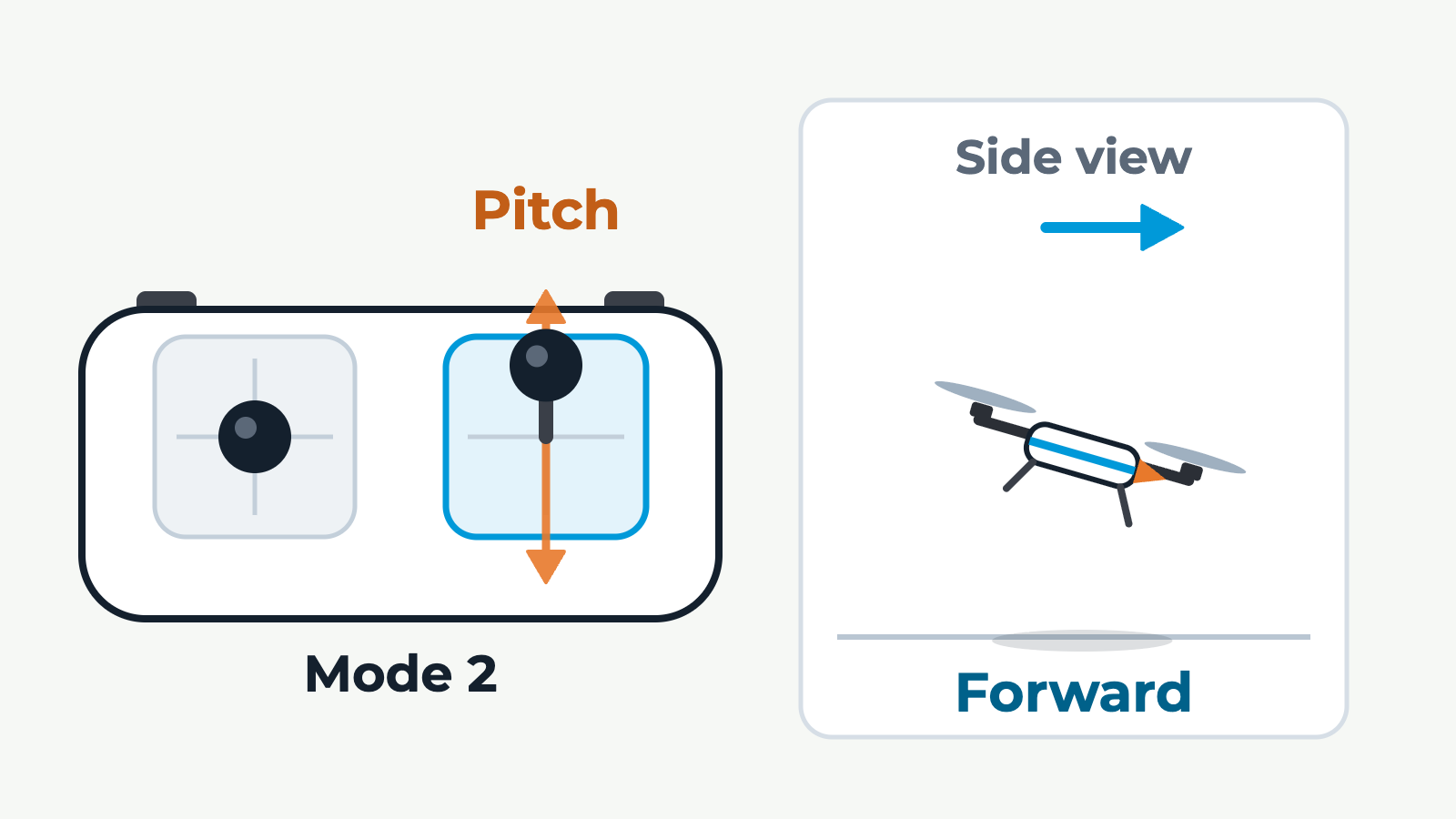
A simplified two-stick drone transmitter in Mode 2 beside a schematic multirotor. One input at a time: the left stick pushed up raises throttle and the drone climbs, pulled down it descends. The left stick pushed right yaws the nose right, seen from above, and pushed left yaws it left; the drone stays in place. The right stick pushed forward pitches the nose down and the drone flies forward; pulled back it flies backward. The right stick pushed right rolls the drone right and it moves right, seen from behind; pushed left it moves left. Each time the stick returns to centre the drone stops and holds, as in GPS mode. In Mode 1 throttle moves to the right stick and pitch to the left stick.
Telemetry is decision support
Telemetry gives the pilot information such as battery state, aircraft position, height, link quality, warnings and mode status. It should be monitored, not merely displayed.
If telemetry disagrees with visual observation or expected aircraft behaviour, slow the operation down and diagnose before continuing.
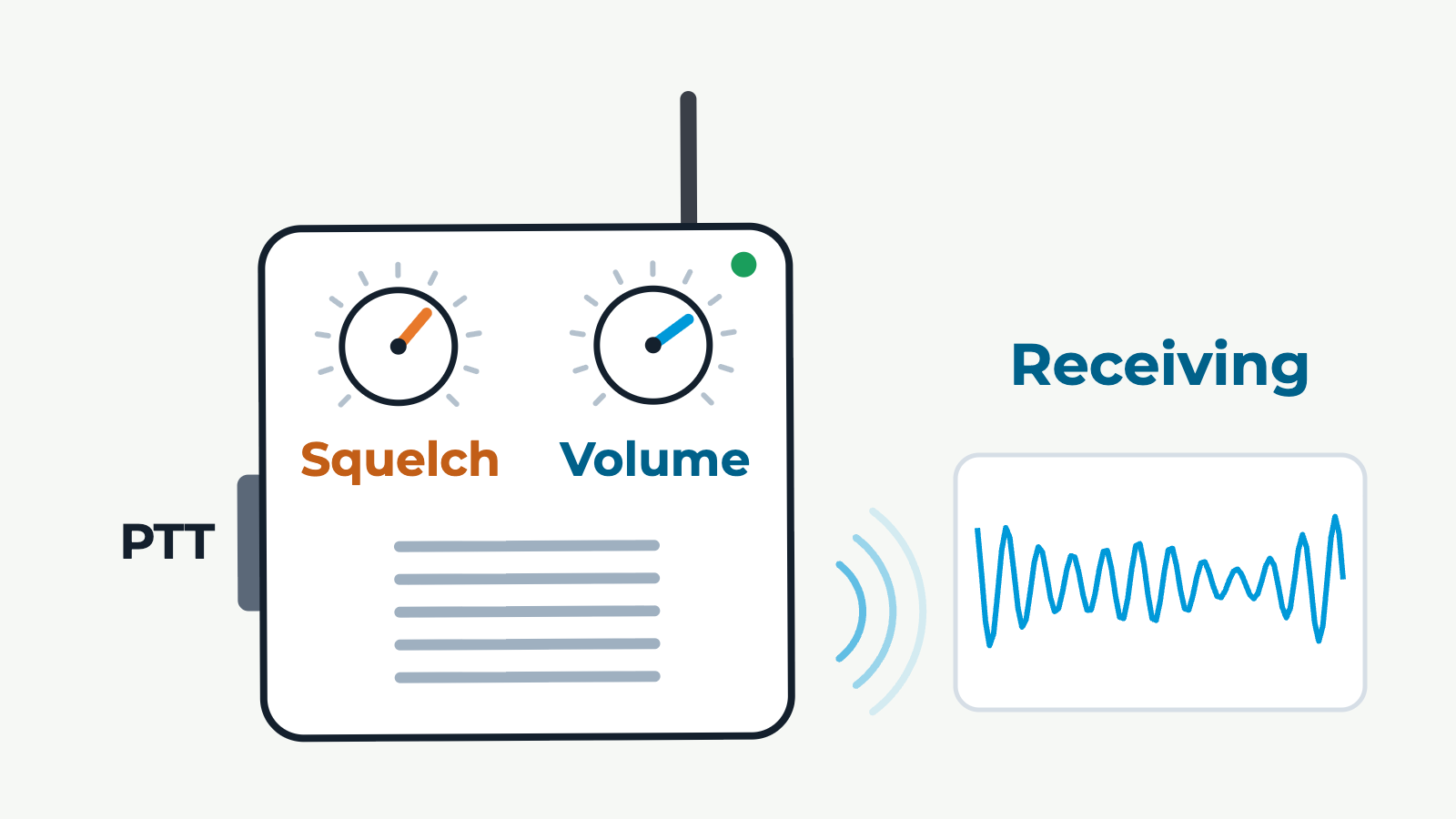
A simplified radio control panel with a Volume knob, a Squelch knob, a push-to-talk button on the side, an antenna and a speaker. Next to it a panel shows what comes out of the speaker. With squelch set low the speaker gives a loud hiss even though nobody is transmitting. The squelch knob is turned up and the hiss disappears. Another station transmits and its voice comes through. Volume only changes how loud the output is. When push-to-talk is held the radio transmits: a red lamp lights, waves leave the antenna and the speaker stops receiving. Releasing the button returns the radio to receive.
Software changes are operational changes
Firmware, app versions and control settings can alter aircraft behaviour. Update discipline, configuration checks and test flights help prevent surprises on operational jobs.
Practice Questions
Which item is part of remote pilot station knowledge?
- Command and control link.
- Runway pavement strength only.
- Passenger oxygen system.
- Cabin pressurisation.
Answer: Command and control link.
The MOS includes transmitter, command and control link, controls, antennas, software, telemetry and power supply.
Next step after study
Complete your Remote Pilot Licence training
The free study guide is a strong theory foundation. To actually be issued with a RePL, students still complete approved training, practical flying and assessment with a certified provider.