
RBAK - Basic Aviation Knowledge
Performance, Wind Shear, Turns and Ground Effect
Preserve performance margin when weight, wind, heat, height, turns and descent airflow make the aircraft work harder.
Lesson references
- Last reviewed
- 2026-05-19
- Lesson references
- RePL Study Guide pp. 215-236; Part 101 MOS C10 pp. 92-95; CASA AC 101-01 v6.1 and AC 101-03 v2.0 checked 2026-05-19.
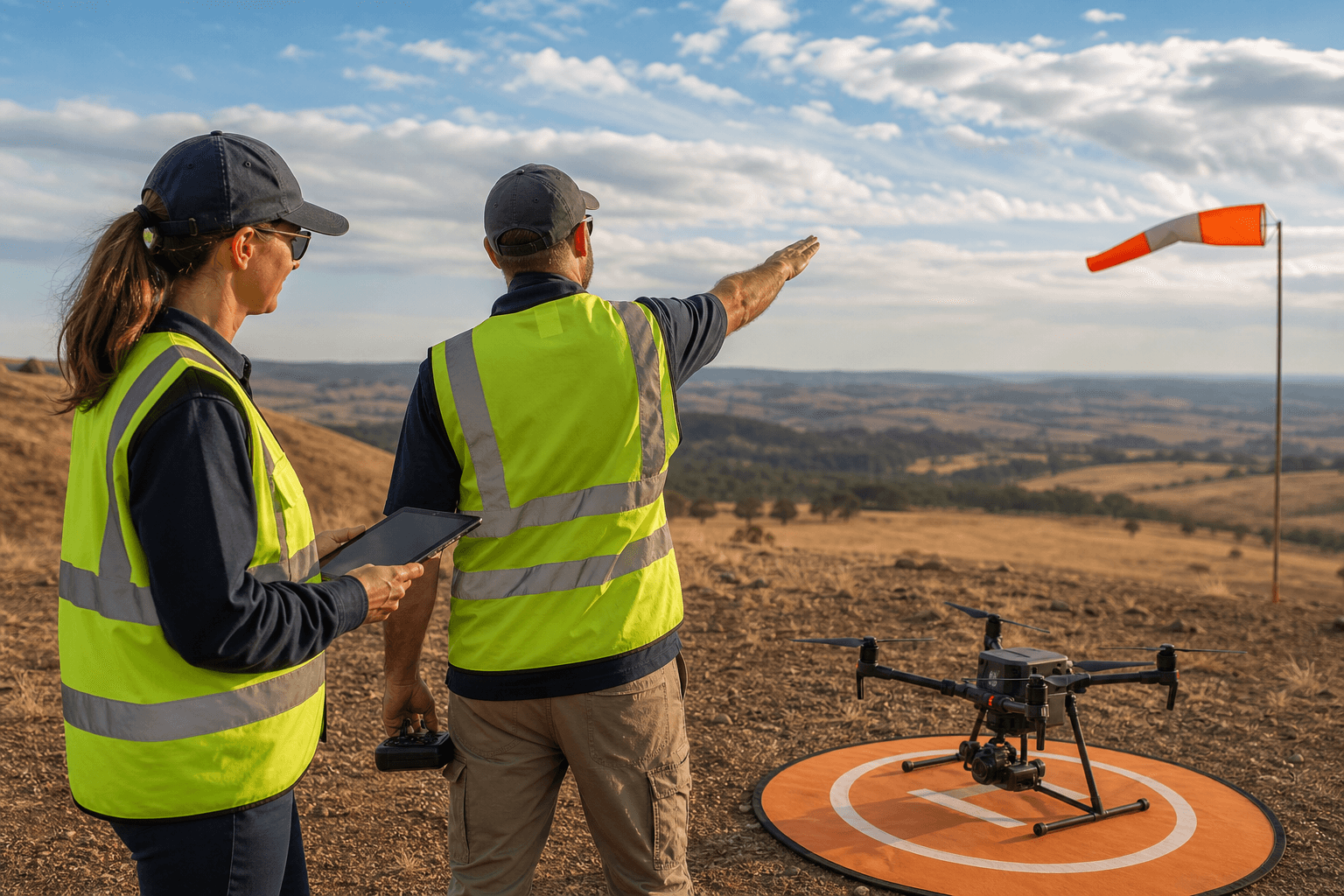
Performance margin is the room left over
Performance margin is what remains after the aircraft has dealt with weight, payload, wind, temperature, altitude, climb demand, turns and the distance back to a safe landing area.
A remote pilot should not think of performance as a single maximum flight time number. Performance is a moving margin. It shrinks when the aircraft has to work harder and grows when the pilot simplifies the job.
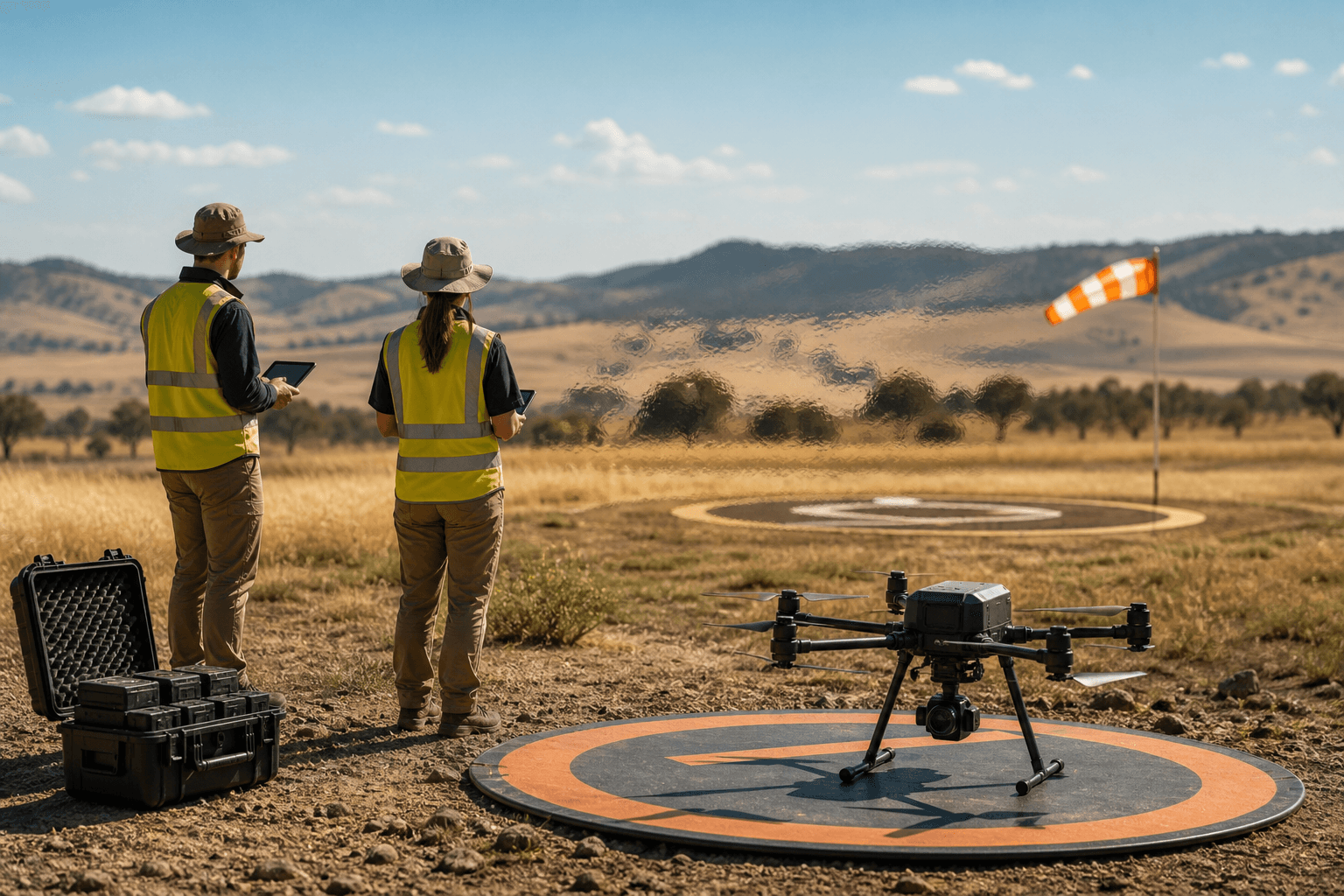
Weight and density effects change climb and recovery
More weight means more thrust is needed to hover, climb, stop a descent and turn. Hotter air and higher elevation can reduce available performance. Add wind, payload and battery sag, and a flight that looked ordinary can become marginal.
For multirotor work, the practical check is simple: if the aircraft climbs slowly, fights the wind, sounds loaded, runs hot or uses battery faster than expected, reduce task complexity and recover early.
- Be conservative with heavy payloads, high temperatures and long return legs.
- Treat poor climb after launch as useful warning information.
- Keep reserve for the return, not just for hovering over the target.
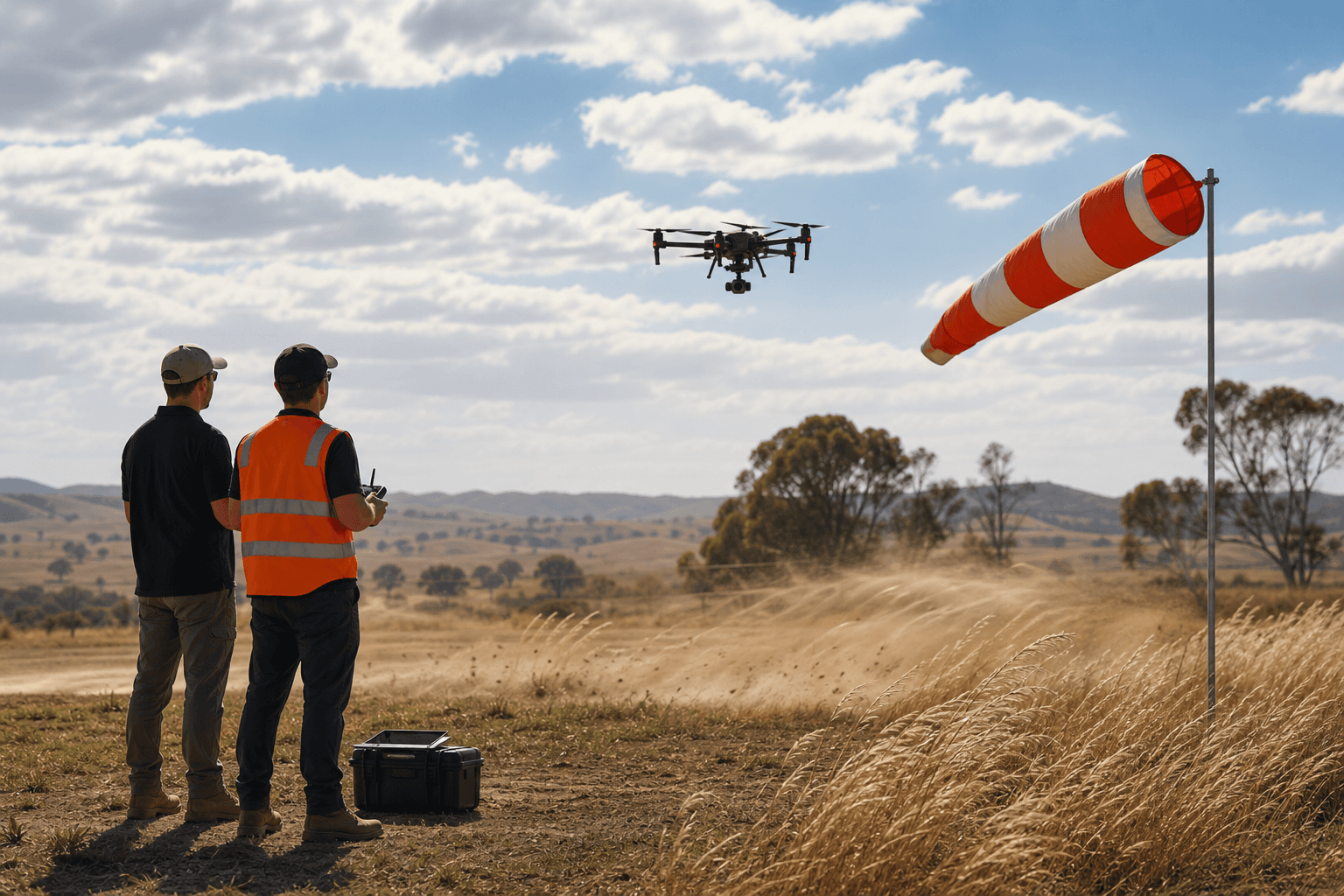
Wind shear and gusts change the aircraft's energy picture
Wind shear is a change in wind speed or direction over a short distance or height. Gusts, buildings, terrain, tree lines and thermal activity can all change drift, stopping distance, climb demand and battery use.
The risk for a remote pilot is being surprised late: a downwind leg carries the aircraft away, an into-wind return uses more battery, or a low-level gust reduces margin near obstacles.
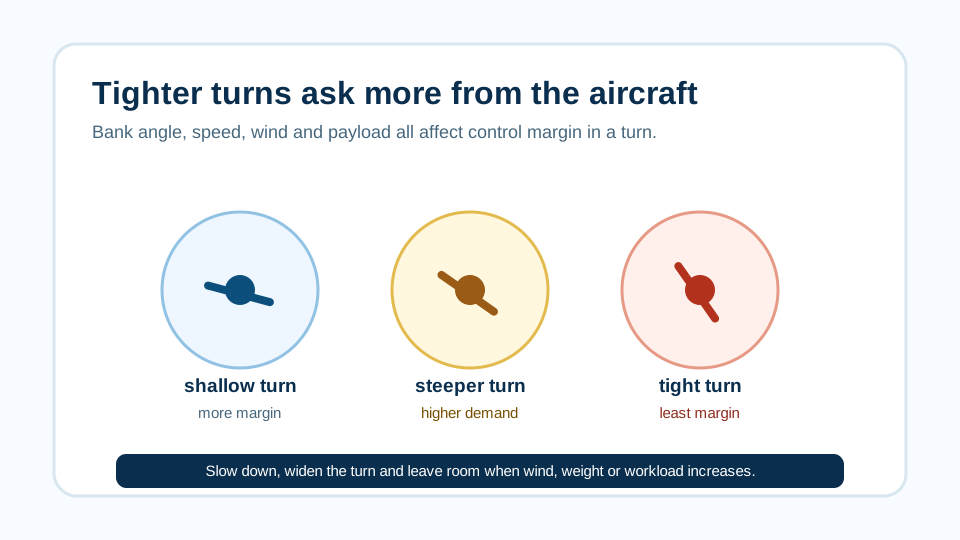
Turns increase demand
A turn changes the lift and thrust picture. The tighter, faster or steeper the turn, the more the aircraft has to work to maintain control and altitude. Wind and payload can make that demand more obvious.
For RePL study, the takeaway is practical: avoid tight, rushed turns when the aircraft is heavy, close to obstacles, low on battery, downwind or already showing reduced performance.
Stall and spin awareness is about recognising loss of margin
For fixed-wing RPA, angle of attack, stall and spin awareness remain important. For multirotor pilots, the same safety habit applies even though the aerodynamics are different: recognise when control margin is disappearing and avoid forcing the aircraft into a corner.
A slow response, high sink rate, heavy payload, turbulent approach, tight turn or poor climb is not something to push through casually. It is a reason to simplify and recover.
Ground effect can help briefly, but it can also hide poor planning
Near the surface, rotor airflow interacts with the ground. This can create a cushioning effect that makes the aircraft feel more efficient close to the landing area, but the benefit fades with height and does not remove obstacle, wind or descent risks.
A rushed descent can still put the aircraft into disturbed airflow, close to people, obstacles or rough terrain. Plan the descent early instead of arriving low, fast and short of options.
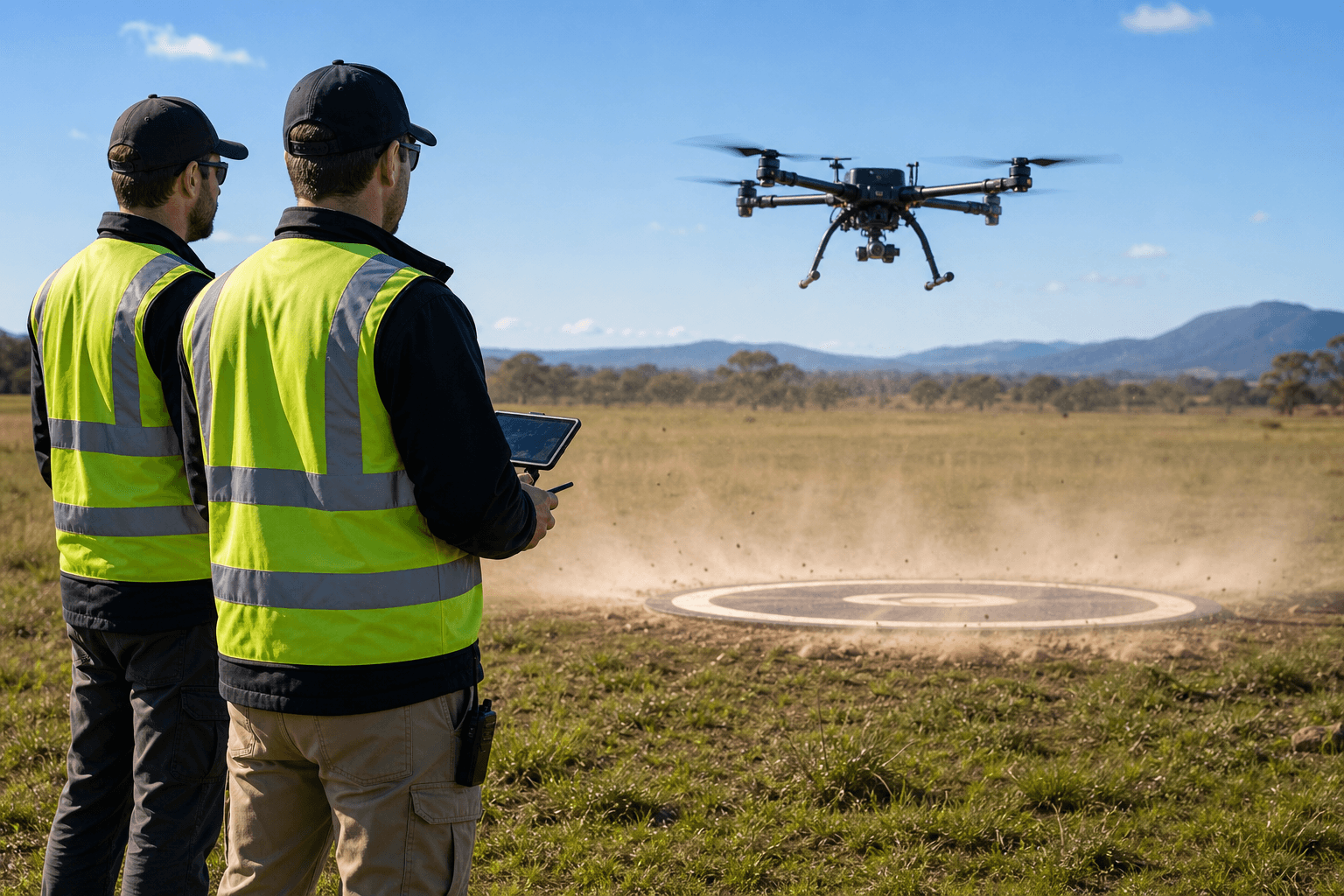
The practical decision is to make the job easier
When performance margin is shrinking, the best response is usually not more aggressive flying. It is a simpler task, wider turns, earlier landing, lower workload, better launch point, smaller payload, shorter route or a postponed flight.
A performance problem is easier to solve while the aircraft is still close, high enough, controllable and carrying enough battery to come home.
Practice Questions
What is performance margin in practical RPA operations?
- The spare capability left after weight, wind, heat, altitude, battery and task demand are considered.
- Only the aircraft colour scheme.
- A fixed number that never changes after take-off.
- Only the size of the memory card.
Answer: The spare capability left after weight, wind, heat, altitude, battery and task demand are considered.
Performance margin changes with aircraft loading, environment, battery state and the way the task is flown.
What should a slow climb or unexpectedly high battery use after launch suggest?
- The aircraft may have less performance margin than planned, so the task should be simplified or recovered early.
- The aircraft is always safer to fly farther away.
- Wind and payload no longer matter.
- The pilot should ignore telemetry.
Answer: The aircraft may have less performance margin than planned, so the task should be simplified or recovered early.
Early performance cues are useful warning information and should not be ignored.
Why can wind shear or gusts increase risk near obstacles?
- They can change drift, stopping distance, climb demand and battery use quickly.
- They always make the aircraft hover better.
- They remove the need for visual line of sight.
- They only affect crewed aircraft.
Answer: They can change drift, stopping distance, climb demand and battery use quickly.
Changing wind can reduce the time and space available for correction.
What is the safer response when performance margin is shrinking?
- Simplify the task, widen turns, preserve battery and recover early.
- Use tighter turns to finish faster.
- Push farther downwind before returning.
- Wait until critical battery before deciding.
Answer: Simplify the task, widen turns, preserve battery and recover early.
Conservative decisions preserve options while the aircraft is still controllable.
Next step after study
Complete your Remote Pilot Licence training
The free study guide is a strong theory foundation. To actually be issued with a RePL, students still complete approved training, practical flying and assessment with a certified provider.