
RHPF - Human Performance
Human Performance and Threat and Error Management
Use airmanship, personal fitness, workload control and crew communication to catch problems before they become incidents.
Lesson references
- Last reviewed
- 2026-05-18
- Lesson references
- RePL Study Guide pp. 241-275; Part 101 MOS C10 pp. 100-102.
The remote pilot is part of the system
RPA operations can feel screen-based, but the same human performance traps remain: fatigue, time pressure, overconfidence, distraction, heat, dehydration and poor communication.
Airmanship is the habit of keeping the operation safe when the plan meets the real world. For remote pilots, that means aviate, navigate and communicate: keep the aircraft under control, know where it is and where it is going, then keep the right people informed.
- Aviate: keep control, energy, height, battery and recovery options ahead of the aircraft.
- Navigate: maintain orientation, position awareness, airspace awareness and site boundaries.
- Communicate: brief clearly, call threats early and confirm instructions are understood.
RPA pilots have different sensory information
A crewed-aircraft pilot can feel acceleration, vibration, attitude change and aircraft response through the body. A remote pilot receives most of that information through screens, telemetry, sound, sight and crew calls.
That gap matters. System latency, camera delay, map lag or a weak control link can make the aircraft state feel slightly behind the real aircraft. Good remote pilots avoid flying as if the screen is the aircraft.
- Look at the aircraft and the site, not only the screen.
- Treat telemetry as decision support, not as a substitute for situational awareness.
- Use conservative margins when latency, glare, poor contrast or workload increase.
Fit to operate comes before fit to fly
A serviceable aircraft does not make a safe operation if the pilot is not fit to operate. Illness, medication, stress, alcohol, drugs, fatigue, dehydration, heat, cold and strong emotion can all reduce attention and judgement.
The professional move is to decide this before launch. If the pilot is tired, unwell, rushed or emotionally loaded, the operation may need another pilot, a delay, a reduced scope or a stop-work call.
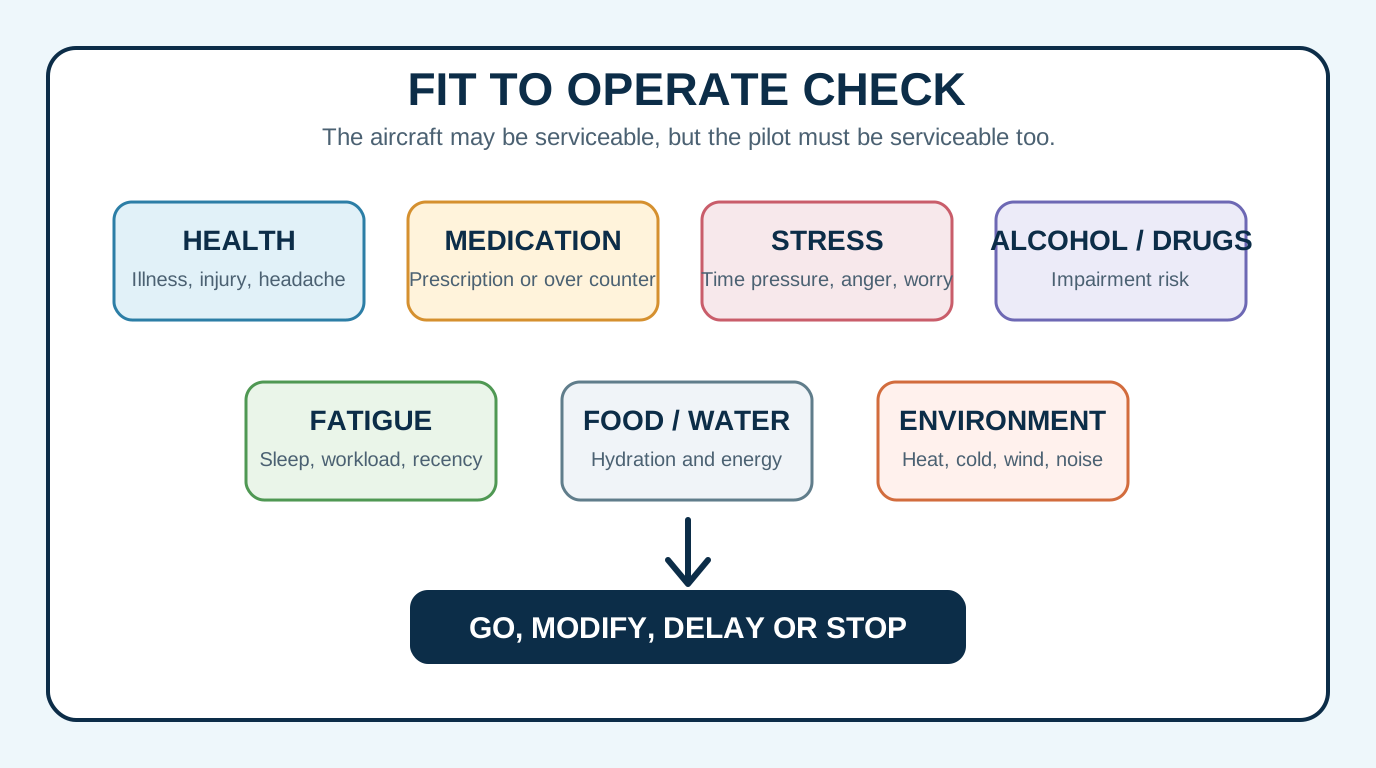
- Colds, hay fever, congestion, headache and migraine can reduce concentration and comfort.
- Prescription and over-the-counter medicines can affect alertness and judgement.
- Heat, dehydration and fatigue can creep up slowly during outdoor jobs.
Vision is not a perfect sensor
Visual line of sight depends on human vision. Distance, height, glare, background clutter, colour, haze, cloud and low contrast can all make a small aircraft hard to see or orient.
Empty field myopia can occur when the eye has little to focus on, and relative motion can make it harder to judge whether another aircraft, bird or object is moving toward or away from the RPA. The remedy is not bravado; it is scanning, observers, sensible distances and clear lost-visual actions.
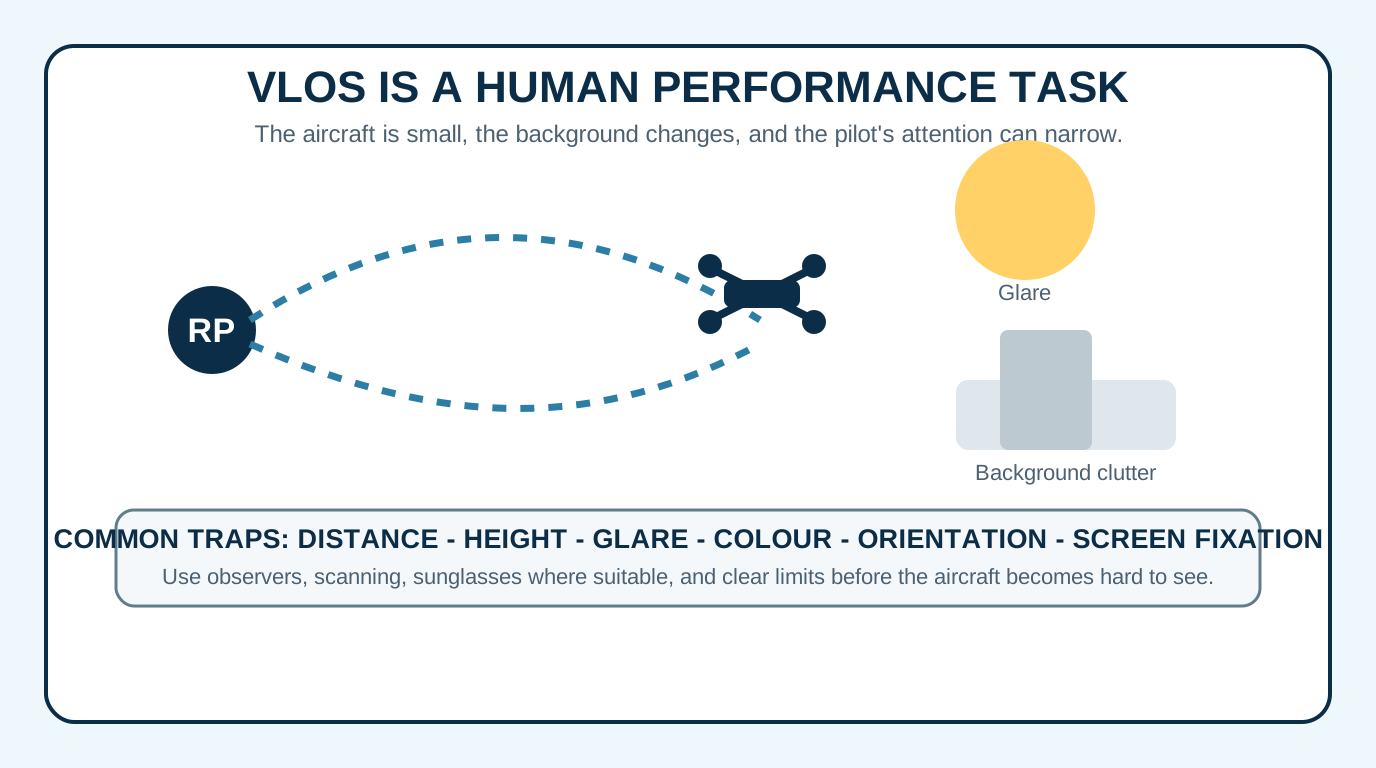
- Use suitable sunglasses or prescription glasses where needed and permitted.
- Brief what the crew will do if the pilot or observer loses visual contact.
- Avoid screen fixation during critical phases, near obstacles or near other airspace users.
Stress narrows thinking
Stress can be short-term, such as a sudden aircraft warning, or long-term, such as fatigue, work pressure or conflict at home. Either can narrow attention, reduce memory, rush decisions and make a pilot more likely to press on.
Pressure can come from pride, peer pressure, employer pressure, customer expectation or the desire to get the job done. A good pilot recognises those pressures as threats, not as reasons to lower the standard.
- Use checklists and aide-memoires when workload rises.
- Slow the operation down before overload becomes an error.
- Use stop-work language that every crew member is allowed to call.
Threat and error management is a loop
Threat and error management is the discipline of finding the threat early, trapping the error before it becomes an aircraft state, then recovering while there is still margin.
Strategic risk management happens before flight: site selection, crew, approvals, weather and procedures. Tactical risk management happens during flight: gusts increase, a battery warning appears, a bystander moves, or the aircraft drifts toward a boundary.
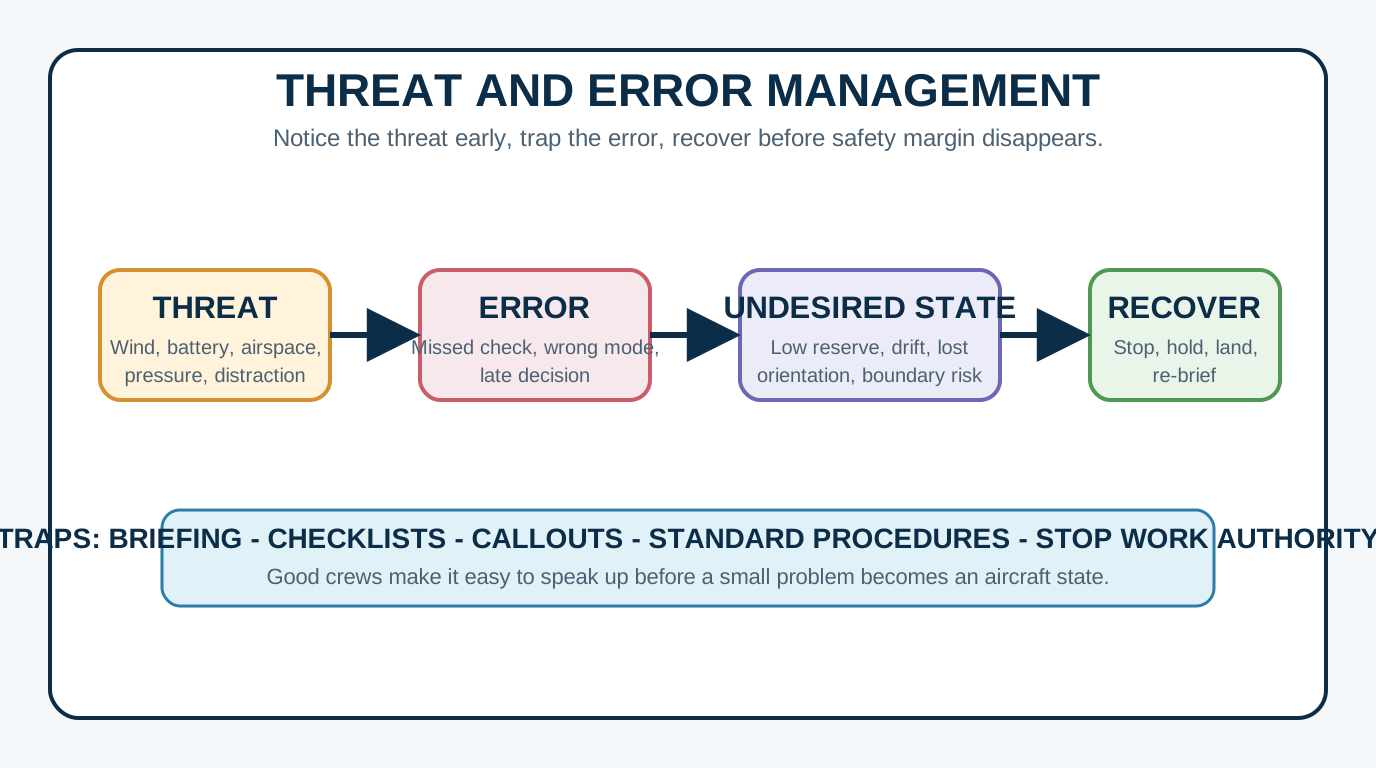
- Threat: something outside or inside the crew that can reduce safety margin.
- Error: an action or omission that can move the operation away from the plan.
- Undesired aircraft state: the aircraft or operation is now in a condition that needs recovery.
- Recovery: stop, hold, climb, land, re-brief or otherwise return to a controlled state.
Crew coordination is an operational control
Observers, payload operators and remote pilots need shared words for stop, hold, traffic, lost link, low battery and emergency recovery. If the crew cannot communicate clearly, the operation is already carrying extra risk.
Good crew communication is closed-loop. A person makes a call, the receiver acknowledges it, the action is taken, and the result is confirmed. This reduces assumptions and catches errors early.
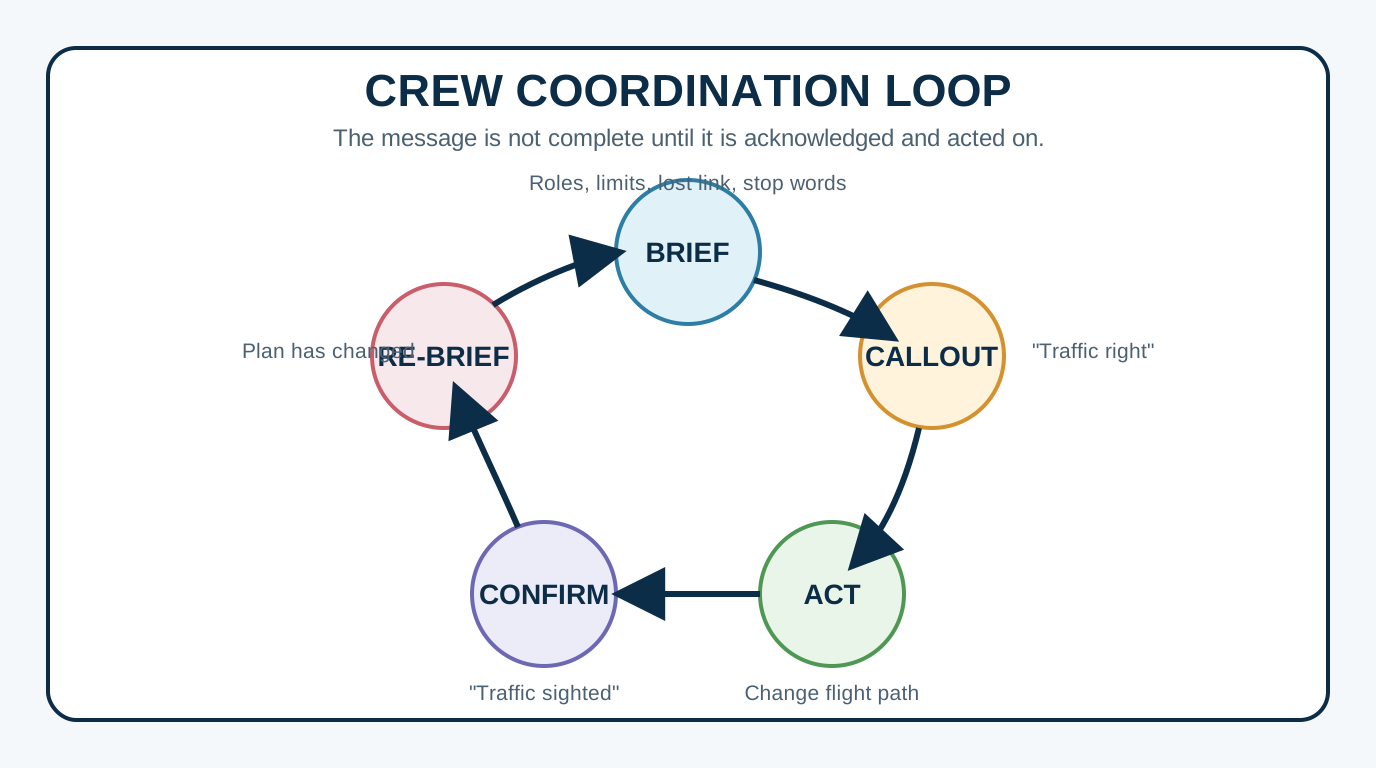
- Use plain, brief calls during critical moments.
- Give observers permission to be assertive when they see traffic, people, hazards or drift.
- Re-brief when the plan changes instead of relying on everyone to infer the new plan.
Build the habit before the pressure arrives
Human performance training is not about blaming people. It is about designing the operation so ordinary human limits are less likely to become safety events.
The practical standard is simple: brief the threats, check personal fitness, use checklists, keep workload manageable, communicate clearly and stop early when the operation is drifting from the plan.
- If the pilot is not fit, delay or replace the pilot.
- If the aircraft is hard to see, bring it closer or land.
- If workload is rising, simplify the task.
- If the crew is confused, hold or land and re-brief.
Practice Questions
What is the main purpose of threat and error management?
- To identify and manage threats and errors before they reduce safety.
- To remove the need for checklists.
- To make one person responsible for every task.
- To replace operational procedures.
Answer: To identify and manage threats and errors before they reduce safety.
TEM is a structured way to anticipate threats, trap errors and recover before safety margins erode.
Which example best shows good airmanship during an RPA operation?
- Landing early when wind, battery and workload are all trending the wrong way.
- Continuing because the client is watching.
- Ignoring an observer call to avoid interrupting the mapping run.
- Flying further away after the aircraft becomes hard to see.
Answer: Landing early when wind, battery and workload are all trending the wrong way.
Good airmanship protects safety margin. Landing early is often the professional decision when threats are stacking up.
Why can screen fixation be hazardous for a remote pilot?
- It can reduce awareness of the aircraft, obstacles, people and other airspace users.
- It improves visual line of sight by replacing the aircraft with telemetry.
- It removes the need for observers.
- It prevents glare and distance from affecting vision.
Answer: It can reduce awareness of the aircraft, obstacles, people and other airspace users.
Telemetry and camera views are useful, but the pilot must maintain situational awareness of the real aircraft and operating environment.
In closed-loop crew communication, what should happen after an observer calls 'traffic right'?
- The remote pilot acknowledges, acts if required, and confirms the traffic or plan.
- The observer assumes the pilot heard it and says nothing else.
- The payload operator takes control without speaking.
- The crew waits until after landing to discuss it.
Answer: The remote pilot acknowledges, acts if required, and confirms the traffic or plan.
Closed-loop communication reduces assumptions by making sure critical information is heard, understood and acted on.
Next step after study
Complete your Remote Pilot Licence training
The free study guide is a strong theory foundation. To actually be issued with a RePL, students still complete approved training, practical flying and assessment with a certified provider.