
RHPF - Human Performance
Decision-Making, Risk Matrix and Operational Worksheets
Turn human factors theory into practical remote pilot decisions using decision-trap checks, a simple risk matrix and live TEM worksheets.
Lesson references
- Last reviewed
- 2026-05-20
- Lesson references
- RePL Study Guide pp. 241-275; Part 101 MOS C10 Schedule 4 Unit 5.
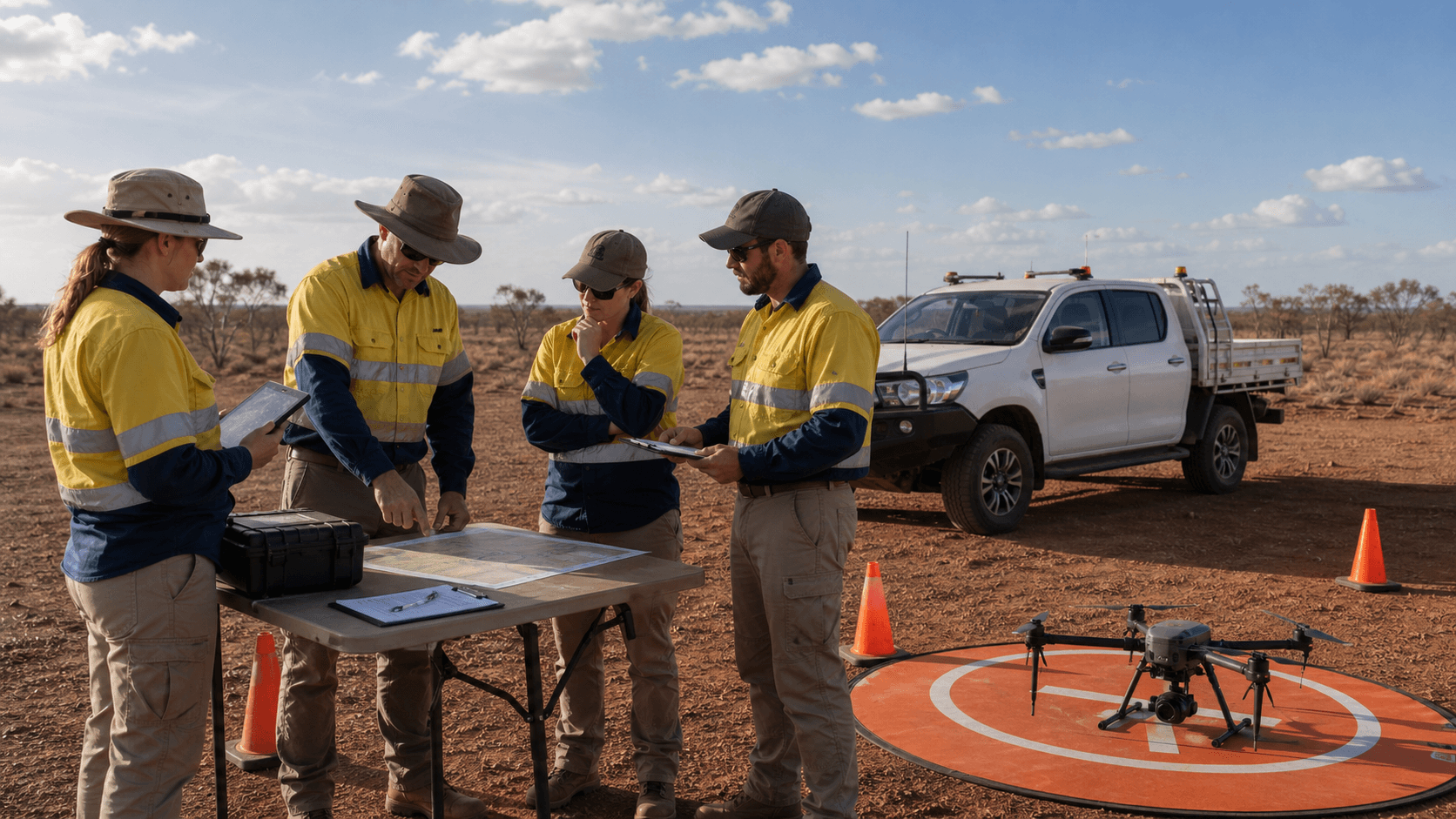
Human factors become visible in decisions
Human performance is not just a list of personal limitations. It shows up in ordinary decisions: launch now or wait, continue or land, trust the plan or update it, accept a client request or hold the line.
The remote pilot's job is to make those decisions deliberate. That means noticing pressure, naming the risk, choosing a control and leaving a decision trail that another competent person could understand later.
- If the crew is rushing, slow the operation down.
- If the plan no longer matches the site, update the plan before launch.
- If the risk control is vague, the operation is not yet controlled.
- If the decision cannot be explained simply, pause and re-brief.
Pressure creates decision traps
Most poor decisions do not feel careless at the time. They often feel efficient, loyal, confident or helpful. That is why pressure should be treated as a threat in its own right.
Common traps include confirmation bias, plan continuation, risky shift and screen fixation. The practical countermeasure is to give the crew a short pause point where someone asks what has changed and whether the operation still has margin.
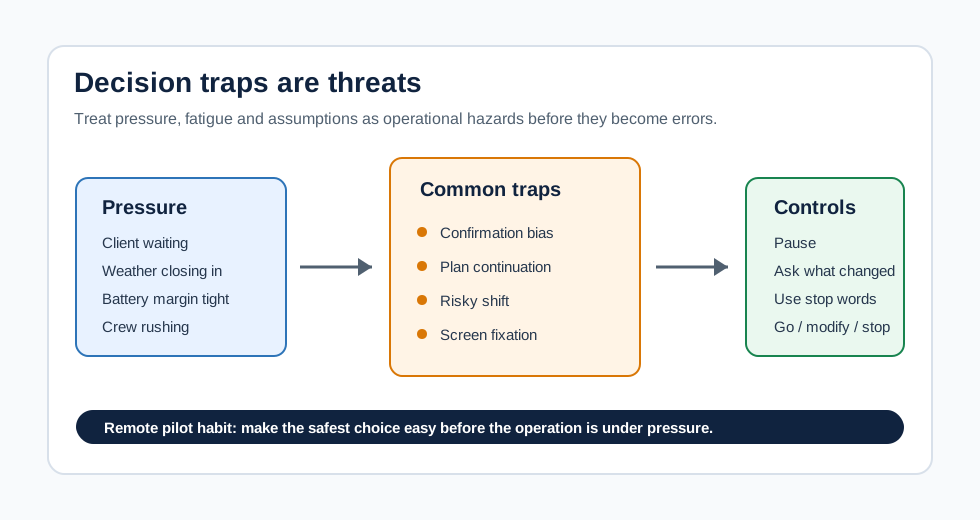
- Confirmation bias: only noticing information that supports the plan you already wanted.
- Plan continuation: pressing on because stopping would be inconvenient.
- Risky shift: a group becoming more comfortable with risk than any one person should be.
- Screen fixation: losing the aircraft, site or airspace picture because the display is absorbing attention.
Use a risk matrix as a conversation starter
A risk matrix is not magic. It will not make a bad operation safe by colouring a square green. Its value is forcing the crew to discuss likelihood, consequence, controls and the residual risk after those controls are applied.
The strongest remote pilot habit is plain wording: this hazard could cause this outcome, so we will apply this control, and our final decision is go, modify, delay or stop.
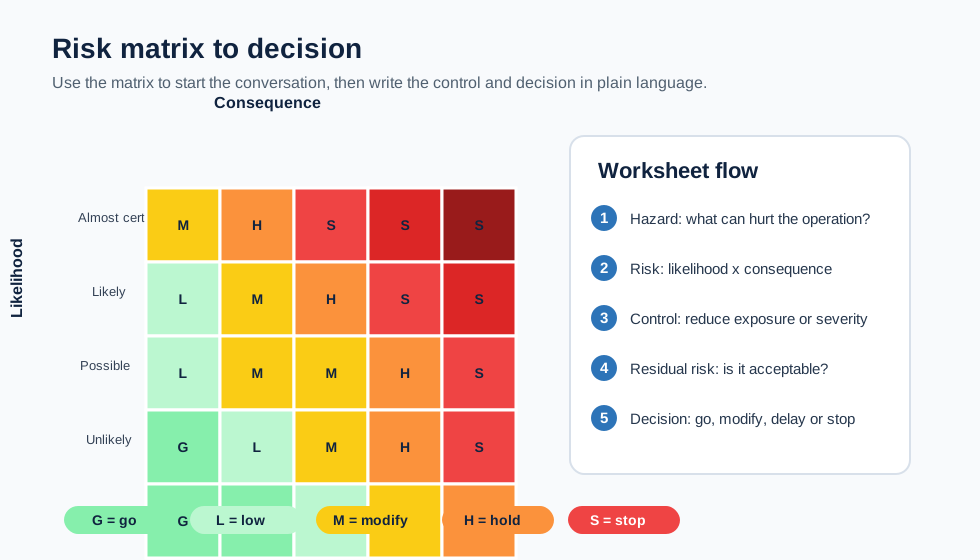
- Likelihood asks how credible the event is in this operation, not in aviation generally.
- Consequence asks what could happen if the hazard is not controlled.
- Controls should reduce likelihood, consequence or exposure.
- Residual risk is the risk left after the control is actually in place.
Turn TEM into a live worksheet
Threat and error management is easiest to teach as a loop. Identify the threat, choose a countermeasure, trap errors early, recover before the aircraft state becomes unsafe, then learn from the job.
In a remote pilot briefing, this can be a short worksheet rather than a long speech. The crew should know the top threats, the stop words, the recovery action and who has authority to call a hold or landing.
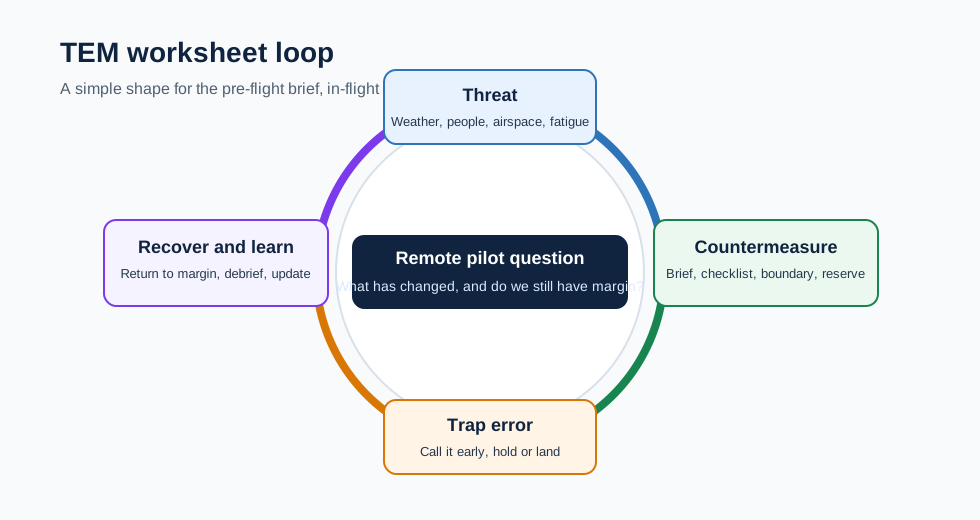
- Threat: what can push the job away from the plan?
- Countermeasure: what will we do before that happens?
- Error trap: how will the crew notice and call it early?
- Recovery: what action returns the operation to a controlled state?
Give every crew member a useful voice
Crew coordination is a control only when the crew knows what to say and when to say it. An observer who is unsure whether they are allowed to interrupt is not an effective observer.
The pre-flight brief should give plain callouts for traffic, people, loss of visual contact, battery concerns, weather change, boundary drift and confusion. Closed-loop communication then confirms the message was heard and acted on.
- Use short calls: stop, hold, land, traffic, people, visual lost, battery, boundary.
- Acknowledge critical calls so the sender knows the message landed.
- Re-brief after any material change instead of relying on assumptions.
- Protect assertive calls from rank, customer pressure or embarrassment.
Use personal minimums before the legal minimums
Legal limits are not always enough for a particular pilot, aircraft, crew or site. Personal and operational minimums help prevent a pilot from negotiating with the limit while under pressure.
Examples include maximum gust spread, minimum battery reserve, maximum distance for reliable VLOS, minimum crew numbers for complex sites, a maximum number of concurrent tasks, or a rule that any lost-visual event triggers an immediate hold or landing.
- Write personal minimums before the job, not during the hard moment.
- Make the minimum measurable where possible.
- Brief the trigger and the action together.
- Tighten the minimum when fatigue, heat, glare, poor visibility or complex airspace increases workload.
Debrief the decision, not just the flight
A short debrief closes the learning loop. It should ask what changed, what was missed, which controls worked, which calls were useful and what the next operation should do differently.
This is study guidance, not legal advice. Use current CASA guidance, operator procedures and aviation reviewer advice when setting risk matrices, operational thresholds and reporting requirements.
- What was the strongest threat today?
- Which control gave us the most safety margin?
- Where did workload rise?
- What should be changed in the JSA, checklist or brief before next time?
Practice Questions
Why is pressure treated as a threat in remote pilot decision making?
- Because it can encourage plan continuation, rushed thinking and acceptance of weaker controls.
- Because pressure only affects inexperienced pilots.
- Because it removes the need for a risk assessment.
- Because it makes weather and battery limits irrelevant.
Answer: Because it can encourage plan continuation, rushed thinking and acceptance of weaker controls.
Pressure can narrow thinking and make an unsafe decision feel reasonable. Naming it early helps the crew manage it.
What is the most useful role of a risk matrix in an RPA job brief?
- To start a clear discussion about likelihood, consequence, controls and residual risk.
- To automatically approve every flight in a green square.
- To replace the operator's procedures.
- To remove the remote pilot's responsibility for the decision.
Answer: To start a clear discussion about likelihood, consequence, controls and residual risk.
A matrix is useful when it supports a traceable decision. It is not a substitute for judgement.
Which statement best describes plan continuation bias?
- Continuing with the original plan even though new information suggests it should change.
- Cancelling every operation before checking the weather.
- Using a checklist before take-off.
- Replacing a pilot who is unfit to operate.
Answer: Continuing with the original plan even though new information suggests it should change.
Plan continuation is a decision trap. The countermeasure is to pause, ask what has changed and re-decide.
What makes a crew callout effective during a busy RPA operation?
- It is short, specific, acknowledged and linked to an action if needed.
- It is delayed until after the flight.
- It avoids interrupting the pilot even when safety is changing.
- It uses vague language so nobody feels challenged.
Answer: It is short, specific, acknowledged and linked to an action if needed.
Closed-loop communication helps critical information become shared action, not just background noise.
Next step after study
Complete your Remote Pilot Licence training
The free study guide is a strong theory foundation. To actually be issued with a RePL, students still complete approved training, practical flying and assessment with a certified provider.