
REES - Electrical Systems
Battery Management, Charging and Power Margins
Read battery labels, calculate usable energy, manage charging and storage risk, and preserve enough reserve to recover the aircraft safely.
Lesson references
- Last reviewed
- 2026-05-19
- Lesson references
- RePL Study Guide pp. 161-165; Part 101 MOS C10 pp. 97-99; CASA Pack Right lithium battery guidance and AC 101-03 v2.0 Appendix C checked 2026-05-19.
A battery is an energy source and a limitation
The battery is not just a consumable. It is one of the main limits on endurance, payload, climb, recovery, return distance and emergency options.
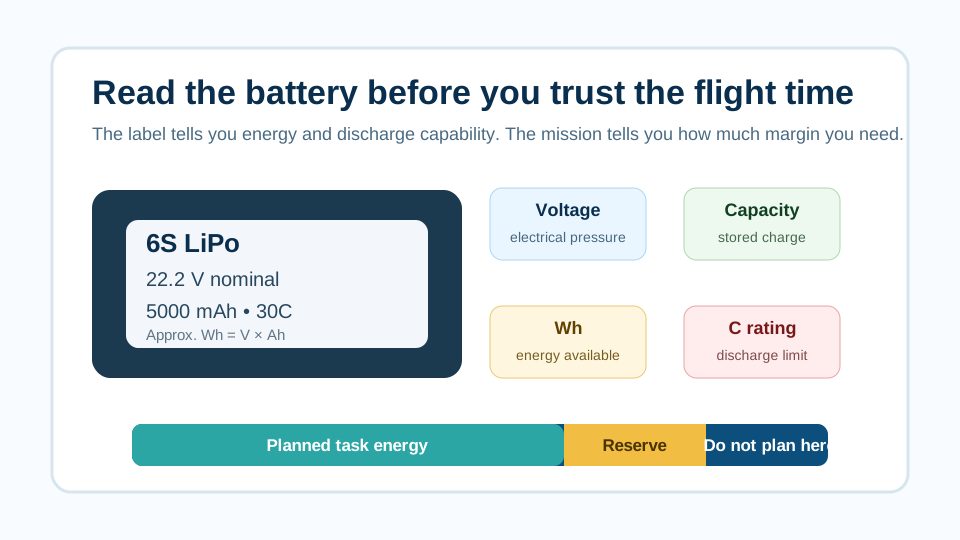
A remote pilot should be able to read the battery label, understand the practical meaning of voltage, capacity, watt hours and discharge rating, and then connect those numbers to the job being flown.
Voltage, capacity and watt hours answer different questions
Voltage is electrical pressure. Capacity, normally shown as amp hours or milliamp hours, tells you how much charge the pack can store. Watt hours estimate total energy by combining voltage and capacity.
The simple study calculation is watt hours equals volts multiplied by amp hours. A 22.2 volt, 5 amp hour pack is about 111 watt hours before real-world losses and reserve are considered.
- Use nominal voltage for study calculations unless the procedure specifies otherwise.
- Convert milliamp hours to amp hours before multiplying.
- Treat the result as planning information, not a promise of exact flight time.
C rating is about discharge margin
C rating describes how quickly a battery can be discharged relative to its capacity. A pack with too little discharge capability can sag under load, heat up, trigger warnings or reduce aircraft performance.
For remote pilots, the practical point is conservative: use approved batteries, avoid pushing packs beyond the manufacturer's limits, and investigate abnormal voltage sag, heat or warning behaviour.
Reserve is planned before launch
Battery reserve is the margin that allows for wind, delay, missed landing, go-around, repositioning, unexpected climb demand or a longer recovery path.
Low-battery warnings should not be used as the planned landing point. The crew should brief the planned landing threshold, minimum reserve, emergency threshold and what happens if the aircraft is farther away than expected.
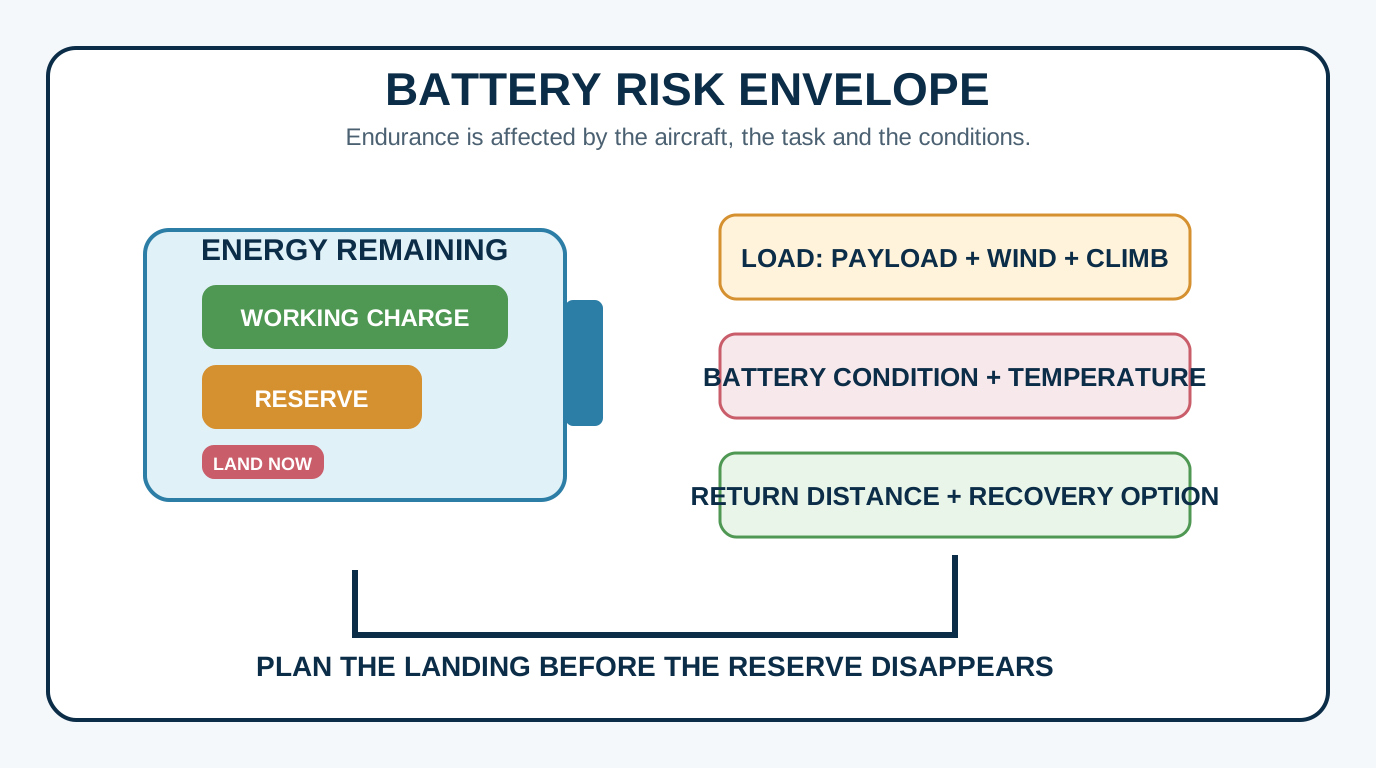
- Increase reserve for wind, cold, heat, payload, degraded packs or long return legs.
- Land earlier when telemetry trends do not match the expected endurance.
- Stop the task before battery state forces a rushed recovery.
Charging is part of flight safety
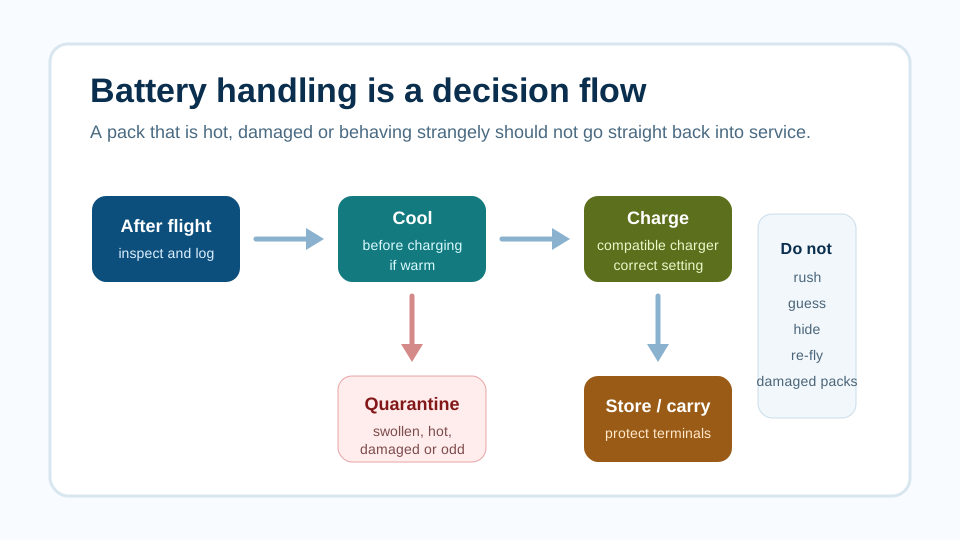
Charging errors can damage batteries or create fire risk. CASA's model-aircraft guidance warns that LiPo batteries need care, compatible chargers and suitable charge control, and that damaged, puffed or unsafe cells should not be flown.
The operator procedure should define where packs are charged, how they are supervised, when they are cooled before charging, how damaged packs are quarantined and how cycle or health data is recorded.
Storage, transport and disposal need their own checks
Battery risk continues after the aircraft lands. Packs may be hot, physically stressed, over-discharged or damaged after a hard landing. Storage and transport should protect terminals, prevent short circuits and follow current dangerous-goods and airline requirements where relevant.
CASA Pack Right guidance is a reminder that lithium battery carriage can have specific conditions. Operational crews should check current airline, dangerous-goods and operator requirements before moving batteries by air.
Damaged packs are not negotiation points
Swelling, punctures, crushed cases, abnormal heat, damaged leads, loose connectors, unexplained voltage behaviour or repeated charger errors should take a pack out of service until it is assessed under the operator procedure.
A battery problem is not fixed by needing the aircraft for one more flight. The safe decision is to quarantine, record and replace.
Practice Questions
What does watt hours estimate for an RPA battery?
- The total energy stored, based on voltage multiplied by amp hours.
- The exact wind speed on site.
- The aircraft's radio frequency.
- The propeller diameter only.
Answer: The total energy stored, based on voltage multiplied by amp hours.
Watt hours combine voltage and capacity to estimate stored energy before real-world losses and reserve.
Why should a low-battery warning not be the planned landing point?
- Because reserve is needed for wind, delay, repositioning and recovery margin.
- Because warnings are only decorative.
- Because the aircraft charges itself during descent.
- Because payload weight no longer matters near landing.
Answer: Because reserve is needed for wind, delay, repositioning and recovery margin.
The pilot should plan to land with usable margin rather than allowing the battery state to force the decision.
What should happen to a swollen or physically damaged lithium battery?
- It should be quarantined and handled under the operator's damaged-battery procedure.
- It should be flown once more if the job is urgent.
- It should be fast charged immediately.
- It should be hidden from the battery log.
Answer: It should be quarantined and handled under the operator's damaged-battery procedure.
Physical damage, swelling or abnormal behaviour can indicate a serious battery risk.
What is the safest source for battery transport requirements by airline?
- Current CASA dangerous-goods guidance, airline rules and operator procedures.
- A memory of a previous trip only.
- The colour of the battery case.
- A social media comment with no date.
Answer: Current CASA dangerous-goods guidance, airline rules and operator procedures.
Lithium battery carriage requirements can be specific and should be checked from current sources.
Next step after study
Complete your Remote Pilot Licence training
The free study guide is a strong theory foundation. To actually be issued with a RePL, students still complete approved training, practical flying and assessment with a certified provider.