
RACP - Airspace and Charts
Airspace, Charts and Approvals
Read the aeronautical picture before launch: airspace, aerodromes, PRD areas, NOTAMs and approval pathways.
Lesson references
- Last reviewed
- 2026-05-18
- Lesson references
- RePL Study Guide pp. 40-99; Part 101 MOS C10 pp. 94-95.
Start with the airspace question
Before a remote pilot thinks about launch points, batteries or camera settings, the airspace needs to make sense. Identify whether the job is in Class G, near controlled airspace, near a controlled or non-controlled aerodrome, or inside a prohibited, restricted or danger area.
Charts are not decoration. They show aerodromes, control zones, control areas, VFR routes, CTAF boundaries, radio frequency boundaries and special-use areas that can change the operational decision.
Use official information, then cross-check it
The core sources are aeronautical information publications, ERSA and NOTAMs. A CASA verified drone safety app can help field decision-making, but it should not replace understanding the underlying aviation information.
For restricted areas, controlled airspace, operations near aerodromes or operations above 400 ft AGL, the pilot must identify whether a permission, approval or exemption is required before the operation is flown.
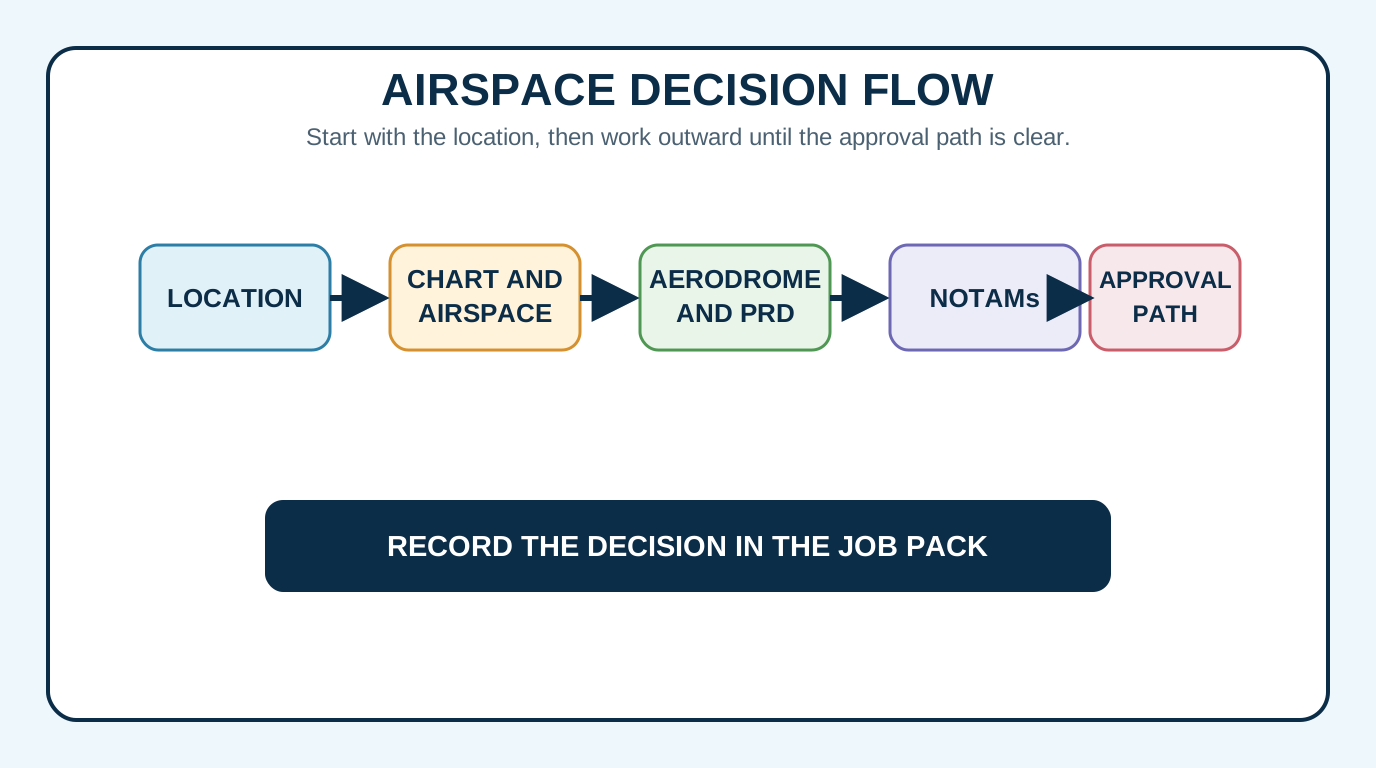
- Check the location against the applicable chart.
- Check NOTAMs for temporary hazards or restrictions.
- Check ERSA or relevant publications for aerodrome and frequency information.
- Record the decision path in the job pack when the operation is commercial.
Know when approval or radio qualification enters the picture
Some operations need more than a map check. Controlled airspace, controlled aerodrome no-fly zones, restricted areas, operations above 400 ft AGL, and some aerodrome-adjacent operations can require approval, permission, coordination or an aeronautical radio qualification.
The safe habit is to separate three questions: where is the aircraft, what rule or published information applies there, and what authorisation or communication is required before launch.
- Do not treat a green app result as the whole approval story.
- Check whether the operator has the right approval as well as whether the pilot has the right licence.
- Record radio frequencies, CTAF context and aerodrome considerations in the job pack where relevant.
PRD areas and NOTAMs can change the day
Prohibited, restricted and danger areas are not background chart clutter. They can represent military activity, hazardous operations, special events or other airspace activity that changes whether an RPA job can proceed.
NOTAMs are the temporary layer. They can introduce hazards, restrictions, aerodrome changes, airspace activation, navigation changes or operational information that was not present when the original job was planned.
EFBs are useful, not magic
Electronic flight bags and drone safety apps reduce workload, but they can also hide assumptions. Battery, data coverage, stale downloads or a wrong operating profile can all turn a convenient tool into a weak link.
The safe habit is simple: use digital tools, know what source they are using, and carry enough understanding to challenge an answer that does not look right.
- Check the app profile: aircraft type, operation type, height, date and location.
- Check data currency before relying on cached information.
- If the digital answer conflicts with official source material, stop and resolve the conflict.
A clean decision is traceable
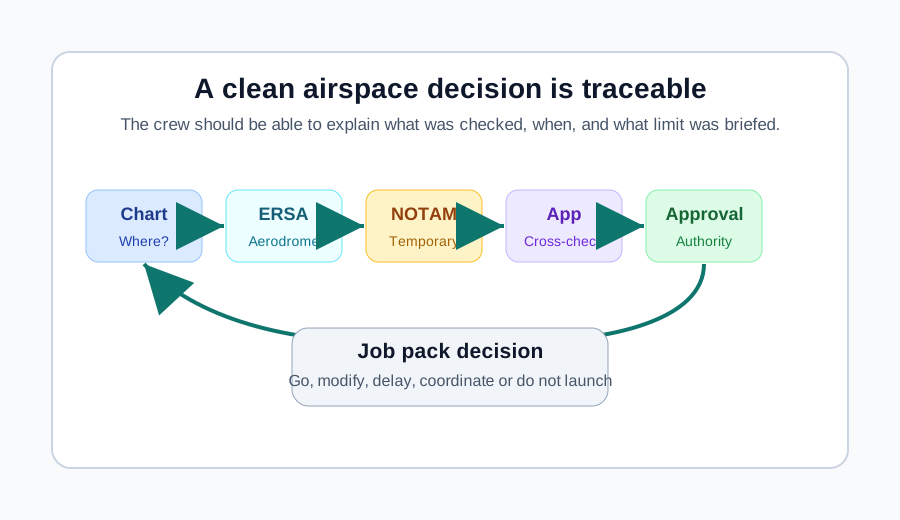
The goal is not to collect screenshots. The goal is a traceable decision: the crew can explain why the operation was legal, controlled and inside the operator's procedures at the time it was flown.
For commercial work, that decision trail belongs in the job pack. It protects the crew, helps the chief remote pilot review the operation, and makes repeat work easier to brief.
Practice Questions
Which source should be checked for temporary operational changes that may affect a planned RPA operation?
- NOTAMs
- A marketing brochure
- A battery label
- A propeller manual only
Answer: NOTAMs
NOTAMs communicate temporary changes and hazards relevant to aviation operations.
A drone safety app gives a simple result, but the chart shows nearby controlled airspace and the job is close to an aerodrome. What should the pilot do?
- Cross-check official sources and confirm whether approval, coordination or radio requirements apply.
- Ignore the chart because the app is easier to read.
- Launch immediately and check after landing.
- Assume all aerodrome operations are automatically approved.
Answer: Cross-check official sources and confirm whether approval, coordination or radio requirements apply.
Digital tools help decision-making, but the pilot still needs to understand official aeronautical information and approval requirements.
Why should an airspace decision be recorded in a commercial job pack?
- It creates a traceable decision path for legal, operational and review purposes.
- It replaces the need to check NOTAMs.
- It proves the weather will remain suitable.
- It removes all requirements for operator procedures.
Answer: It creates a traceable decision path for legal, operational and review purposes.
A clear decision record helps the crew and operator show how the operation was assessed before flight.
Next step after study
Complete your Remote Pilot Licence training
The free study guide is a strong theory foundation. To actually be issued with a RePL, students still complete approved training, practical flying and assessment with a certified provider.