
RBAK - Basic Aviation Knowledge
Lift, Drag and Angle of Attack
See how changes in airspeed and angle of attack affect lift, drag, stall margin and endurance.
Lesson references
- Last reviewed
- 2026-05-18
- Lesson references
- RePL Study Guide pp. 200-213; Part 101 MOS C10 p. 93.
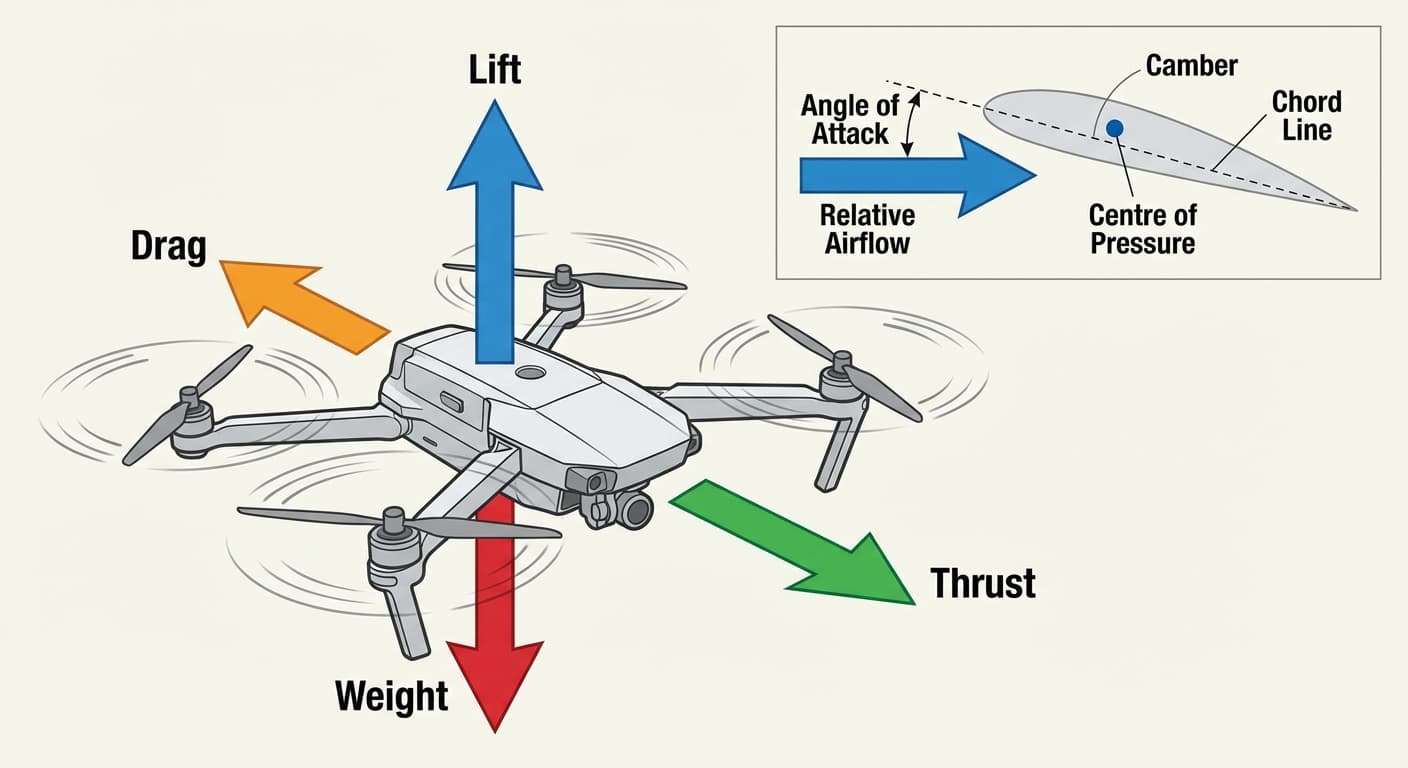
Lift changes with speed and angle
Increasing airspeed or angle of attack can increase lift up to a point. Beyond the useful range, airflow can separate and lift can reduce sharply.
For fixed-wing RPA, that point is tied to stall awareness. For multirotors, the same general idea still helps explain rotor loading, translational lift and why disturbed airflow matters.
Drag is not one thing
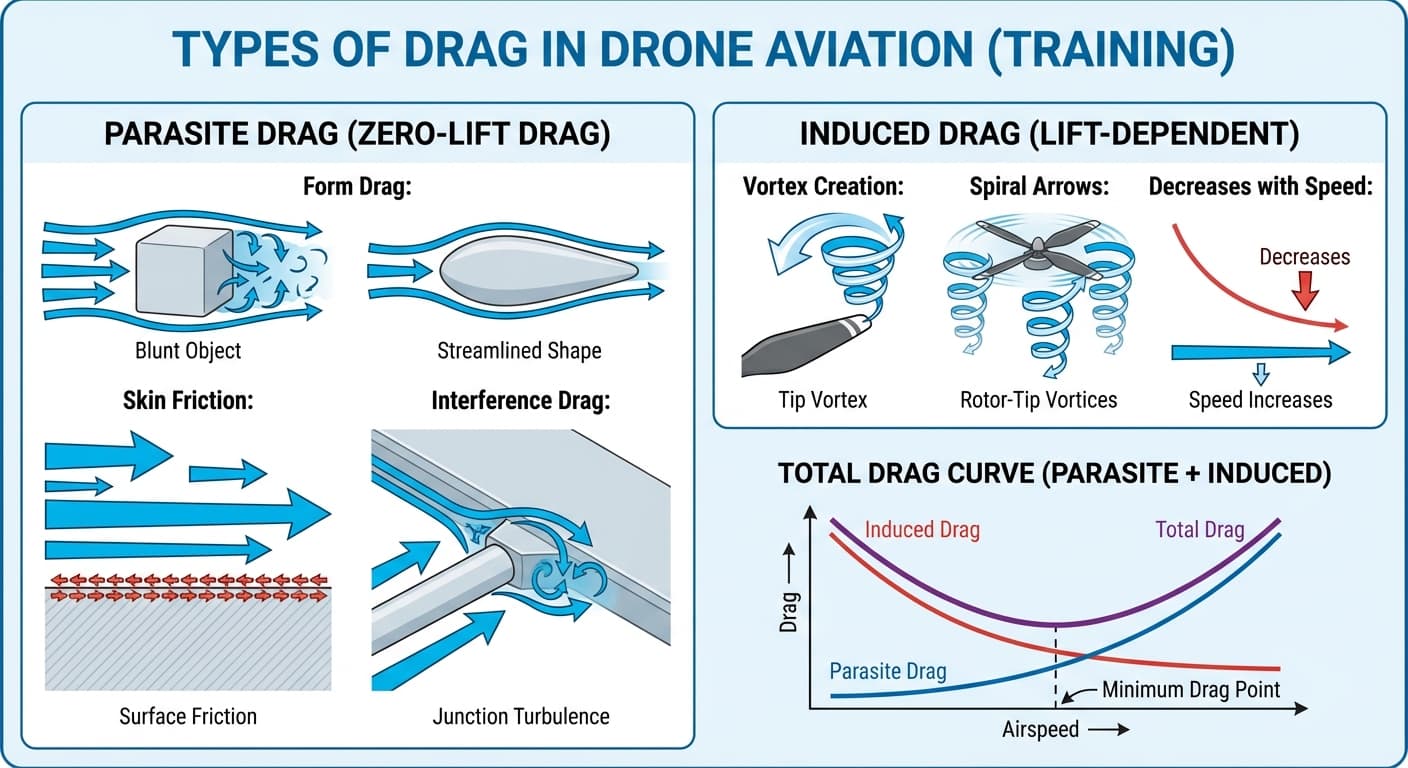
Parasite drag includes form drag, interference drag and skin friction. Induced drag is associated with producing lift. Different types dominate at different speeds.
The practical lesson is that flying too fast or too slow can both waste energy. Mission planning should account for the aircraft's efficient operating speed, wind and payload.
Endurance comes from balance
Maximum endurance is not simply maximum speed or minimum speed. It is the point where the aircraft can stay airborne longest for the available energy.
Remote pilots see this as battery margin. Wind, climb, turns, payload and poor route design all move the operation away from the ideal.
Practice Questions
Which type of drag is associated with producing lift?
- Induced drag
- Skin friction only
- Form drag only
- Magnetic drag
Answer: Induced drag
Induced drag is lift dependent and is one of the drag types remote pilots should recognise.
Next step after study
Complete your Remote Pilot Licence training
The free study guide is a strong theory foundation. To actually be issued with a RePL, students still complete approved training, practical flying and assessment with a certified provider.