
RBAK - Basic Aviation Knowledge
Aerodynamics, Weight and Balance
Connect aerofoil terminology, forces, centre of gravity and loading limits to safe RPA operation.
Lesson references
- Last reviewed
- 2026-05-18
- Lesson references
- RePL Study Guide pp. 199-206; Part 101 MOS C10 pp. 92-93.
Four forces, one aircraft
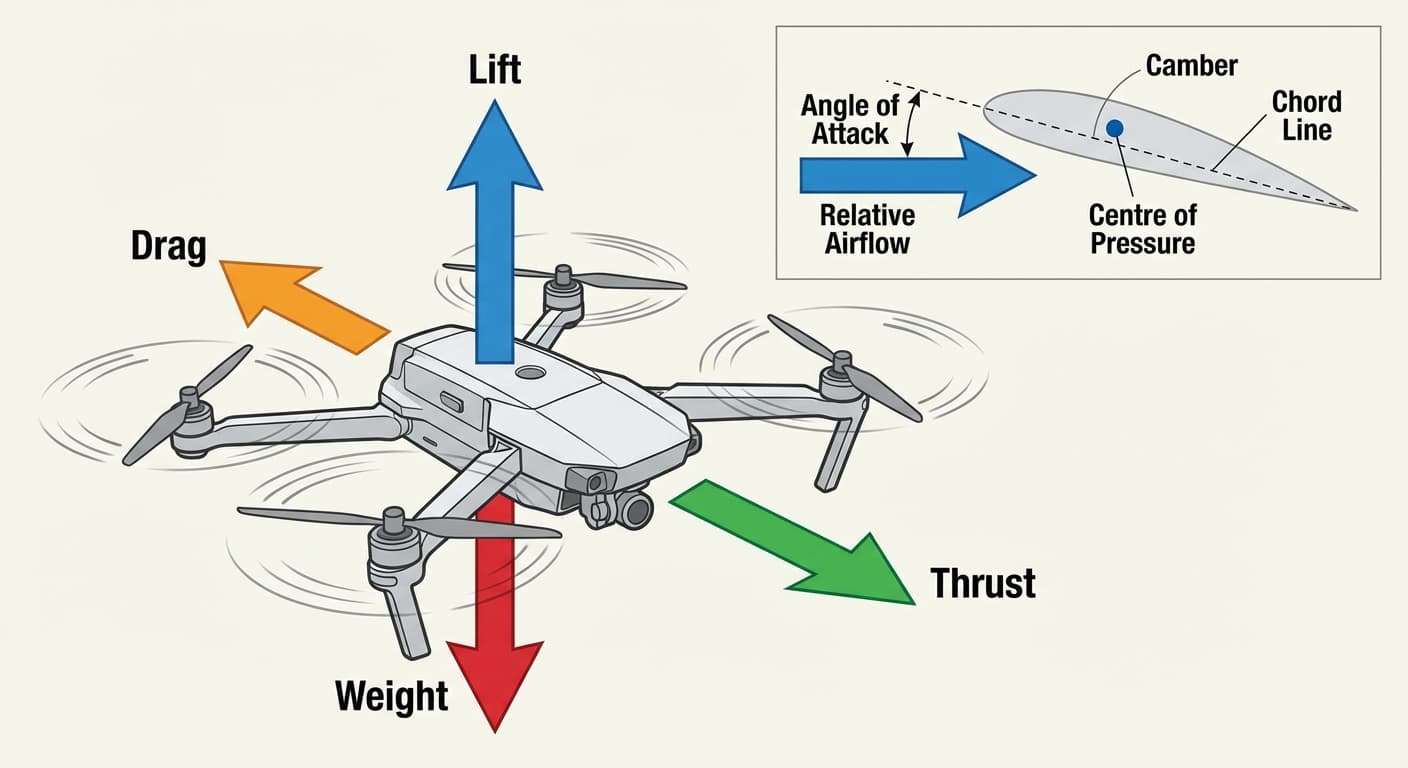
Lift acts upward, weight acts downward, thrust moves the aircraft forward or upward depending on the design, and drag resists motion through the air.
Angle of attack is the angle between the aerofoil chord line and the relative airflow. Centre of pressure is where the aerodynamic force acts. Centre of gravity is where the aircraft balances.
Lift has more than one explanation
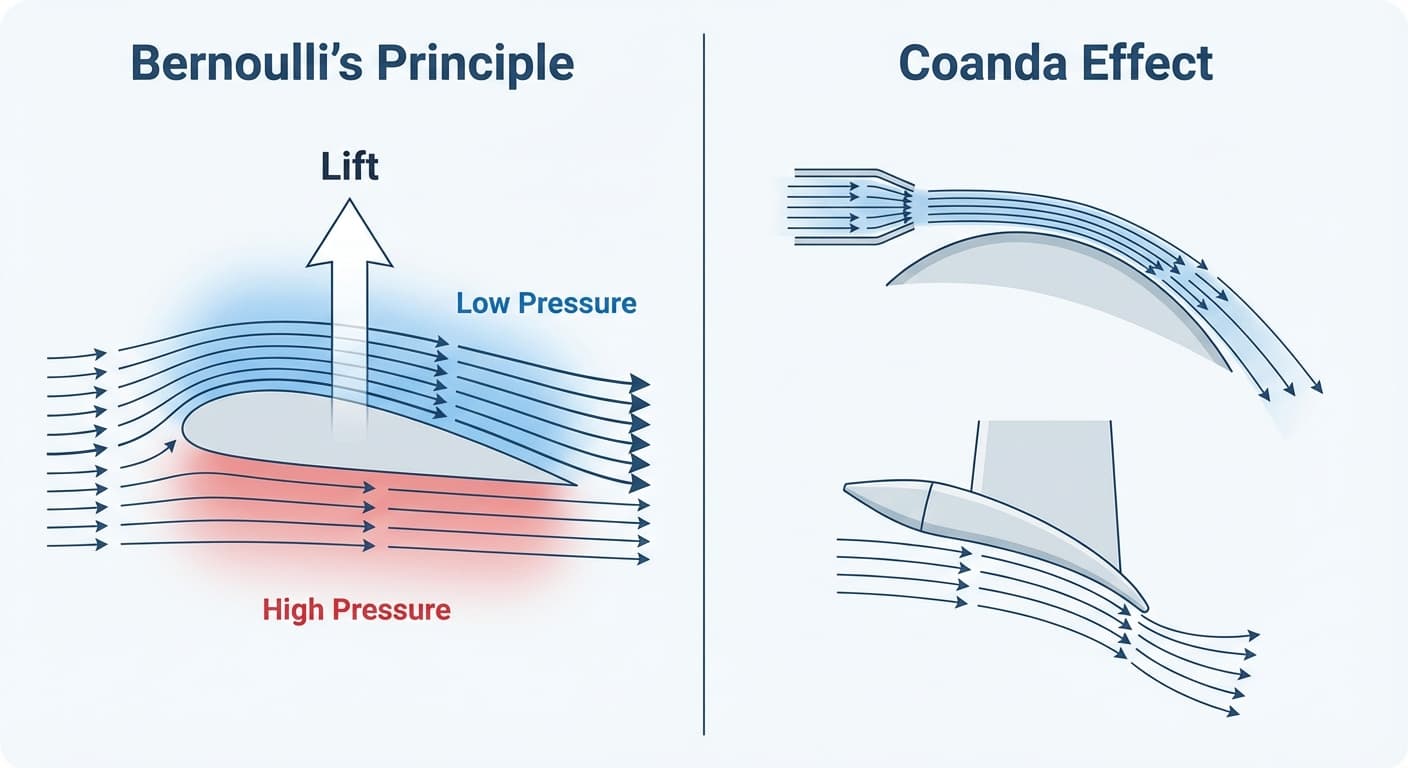
The MOS expects remote pilots to understand Bernoulli, Coanda and Newton's third law at a basic level. In practical terms, an aerofoil or rotor creates lift by shaping and accelerating air so that a useful force is produced.
The exam point is useful, but the operational point is better: damaged propellers, wrong payloads, high density altitude or poor loading can reduce the lift and control margin you thought you had.
Loading changes the aircraft
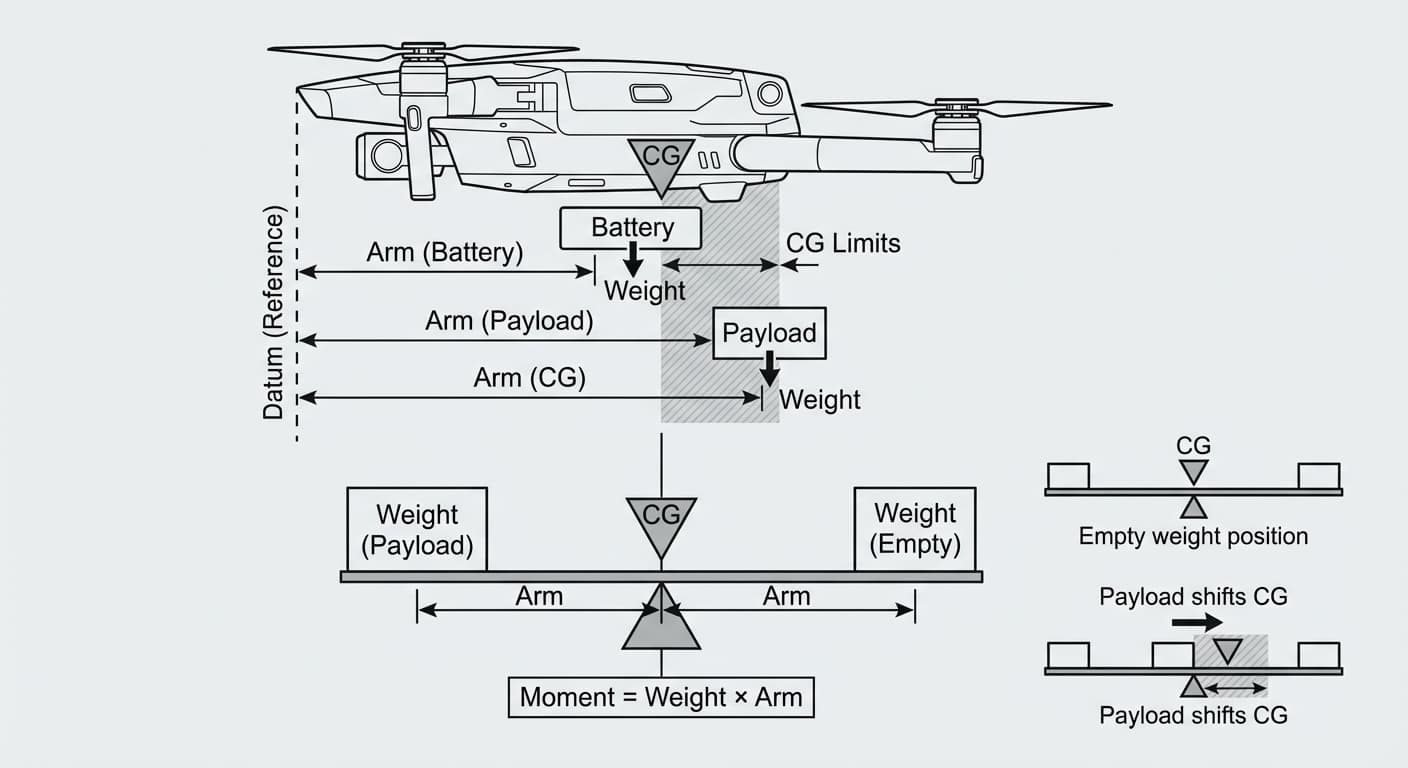
Empty weight, operating weight, maximum gross weight, arm, moment, datum and centre of gravity limits are all ways of describing whether the aircraft is loaded within its approved envelope.
For RPA operations, payloads are the everyday trap. A camera, sprayer tank, LiDAR unit or extra battery can change gross weight, balance, endurance and emergency handling.
Practice Questions
Why can adding a payload change flight safety?
- It can change weight, balance, endurance and control margin.
- It only changes the colour of the aircraft.
- It always improves climb performance.
- It removes the need for battery planning.
Answer: It can change weight, balance, endurance and control margin.
Payload affects aircraft loading and can push the RPA outside expected performance or balance limits.
Next step after study
Complete your Remote Pilot Licence training
The free study guide is a strong theory foundation. To actually be issued with a RePL, students still complete approved training, practical flying and assessment with a certified provider.