
RBAK - Basic Aviation Knowledge
Direction, Heading and Wind
Learn how aviation expresses direction, why heading and track are different, and how wind changes the path an RPA actually flies.
Lesson references
- Last reviewed
- 2026-05-18
- Lesson references
- RePL Study Guide pp. 11-35; Part 101 MOS C10 pp. 92-93.
Direction is a safety language
Aviation avoids casual direction words wherever precision matters. A bearing or heading is normally spoken as a three figure group measured clockwise from north. East is 090, south is 180, west is 270 and north is normally 360.
That format matters because remote pilots share airspace with crewed aircraft, and clear direction keeps observers, pilots and air traffic services talking about the same thing.
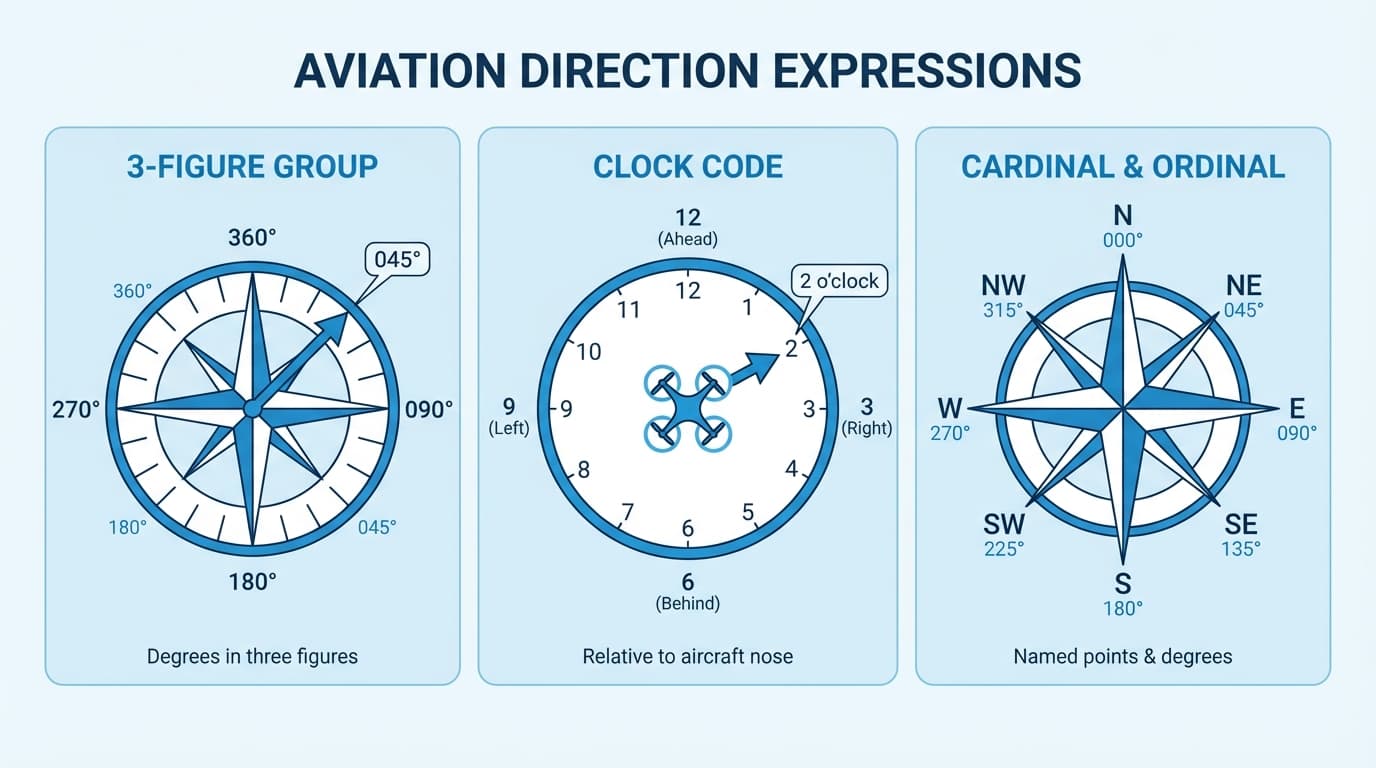
- Use leading zeros: say 045, not 45.
- Use clock code for traffic relative to the aircraft nose.
- Use cardinal and ordinal points only when approximate direction is enough.
Heading is not the same as track
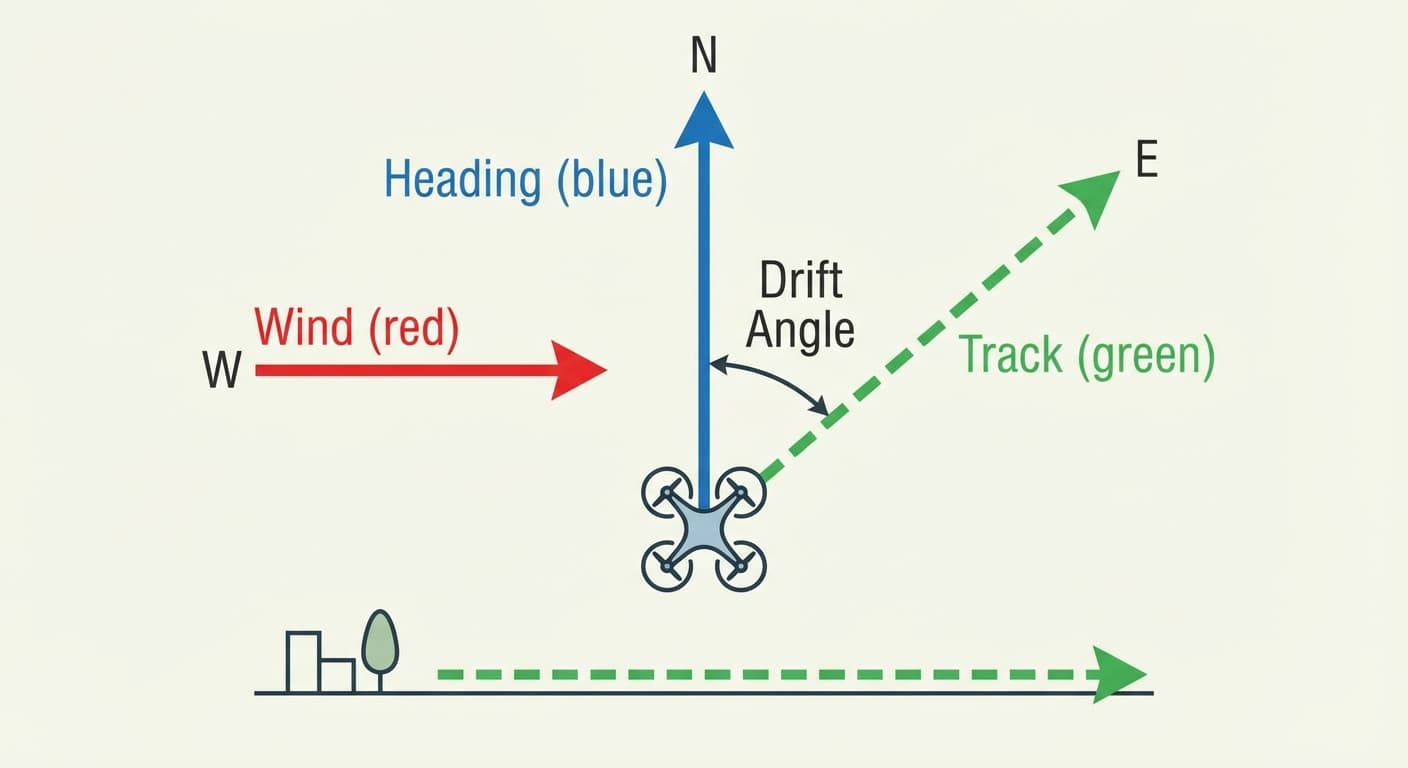
Heading is where the aircraft nose points. Track is the path over the ground. Wind can push the aircraft sideways, so a drone may need to point slightly into wind to maintain the intended ground path.
A practical remote pilot watches both the planned track and what the aircraft is actually doing. The stronger the crosswind, the more obvious the difference becomes.
Wind is reported from where it comes
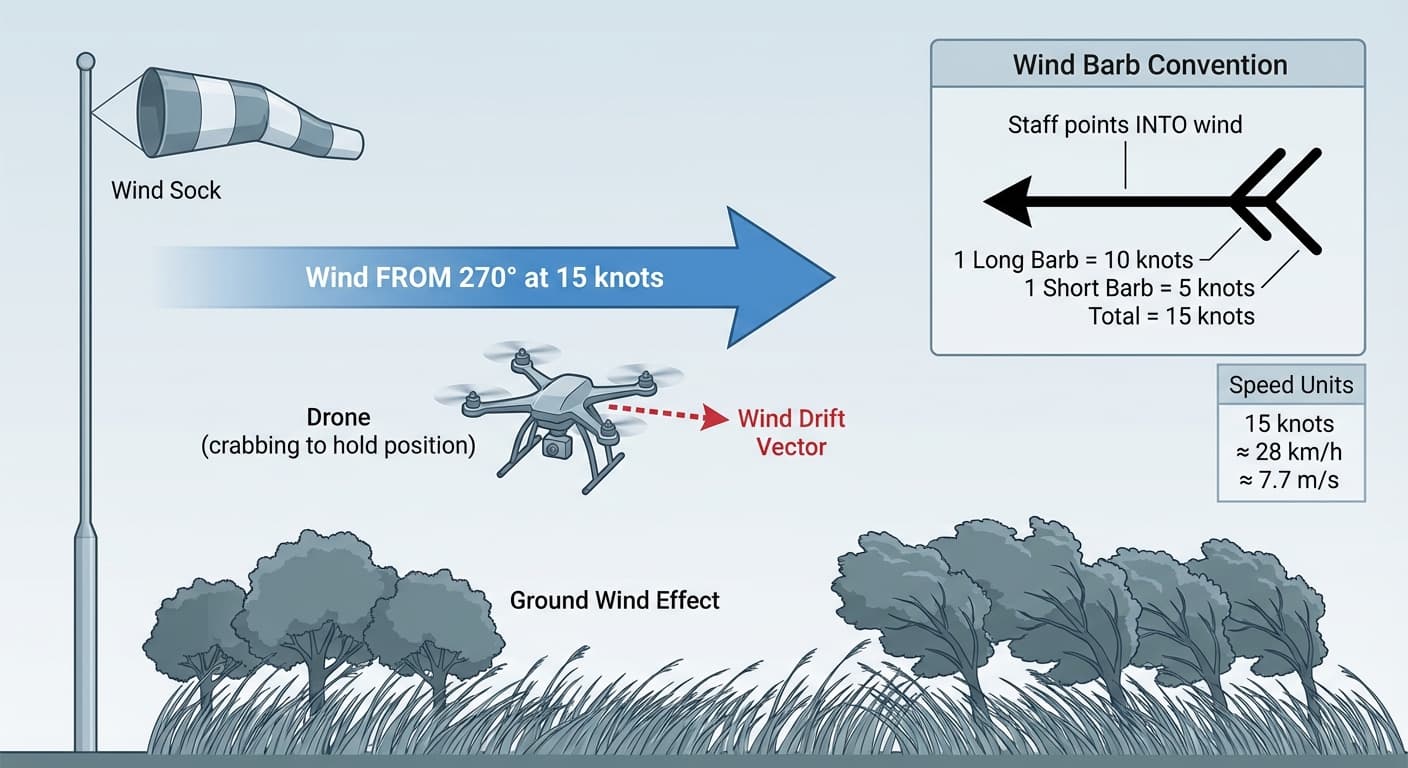
A wind reported as 270/15 is coming from the west at 15 kt. For an RPA, that can mean more battery use into wind, faster groundspeed downwind and sideways drift in a crosswind.
Use forecasts for planning, then confirm conditions at the operating site. Gusts, turbulence around buildings and terrain effects can make the local wind less friendly than the forecast suggests.
Practice Questions
A drone is pointed east, but a northerly wind pushes it south of the planned line. Which statement is correct?
- The heading is east and the track is drifting south of east.
- The track is east and the heading is drifting south of east.
- The heading and track must always be identical.
- Wind direction only matters for crewed aircraft.
Answer: The heading is east and the track is drifting south of east.
Heading is nose direction. Track is the actual ground path, which can be displaced by wind.
Next step after study
Complete your Remote Pilot Licence training
The free study guide is a strong theory foundation. To actually be issued with a RePL, students still complete approved training, practical flying and assessment with a certified provider.