
AROC - Aeronautical Radio
Radio Calls, Readability and Emergencies
Build the radio habits remote pilots need when operating around aviation traffic and controlled procedures.
Lesson references
- Last reviewed
- 2026-05-18
- Lesson references
- RePL Study Guide pp. 278-316; CASA AC 101-01 v6.1.
Radio is for concise shared awareness
Aeronautical radio is not a casual conversation channel. It is a disciplined way to make position, intention, traffic and emergency information understandable to other airspace users.
A remote pilot should know the relevant frequency, listen before transmitting, use standard phraseology and keep calls short enough that other traffic can use the channel.
Radio waves are line-of-sight limited
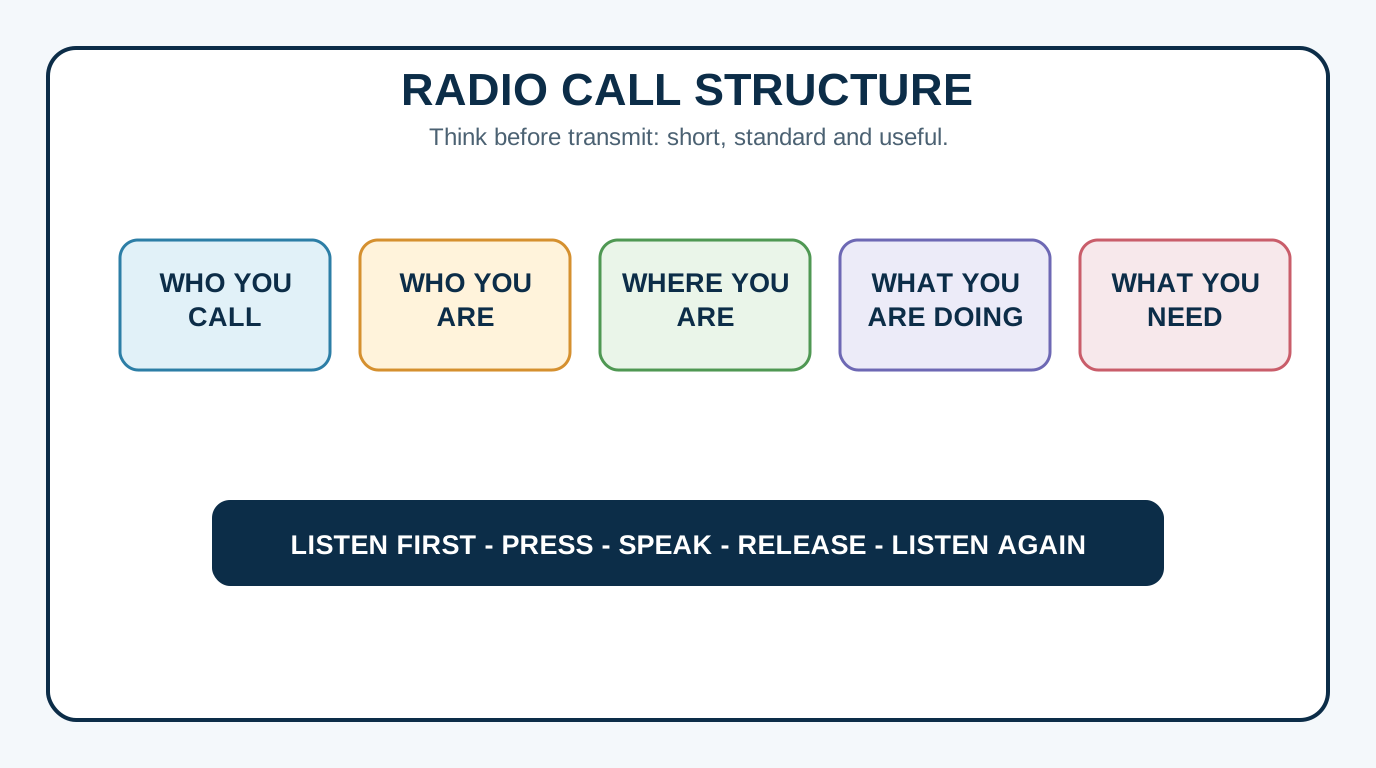
VHF aeronautical radio is mainly line of sight. Height, terrain, antenna placement, aircraft attitude and obstacles all affect whether another station can hear you.
A handheld or remote pilot station radio may not perform like an aircraft-mounted radio. The operator should understand the equipment, battery state, antenna orientation and range limitations before relying on it.
Listen first, then make the call useful
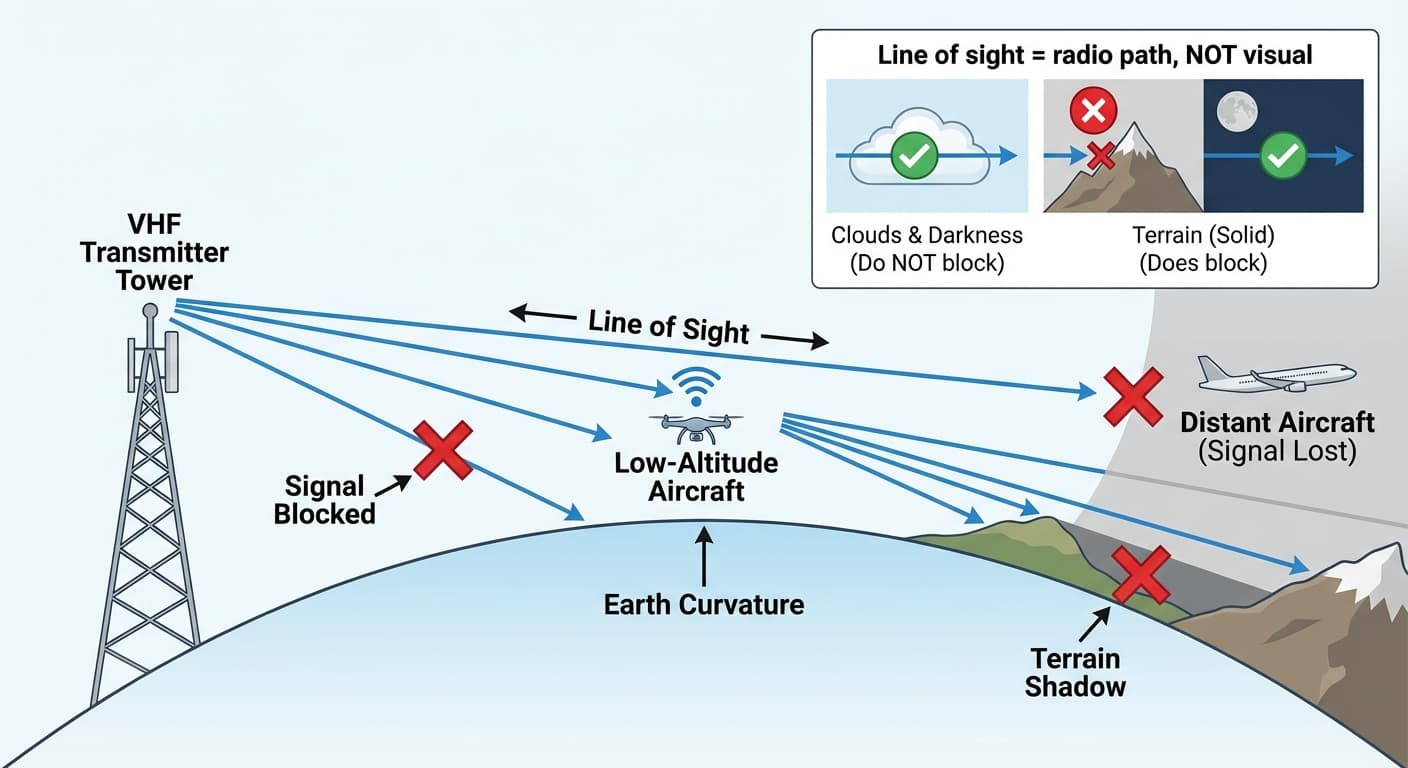
Before transmitting, listen to avoid stepping on another call. Then keep the message relevant: who you are calling, who you are, where you are, what you are doing and what you need.
Unnecessary radio traffic can hide important traffic calls. Long or vague calls also increase workload for other airspace users.
- Use standard phraseology and plain numbers.
- Avoid slang and long explanations on frequency.
- If uncertain, pause and prepare the message before transmitting.
CTAF calls build shared traffic awareness
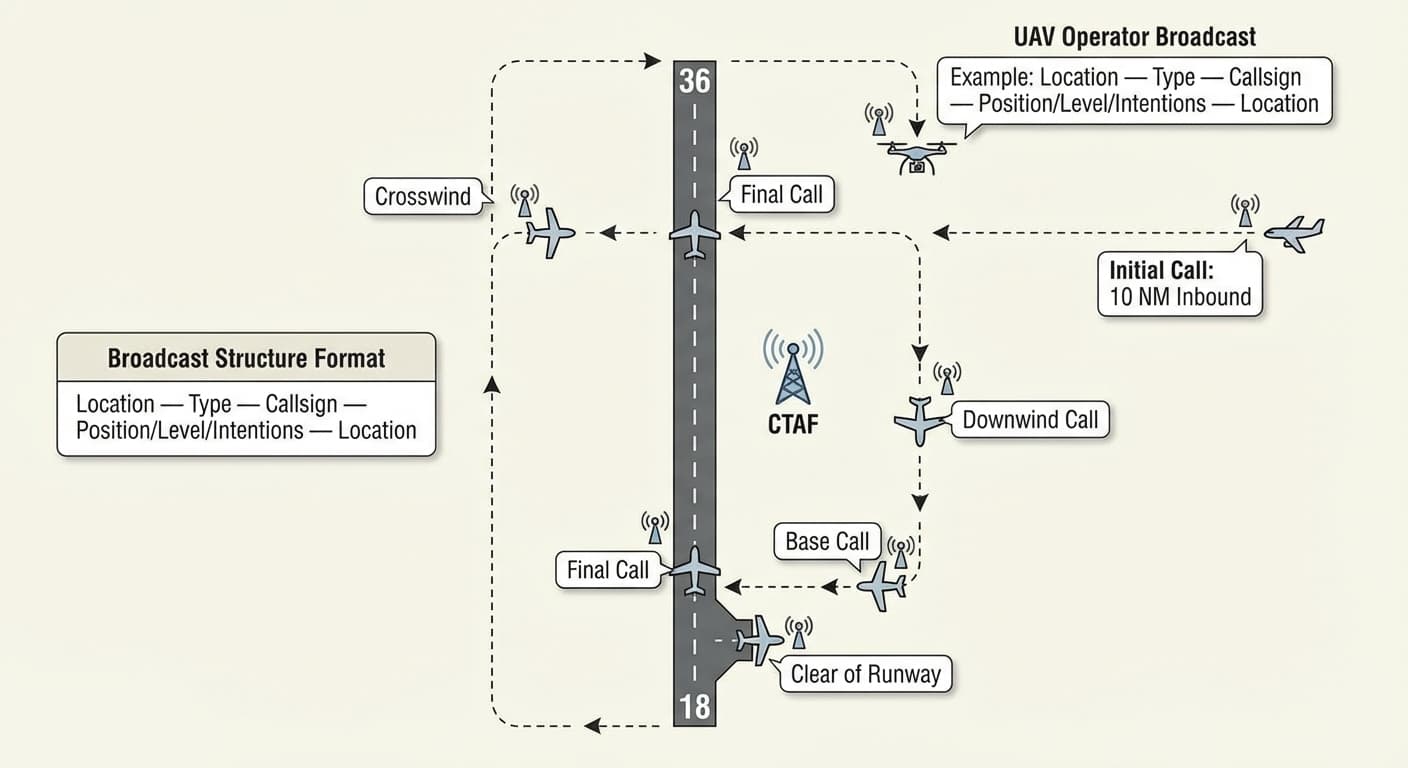
A CTAF is used so nearby aircraft can build a shared picture of traffic and intentions. A remote pilot operating in an environment where radio is required or operationally necessary should make calls that help other pilots understand where the RPA is and what it is doing.
The call should match the operation. A drone at low level near an aerodrome has different information value from a crewed aircraft in the circuit, but both need to understand each other's position and intention.
Clarity matters under pressure
The phonetic alphabet, standard numbers, readability scale, Mayday and Pan Pan formats exist so messages survive stress, noise and time pressure.
If a radio call is needed, plan what you need to say before pressing transmit: who you are calling, who you are, where you are, what you are doing and what you need.
Readability and readback protect the message
The readability scale helps a station report how well a transmission can be heard. Readback confirms critical information has been received correctly, especially when instructions, frequencies, locations or emergency details matter.
If a message is unreadable, do not pretend it was understood. Ask for it again or use an approved alternate communication path if the operation allows it.
Mayday and Pan Pan are not ordinary calls
Mayday is used for distress where there is grave and imminent danger requiring immediate assistance. Pan Pan is used for urgency where safety is affected but the situation is not yet distress.
For remote pilots, the exact operational context matters: risk to people, other aircraft, property, airspace, control link, battery state, aircraft position and the ability to recover safely.
Good radio discipline starts before the job
Radio use should be planned in the job pack: frequency, callsign or station identification, expected calls, emergency calls, backup communication and who is responsible for listening and transmitting.
The radio should be checked like other operational equipment: charged, configured, volume set, frequency confirmed and usable at the site.
Practice Questions
What should a pilot do before making a radio transmission on an aviation frequency?
- Listen first and make a concise, relevant call using standard phraseology.
- Transmit immediately for as long as possible.
- Use informal language to sound friendly.
- Avoid identifying the station being called.
Answer: Listen first and make a concise, relevant call using standard phraseology.
Listening and concise phraseology reduce channel congestion and improve shared situational awareness.
Why should a remote pilot listen before transmitting?
- To avoid blocking another transmission and to build traffic awareness.
- To make the call longer.
- To avoid identifying the station being called.
- To replace all lookout duties.
Answer: To avoid blocking another transmission and to build traffic awareness.
Listening first reduces channel congestion and helps the pilot understand current traffic.
What is the difference between Mayday and Pan Pan in broad terms?
- Mayday is distress; Pan Pan is urgency.
- Mayday is only for weather; Pan Pan is only for batteries.
- They mean exactly the same thing.
- Pan Pan is used for casual position reports.
Answer: Mayday is distress; Pan Pan is urgency.
Standard urgency and distress words help other stations understand the seriousness of the situation.
What should a pilot do if an important radio message is unreadable?
- Ask for the message again or use an approved alternate communication path if available.
- Pretend the message was understood.
- Continue without any traffic awareness.
- Transmit music to test the frequency.
Answer: Ask for the message again or use an approved alternate communication path if available.
Critical communication should be confirmed rather than guessed.
Next step after study
Complete your Remote Pilot Licence training
The free study guide is a strong theory foundation. To actually be issued with a RePL, students still complete approved training, practical flying and assessment with a certified provider.