
RKOP - Operations
Incident Reporting, Fitness and Post-Event Actions
Handle defects, incidents, accidents, fitness-to-operate concerns and post-event learning with a calm, traceable response.
Lesson references
- Last reviewed
- 2026-05-21
- Lesson references
- RePL Study Guide pp. 99-102 and 267-270; Part 101 MOS C10 Schedule 4 Unit 6.
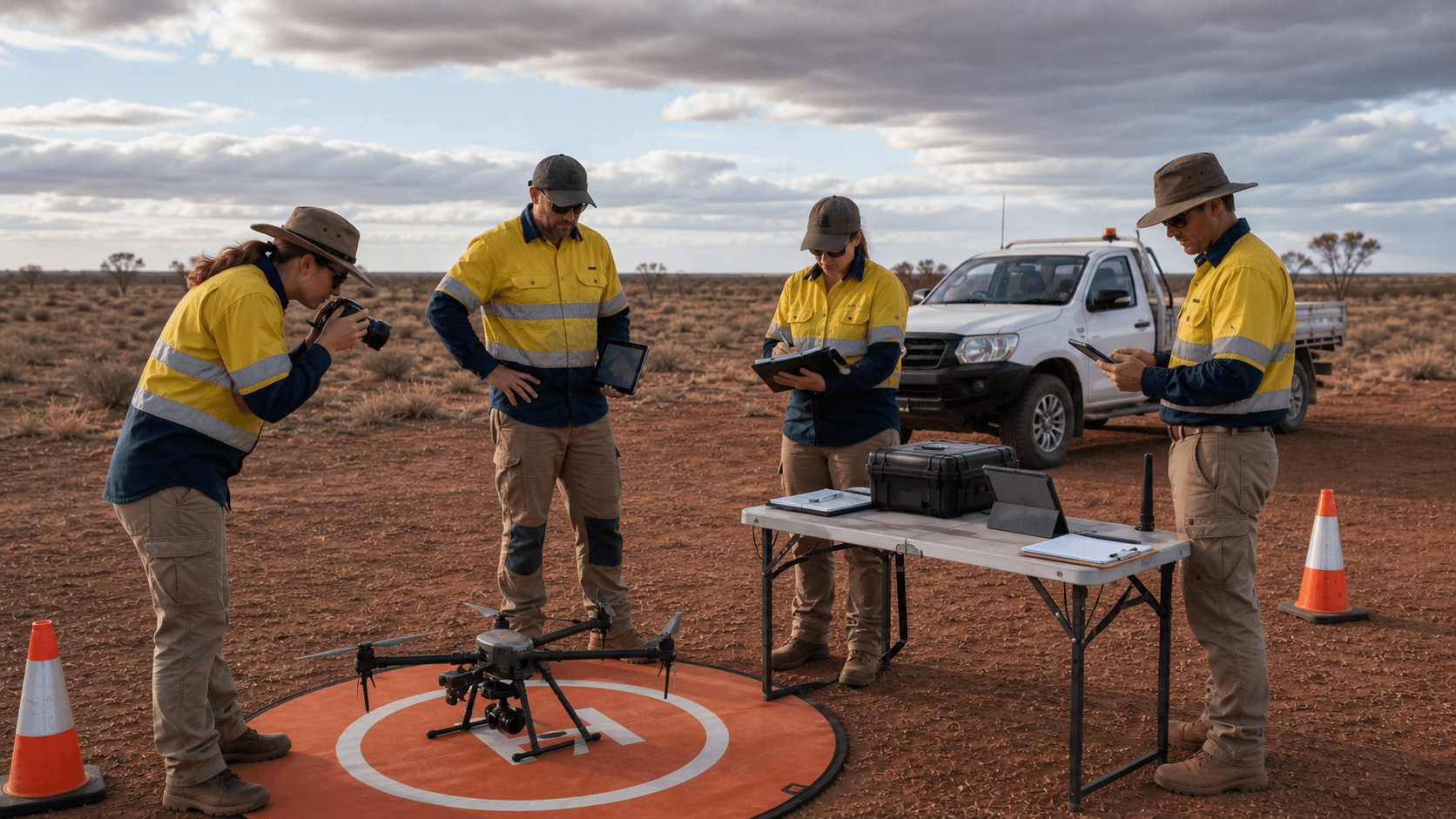
Post-event discipline starts before the event
A remote pilot should not be inventing the reporting pathway after something has gone wrong. The operator's procedures should already say who is contacted, what information is preserved and what stops the aircraft from being flown again until it is cleared.
The study skill is to separate the first response from the later investigation. First response protects people, makes the site safe and preserves evidence. Investigation and reporting then follow the operator's procedure and current CASA or ATSB requirements.
- Protect people and property before paperwork.
- Stop the aircraft from being reused until serviceability is resolved.
- Preserve logs, photos, notes and battery information while memories are fresh.
- Escalate early if the event may be reportable or safety-critical.
Use the same calm order every time
After a crash, flyaway, hard landing, near miss, injury, property damage, battery event or control-link problem, the crew needs an ordered response. Panic and improvisation are poor controls.
A simple order is stabilise, make safe, preserve, notify and review. That sequence keeps immediate safety ahead of administration, while still protecting the information needed for a proper report and learning loop.
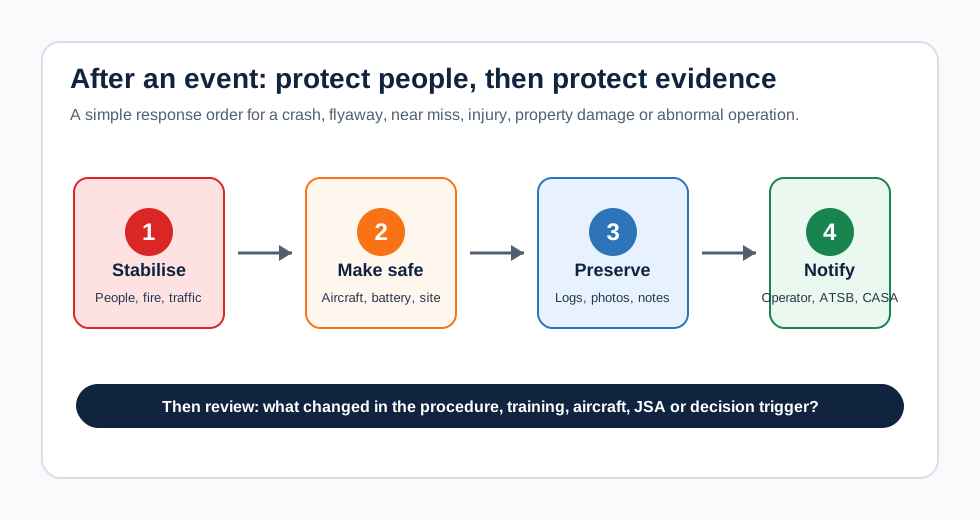
- Stabilise: check people, public safety, fire, traffic and immediate hazards.
- Make safe: isolate batteries if safe, secure the aircraft and protect the site.
- Preserve: collect facts without disturbing anything unnecessarily.
- Notify: follow operator, client, ATSB, CASA and emergency-service pathways as applicable.
Sort the event before deciding the pathway
Not every defect is an accident, and not every abnormal flight is immediately reportable. The safest working habit is to sort the event conservatively, then escalate to the chief remote pilot, safety manager or nominated reviewer if the category is unclear.
CASA points aviation accidents and serious incidents toward ATSB reporting, while ATSB reporting rules distinguish immediately reportable matters from routine written reports. The details can change and depend on the aircraft, operation and occurrence, so this lesson should be treated as a study framework rather than a legal decision tree.
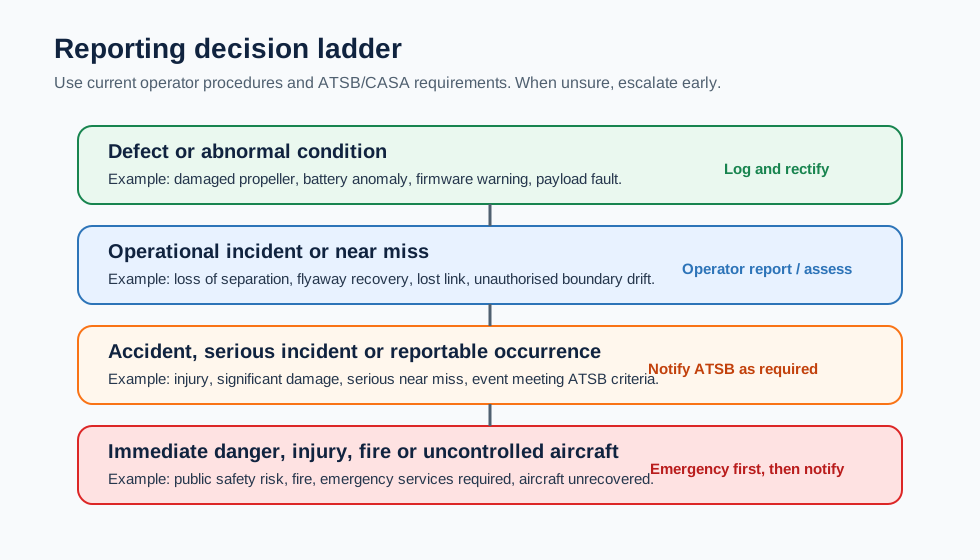
- Defect: record it, quarantine if needed and rectify before further flight.
- Operational incident: preserve facts and report internally under the operator's procedure.
- Accident, serious incident or reportable occurrence: check ATSB/CASA notification requirements immediately.
- Emergency or active public risk: emergency response comes before aviation paperwork.
Preserve the right information
A post-event report is only as good as the information preserved at the time. Logs may be overwritten, batteries may be swapped, aircraft may be moved and witnesses may leave.
Preservation does not mean leaving a hazard uncontrolled. Make people, batteries and the site safe first, then capture the information needed to understand what happened.
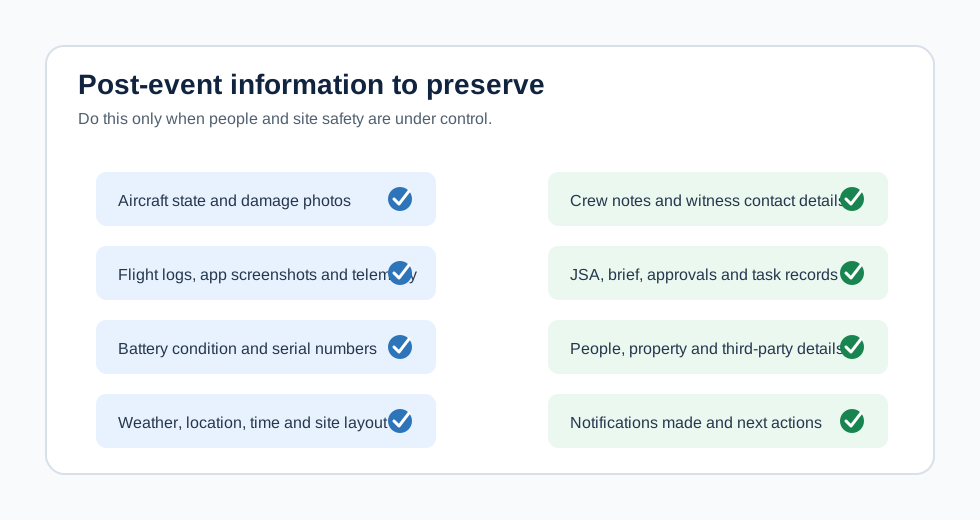
- Aircraft condition, damage photos, serial numbers and payload state.
- Flight logs, app screenshots, telemetry, warnings and controller status.
- Battery identity, charge state, temperature, swelling, damage or unusual behaviour.
- Weather, time, location, site layout, boundaries, crew roles and witness details.
Fitness to operate is part of the occurrence picture
Illness, fatigue, medication, stress, alcohol, drugs and heat exposure can all affect remote pilot performance. If any of those factors may have contributed to an event, they need to be handled honestly through the operator's safety process.
A pilot should also be fit to continue after an event. Shock, embarrassment or pressure to finish the job can degrade judgement. If the pilot or crew is unsettled, the professional decision may be to stop the operation and hand the next decision to the chief remote pilot or another competent person.
- Do not continue simply because the aircraft still powers on.
- Do not hide medication, fatigue, alcohol, drug or stress factors from the internal safety review.
- Use operator procedures for drug and alcohol management, fitness checks and stand-down decisions.
- Treat post-event stress as a safety factor, not a character flaw.
Reporting is not the same as blame
A safety report should make the next operation safer. The useful questions are what happened, what changed, what control failed or was missing, and what needs to change before the aircraft or crew does the same task again.
For RePL study, the practical standard is: record the facts, notify through the correct pathway, quarantine unsafe equipment, review the risk controls and update the procedure if the lesson applies beyond one flight.
- Separate facts from opinions in the first record.
- Record uncertainty rather than guessing.
- Check whether the technical log, JSA, checklist, training record or maintenance system needs an update.
- Close the loop by briefing the change before the next similar operation.
Keep the public version conservative
This web guide can teach the response habit, but it cannot decide the reporting outcome for a real event. Reporting obligations depend on current legislation, ATSB requirements, CASA guidance, operator procedures and the exact facts.
When in doubt, preserve the information and escalate. A late or missing report is harder to fix than an early call asking whether a report is required.
Practice Questions
What should be the first priority after an RPA crash or serious abnormal event?
- Protect people and make the immediate site safe.
- Delete the flight logs to avoid confusion.
- Continue the job if the client is waiting.
- Change the battery and launch again immediately.
Answer: Protect people and make the immediate site safe.
Immediate safety comes first. Evidence preservation and reporting follow once people, fire, traffic and site hazards are controlled.
Why should flight logs, photos and battery details be preserved after an event?
- They help the operator understand what happened and meet any reporting or review requirements.
- They replace the need to tell the chief remote pilot.
- They prove the pilot was never involved.
- They are only useful for social media updates.
Answer: They help the operator understand what happened and meet any reporting or review requirements.
Good records support internal review, serviceability decisions and any required external reporting.
If a remote pilot is unsure whether an event is reportable, what is the safest next step?
- Preserve the information and escalate through the operator's reporting pathway for advice.
- Ignore it unless a member of the public complains.
- Assume small RPA events are never reportable.
- Fly the same aircraft again to see if the problem repeats.
Answer: Preserve the information and escalate through the operator's reporting pathway for advice.
Unclear reporting status should be resolved using current operator, ATSB and CASA guidance rather than guesswork.
Why can fitness to operate matter after an incident as well as before launch?
- Shock, stress or embarrassment can affect judgement and make continuing unsafe.
- A pilot is always less stressed after an incident.
- Fitness only matters for crewed-aircraft pilots.
- Continuing immediately is required if the aircraft still powers on.
Answer: Shock, stress or embarrassment can affect judgement and make continuing unsafe.
Post-event stress can reduce decision quality. The professional response may be to stop, reassign or seek chief remote pilot guidance.
Next step after study
Complete your Remote Pilot Licence training
The free study guide is a strong theory foundation. To actually be issued with a RePL, students still complete approved training, practical flying and assessment with a certified provider.