
RORA - Air Law
Rules, Licences and Current Sources
Know which rules apply, how to keep sources current and why a RePL sits inside a wider operator framework.
Lesson references
- Last reviewed
- 2026-05-18
- Lesson references
- RePL Study Guide pp. 40-55; Part 101 MOS C10 p. 106.
Use current rules, not remembered rules
The attached study guide remains an important teaching source, but law and guidance change. This web guide therefore points learners back to the current MOS, CASA guidance and official operational sources.
A RePL authorises a person for specified RPA categories and weights, but commercial operations also depend on the operator, approvals, procedures and the conditions of the specific job.
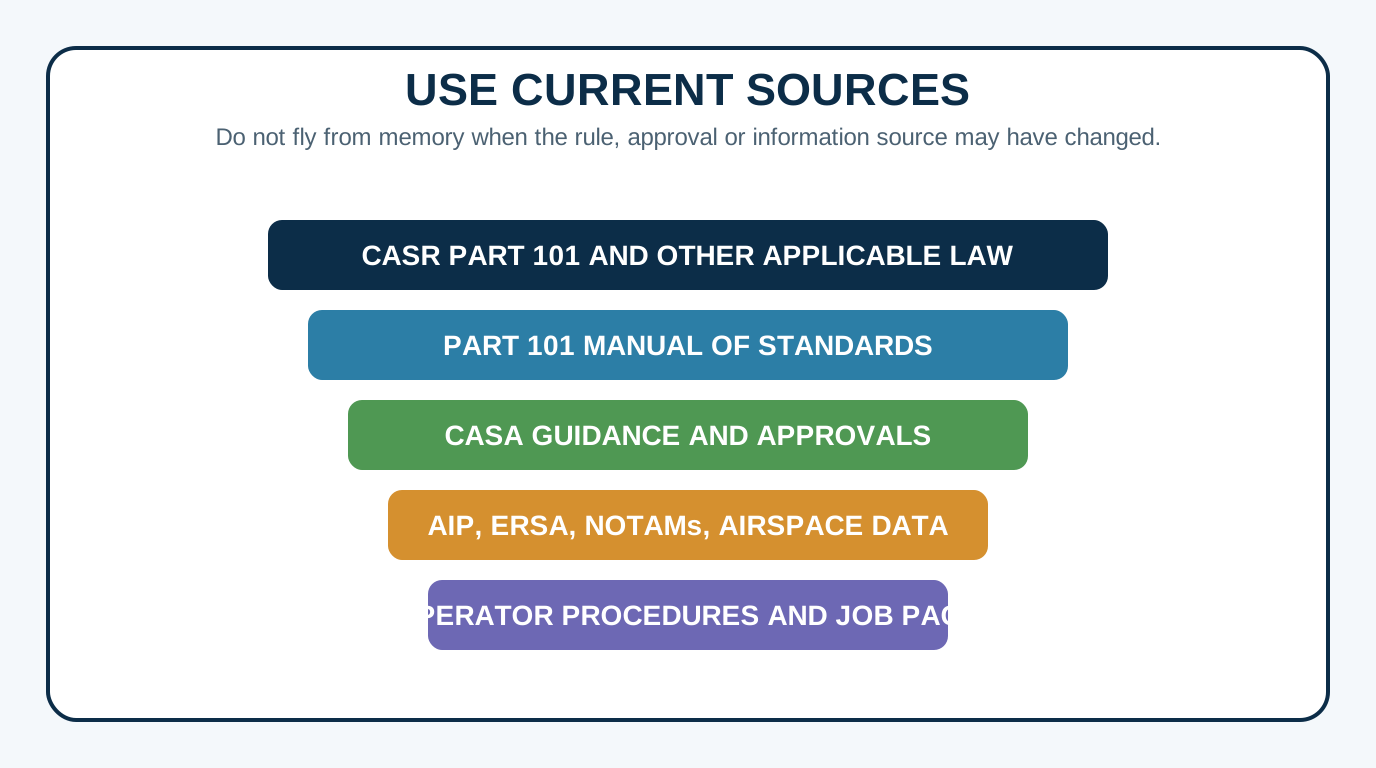
Know what each source is for
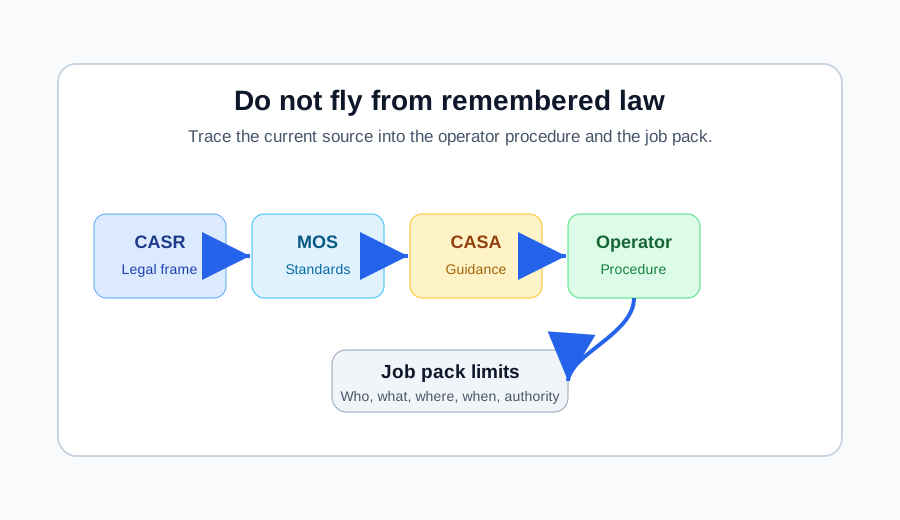
The regulations set the legal framework. The MOS gives detailed standards. CASA guidance helps explain how the regulator expects people to comply. Airservices and aeronautical publications provide operational information such as airspace, aerodrome and NOTAM detail.
Operator procedures then translate that framework into how a particular organisation plans, briefs, flies, records and reports its work.
- Check the current compilation date, not just the title of a document.
- Use official sources for legal and operational decisions.
- Treat training notes as study support, not as a live legal authority.
A RePL has conditions and boundaries
A remote pilot licence is not a blanket permission to conduct any drone job. It sits inside aircraft category, weight class, operational approvals, operator procedures and any conditions that apply to the pilot or operator.
Some work also depends on approvals held by the certified RPA operator, not only the pilot's personal qualification. The remote pilot should know when the job needs escalation to the chief remote pilot or approvals holder.
Currency is an operating habit
Rules, MOS compilations, CASA guidance, operational advice, NOTAMs, airspace data and internal procedures can all change. A current-source check is therefore part of operational discipline.
If a learner remembers a rule from an older course, the right response is not to argue from memory. The right response is to check the current source and document the decision.
The study guide is not legal advice
This material is for study and training support. Before an operation, remote pilots should verify the current legal position using official CASA and Airservices sources and their organisation's approved procedures.
When uncertain, stop and escalate
Air law uncertainty is not a reason to improvise. If the team is unsure about an approval, boundary, licence condition, operating limitation or source conflict, the safe action is to stop and ask the responsible aviation authority inside the organisation.
For this public web guide, uncertain or changeable legal detail should remain conservative and marked for aviation review rather than turned into overconfident operational advice.
Practice Questions
Why should a remote pilot check current official sources rather than relying only on old notes?
- Because legislation, MOS compilations and CASA guidance can change.
- Because old notes are always illegal.
- Because official sources are only needed for crewed aircraft.
- Because RePL conditions never matter.
Answer: Because legislation, MOS compilations and CASA guidance can change.
The current legal and operational position must be verified from official sources.
Why is a RePL not enough by itself for every commercial drone job?
- The job may also depend on operator approvals, procedures, airspace, aircraft limits and specific conditions.
- A RePL automatically authorises every aircraft and every airspace.
- Commercial jobs do not need procedures.
- Only the aircraft manufacturer can decide the legal position.
Answer: The job may also depend on operator approvals, procedures, airspace, aircraft limits and specific conditions.
A licence is only one part of the legal and operational framework for an RPA operation.
What should a remote pilot do when two sources appear to conflict?
- Pause, check the current official source and escalate through operator procedures if needed.
- Use the older source if it is easier.
- Choose the answer that lets the job proceed fastest.
- Ignore both sources and fly from memory.
Answer: Pause, check the current official source and escalate through operator procedures if needed.
Source conflicts should be resolved before flight, especially where legal authority or approval conditions are involved.
Next step after study
Complete your Remote Pilot Licence training
The free study guide is a strong theory foundation. To actually be issued with a RePL, students still complete approved training, practical flying and assessment with a certified provider.