
RORA - Air Law
RePL, ReOC and Operating Categories
Separate pilot authority, operator authority and operating category so a drone job starts from the right legal framework.
Lesson references
- Last reviewed
- 2026-05-19
- Lesson references
- RePL Study Guide pp. 44-55; Part 101 MOS C10 p. 106; CASA RePL/ReOC and drone weight category guidance checked 2026-05-19.
Start with the operation, not the aircraft
A drone that can physically do a job is not automatically authorised to do that job. The legal question starts with the operation: why the aircraft is being flown, who is responsible for it, what category it falls into, what approvals apply, and what procedures control the work.
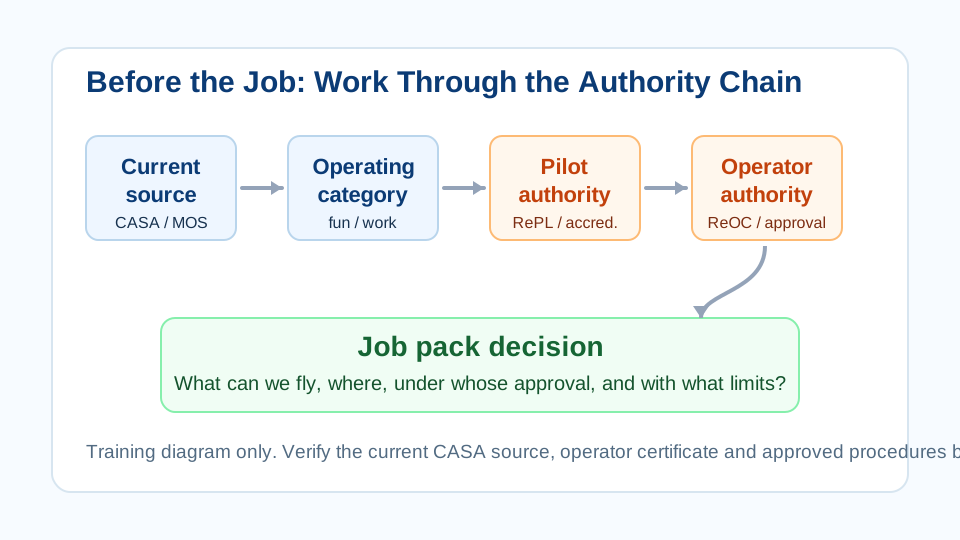
For study, keep the framework simple. The pilot needs authority to fly. The operator may need authority to conduct the operation. The job itself may need a permission, approval or documented operating condition.
RePL is pilot authority, not the whole job approval
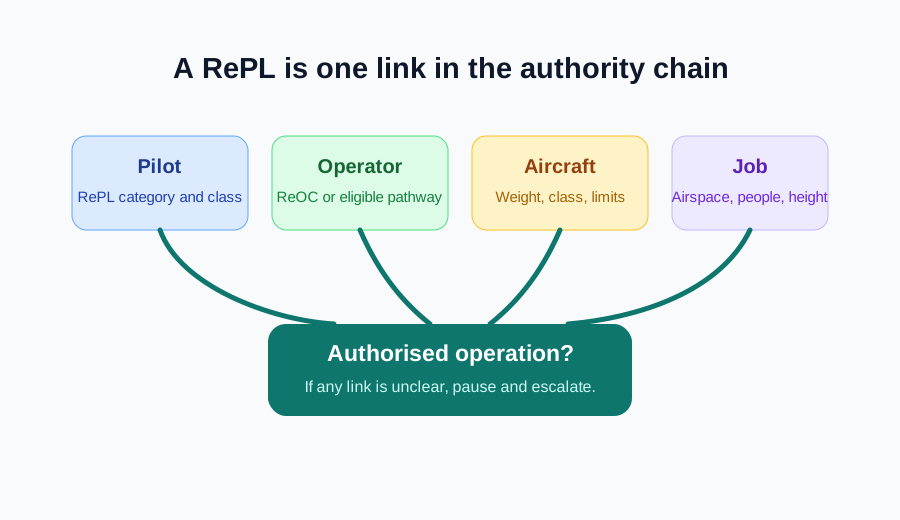
A Remote Pilot Licence shows that a person has been licensed for specified RPA categories and operating privileges. It matters, but it does not replace the operator's certificate, operating procedures, airspace permissions, aircraft limits or job-specific controls.
A common learner trap is thinking the licence is the finish line. In commercial operations, the RePL is one part of a wider chain. The remote pilot still needs to work inside the organisation's approved procedures and any conditions attached to the operation.
- Check the aircraft category and weight class relevant to the pilot.
- Check whether the operation needs a ReOC, excluded category framework or other approval.
- Check whether the operator's procedures allow the job as planned.
- Escalate to the chief remote pilot or accountable operator role when the authority chain is unclear.
ReOC is operator authority
A remotely piloted aircraft operator's certificate is about the organisation or operator conducting RPA operations. It is not the same thing as an individual pilot licence.
Where a ReOC applies, the practical question for the remote pilot is: does this operation sit inside the operator's approved privileges, manuals, procedures, personnel responsibilities and any specific CASA permissions?
Excluded category still has boundaries
CASA's excluded category framework allows certain lower-risk work without a ReOC when the operation fits the category requirements. That does not make it unregulated or informal.
A pilot should check the aircraft weight, operating purpose, notification or record requirements, distance from people, VLOS, height, airspace and other standard limits before treating an operation as excluded category.
- Confirm the operation is eligible before using the excluded category pathway.
- Do not stretch an excluded category job into work that needs a ReOC or approval.
- Keep current-source evidence where the operator procedure requires it.
Standard operating conditions are a baseline
Standard operating conditions are the familiar safe-operating baseline for many RPA tasks: daylight, VLOS, below the normal height limit, away from people, outside prohibited/restricted/controlled airspace unless authorised, and clear of emergency operations.
The point is not to rote-learn a slogan. The point is to recognise when a planned job leaves the baseline and needs extra authority, extra planning or a different decision.
Document the authority chain
A commercial job pack should make the authority chain visible. It should show who is operating, who is flying, what framework applies, what approvals or procedures are being relied on, and what limits are briefed to the crew.
That record does not need to be theatrical. It needs to be specific enough that another competent person can understand why the job was considered authorised at the time it was flown.
Practice Questions
What is the main difference between a RePL and a ReOC?
- A RePL is pilot authority; a ReOC is operator authority.
- A ReOC is a weather forecast and a RePL is a battery document.
- A RePL automatically replaces every operator approval.
- There is no difference.
Answer: A RePL is pilot authority; a ReOC is operator authority.
The pilot licence and operator certificate solve different parts of the legal framework.
Why must excluded category operations still be checked carefully?
- They only apply when the operation fits the category requirements and operating limits.
- They remove all aviation rules.
- They allow any flight over people.
- They automatically permit BVLOS.
Answer: They only apply when the operation fits the category requirements and operating limits.
Excluded category is a defined pathway, not a blank permission.
What should the remote pilot do if a job does not fit the normal baseline conditions?
- Check what extra approval, procedure or operational control is required before flight.
- Fly anyway because the aircraft is capable.
- Ignore the operator's procedures.
- Use a larger memory card.
Answer: Check what extra approval, procedure or operational control is required before flight.
Leaving the baseline can trigger extra authority, planning or approval requirements.
What should a job pack make clear for commercial RPA work?
- Who is operating, who is flying, what authority applies and what limits were briefed.
- Only the camera brand.
- Only the propeller colour.
- Nothing, if the pilot has flown the site before.
Answer: Who is operating, who is flying, what authority applies and what limits were briefed.
A traceable authority chain helps the operator and crew show why the job was authorised and controlled.
Next step after study
Complete your Remote Pilot Licence training
The free study guide is a strong theory foundation. To actually be issued with a RePL, students still complete approved training, practical flying and assessment with a certified provider.