
RORA - Air Law
Operating Limits, VLOS, Populous Areas and Approvals
Turn the headline drone rules into an operational go/no-go check: height, VLOS, people, populous areas, BVLOS and approval triggers.
Lesson references
- Last reviewed
- 2026-05-19
- Lesson references
- RePL Study Guide pp. 55-65 and 99-102; Part 101 MOS C10 p. 106; CASA drone safety rules and flight approvals guidance checked 2026-05-19.
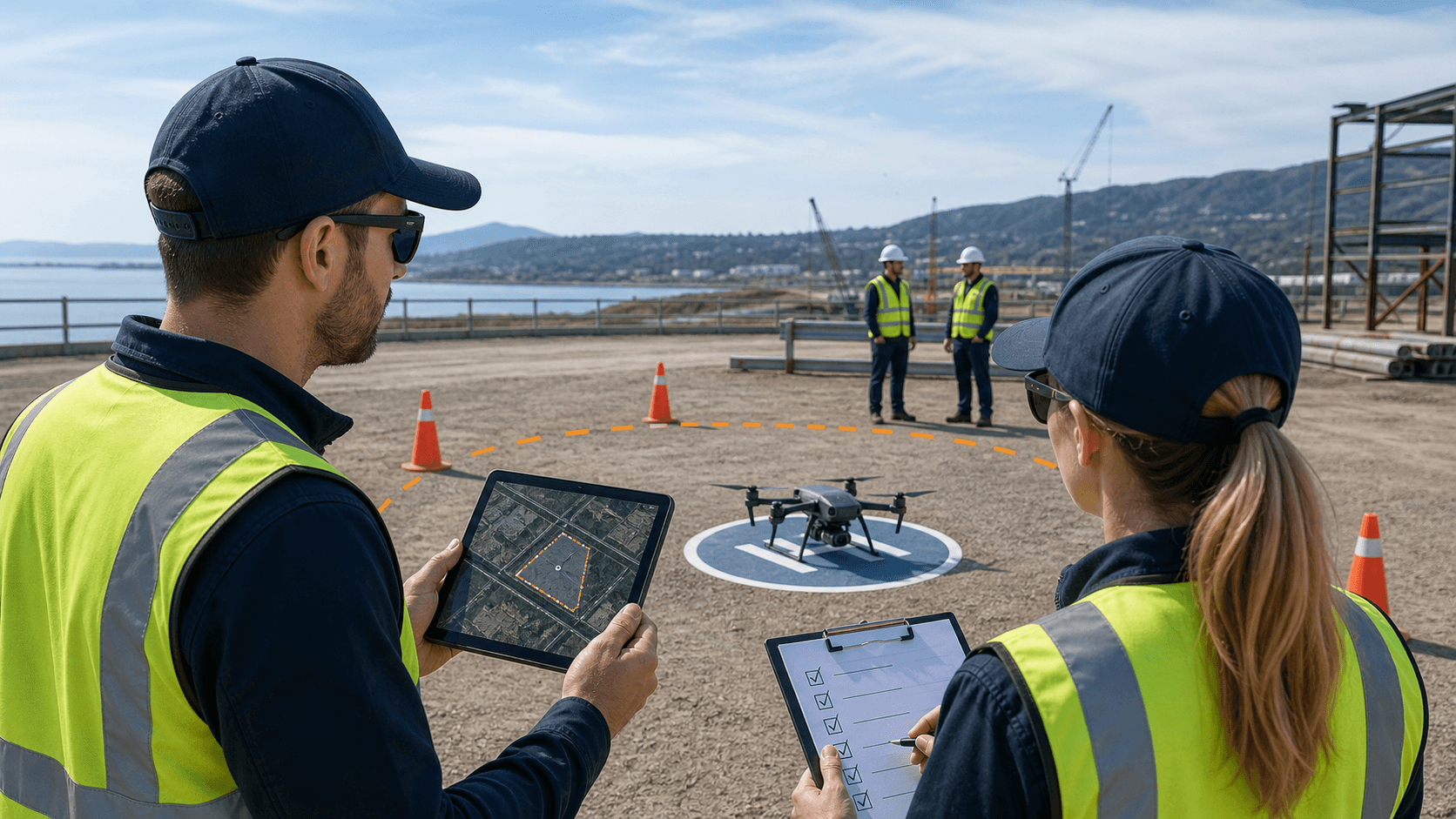
Operating limits are the first safety fence
Most remote pilots remember the headline rules: keep the aircraft in visual line of sight, stay under the normal height limit, keep away from people, avoid prohibited or restricted areas unless authorised, and do not interfere with emergency operations.
Those rules are not trivia. They are the first safety fence. When a job cannot fit inside them, the operation needs a different approval path, a different procedure or a no-go decision.
VLOS means more than seeing a dot
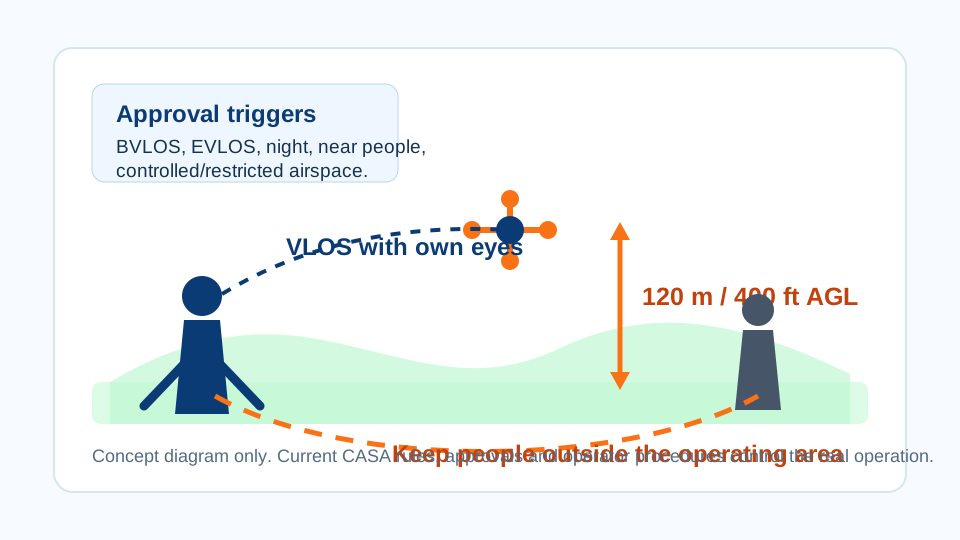
Visual line of sight means the remote pilot, or the crew using approved procedures, can maintain direct visual awareness of the aircraft and its surroundings. A tiny dot at the edge of perception is not useful control.
The pilot needs enough visual information to know aircraft orientation, position, movement, proximity to obstacles, other aircraft risk and whether the planned flight path remains safe.
- Do not rely on the screen alone for VLOS.
- Use observers deliberately, with a shared communication plan.
- Stop or recover early when haze, sun angle, distance or background clutter makes orientation uncertain.
Height is measured from the surface below
CASA's headline drone rules use 120 m, or 400 ft, above ground level as the normal maximum height for many operations. The practical point is that height is referenced to the ground or surface below the aircraft, not simply the launch point.
Terrain, structures and job geometry can make this harder than it looks. A mapping run from a hill, a tower inspection or a job near rising terrain needs careful planning so the crew understands the actual height above the surface throughout the flight.
People and populous areas are not the same check
Keeping clear of people is a direct separation problem. A populous area is a broader risk question: would an uncontrolled crash create an unreasonable risk to the life, safety or property of someone in the area?
A beach, road, park, worksite, school, event space or built-up area can change quickly. The safe plan is to define the operating area, control access, monitor movement and stop when the people picture no longer matches the briefing.
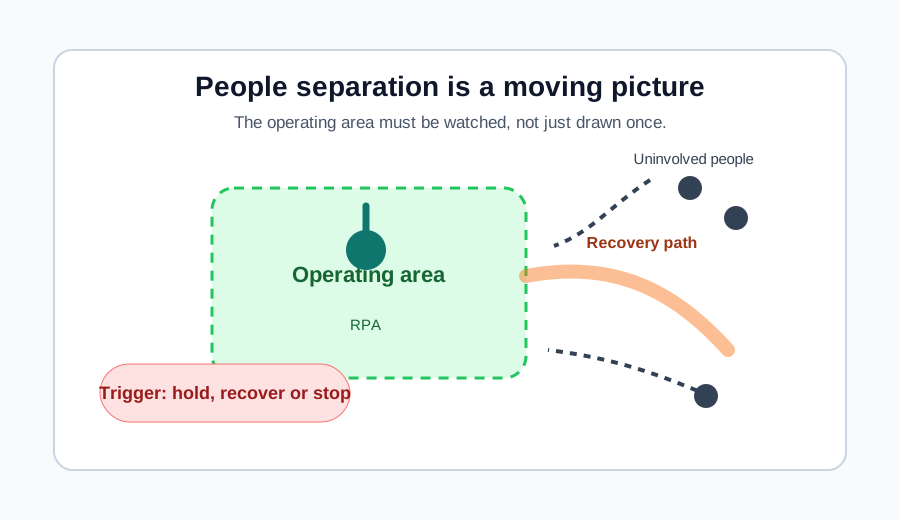
- Do not fly over people who are not part of the operation unless the operation is specifically authorised and controlled for that risk.
- Keep uninvolved people outside the operating area and recovery path.
- Reassess if pedestrians, vehicles or workers enter the area.
- Treat a site as dynamic, not frozen at the time of the first briefing.
BVLOS, EVLOS, night and special work need a different pathway
BVLOS, extended visual line of sight, night operations, operations near or over people, operations in controlled or restricted airspace, and operations above the normal height limit are not just advanced techniques. They are approval and procedure questions.
For a RePL learner, the key is recognising the trigger. If the job leaves the baseline, pause and identify which approval, operator procedure, risk assessment, equipment, crew role and record is required before the aircraft flies.
Do not fly through emergency response activity
Drone operations must not interfere with police, fire, ambulance, search and rescue or other emergency response activity. The safest plan is to build a simple trigger into every briefing: if emergency aircraft or emergency services activity appears, recover or hold clear and reassess.
This is also a good example of why current-source thinking matters. The legal rule, the local situation and the operator procedure all need to line up before the operation continues.
Make the go/no-go decision explicit
A legal limits check should end in a plain decision. The crew should be able to say whether the operation is inside the baseline rules, which approval pathway applies if it is not, and what operating limits have been briefed.
If that sentence cannot be written clearly, the operation is not ready. More flying skill will not fix an unclear authority or risk position.
Practice Questions
What does VLOS require in practical terms?
- Enough direct visual awareness to manage position, orientation, movement and nearby hazards.
- Only a live video feed.
- Only knowing the battery percentage.
- Only being able to hear the aircraft.
Answer: Enough direct visual awareness to manage position, orientation, movement and nearby hazards.
VLOS is about useful visual control and awareness, not merely knowing that the aircraft exists somewhere in the sky.
Why can the 120 m / 400 ft height limit require planning around terrain?
- Because the normal limit is referenced to the ground or surface below the aircraft.
- Because height is always measured from sea level.
- Because launch-point height never matters.
- Because all terrain removes the height limit.
Answer: Because the normal limit is referenced to the ground or surface below the aircraft.
Terrain changes can affect the aircraft's height above ground level during the flight.
What is the safe response if uninvolved people enter the operating area?
- Reassess, hold, recover or stop until the people risk is controlled.
- Continue because the briefing has already happened.
- Fly lower over them.
- Switch to sport mode.
Answer: Reassess, hold, recover or stop until the people risk is controlled.
People separation is dynamic. The operation must respond when the site changes.
What should a remote pilot recognise about BVLOS, night or operations above the normal height limit?
- They are approval and procedure triggers, not just flying techniques.
- They are always allowed under a basic RePL.
- They remove the need for a job pack.
- They only affect the camera settings.
Answer: They are approval and procedure triggers, not just flying techniques.
When a job leaves baseline conditions, the pilot must identify the correct approval, procedure, risk control and record before flight.
Next step after study
Complete your Remote Pilot Licence training
The free study guide is a strong theory foundation. To actually be issued with a RePL, students still complete approved training, practical flying and assessment with a certified provider.