
REES - Electrical Systems
Batteries, Electronics and Signal Reliability
Understand the electrical chain that keeps an RPA powered, controlled and recoverable.
Lesson references
- Last reviewed
- 2026-05-18
- Lesson references
- RePL Study Guide pp. 142-183; Part 101 MOS C10 pp. 97-99.
The aircraft is an electrical system before it is a camera platform
A remote pilot needs a working mental model of batteries, ESCs, receivers, antennas, GPS, telemetry and flight controllers. Most operational failures begin as something simple: poor state of charge, damaged connector, bad compass environment, weak GPS, interference or skipped pre-flight checks.
Treat the battery and command link as critical systems. If either becomes uncertain, the flight should become conservative immediately.
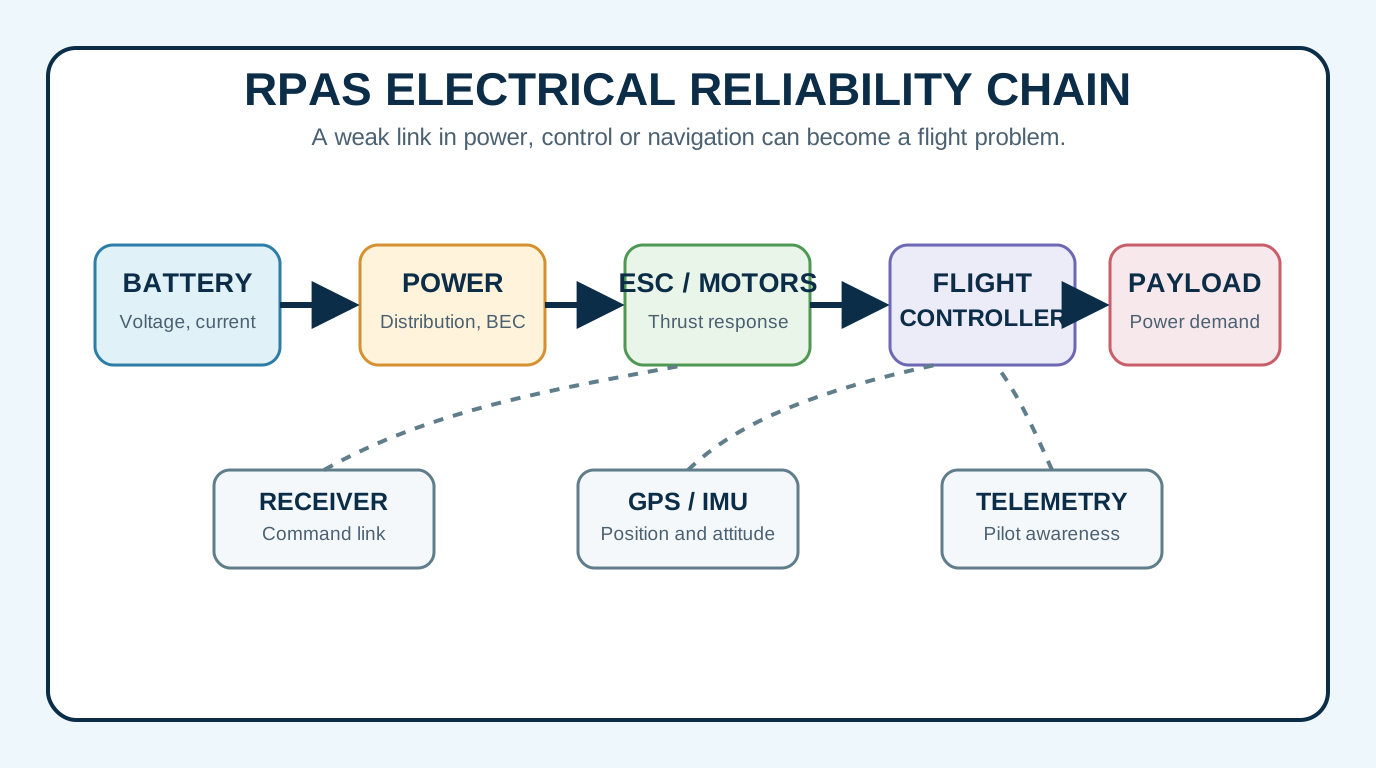
Use the basic electrical words correctly
Voltage is electrical pressure. Current is flow. Resistance limits flow. Power is the rate of doing work, and capacity is the amount of stored energy available to the aircraft.
Remote pilots do not need to become electronics engineers, but they do need to recognise what these values mean on batteries, chargers, payloads and aircraft specifications.
- High current draw can heat components and cause voltage sag.
- A payload can change endurance by adding mass and electrical load.
- A damaged connector, swollen battery or unreliable charger is a safety issue, not a nuisance.
Battery management is operational risk management
Battery endurance is affected by state of charge, pack health, temperature, aircraft mass, payload, wind, climb demand and the distance back to a safe landing area.
The important habit is to plan the landing before the reserve disappears. A low-battery warning is not a target; it is a boundary that should already have been built into the flight plan.
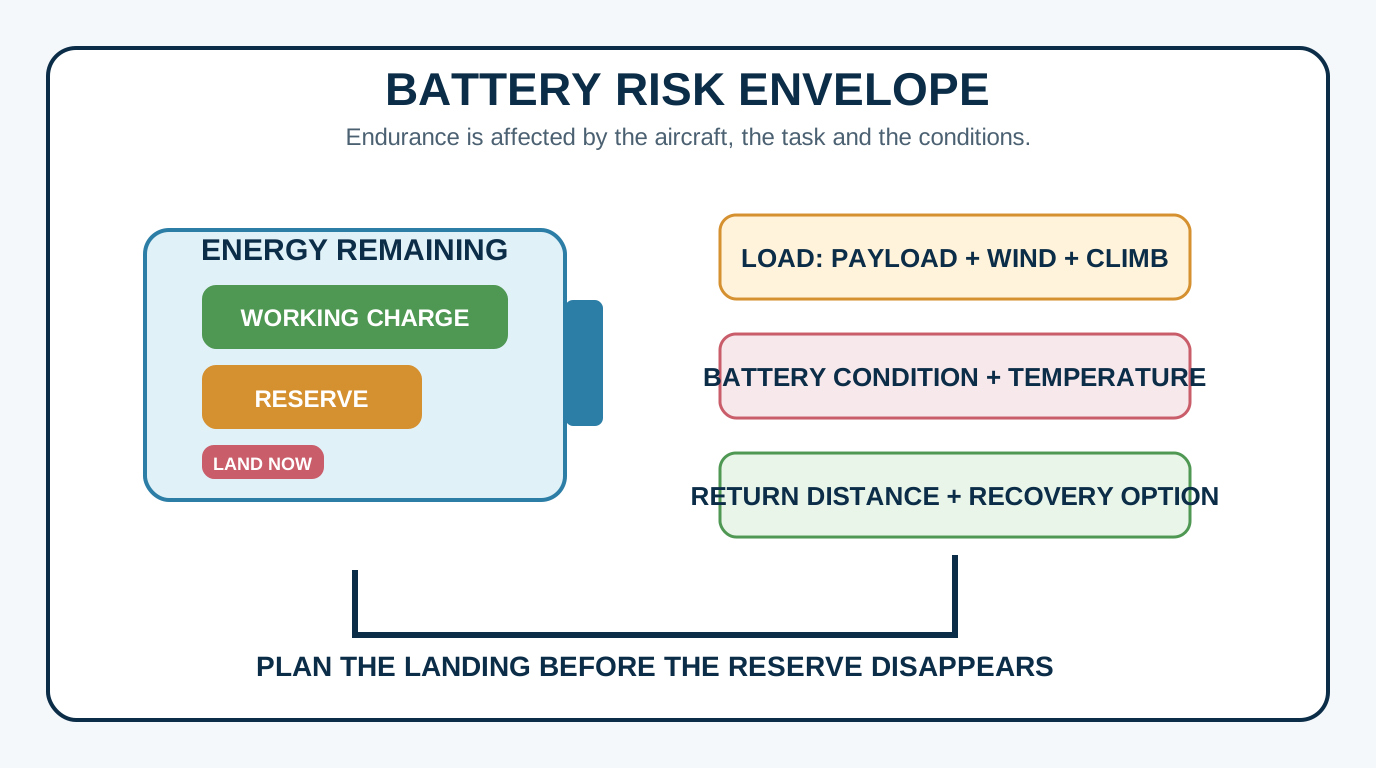
- Check charge state, pack condition, cycle history and storage condition before flight.
- Allow more reserve for wind, cold, heat, payload or long return legs.
- Quarantine batteries with swelling, damage, abnormal heat or unexplained voltage behaviour.
Charging and transport need discipline
Battery risk does not begin at take-off. Charging, storage, transport and post-flight handling all matter. Use compatible chargers, appropriate charge settings and operator procedures for storage and damaged batteries.
After a flight, a hot or stressed pack may need to cool before charging. A battery that has been dropped, crushed, over-discharged or physically damaged needs conservative treatment.
Make reliability visible
Good electrical management is not guesswork. It is logging battery health, checking firmware and configuration, understanding payload power demand, and respecting environmental risks such as powerlines, LTE, Wi-Fi and electromagnetic interference.
- Know what voltage, current, capacity and C-rating mean for the aircraft in use.
- Check battery serviceability before launch and after recovery.
- Understand what the aircraft will do if GPS, command link or remote pilot station functions degrade.
GPS and compass systems are useful but conditional
GPS gives position information, but it depends on satellite geometry, receiver quality, antenna placement and the local environment. Compass and IMU systems can also be affected by metal structures, vehicles, reinforced concrete, magnets and electrical fields.
If the aircraft is relying on GPS hold, return-to-home or an automated route, poor positioning or heading information can turn into a flight-path problem quickly.
- Check satellite count and positioning quality before relying on GPS-assisted modes.
- Keep launch and calibration areas away from obvious magnetic and electrical interference.
- Know how the aircraft behaves if GPS hold degrades or drops out.
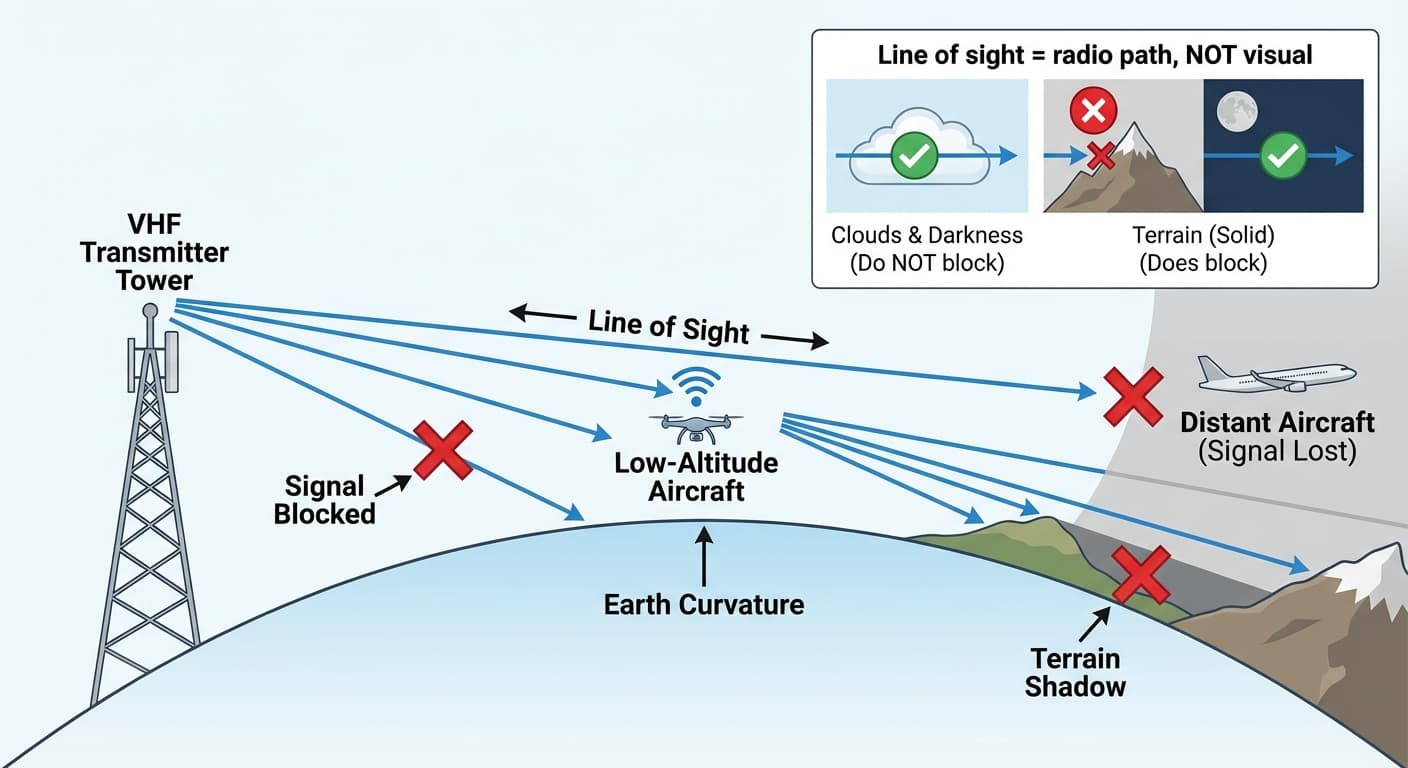
Radio links need line of sight and clean antennas
Command, control and telemetry links are affected by distance, antenna orientation, obstructions, terrain, other transmitters and aircraft attitude. A good link at launch does not guarantee a good link behind a structure or over a ridgeline.
Treat link warnings seriously. If the control link, video link or telemetry becomes unreliable, the flight should move toward recovery, not deeper into the task.
EMI is a site hazard
Electromagnetic interference can come from power infrastructure, transmitters, industrial sites, vehicles, buildings, poor installation, damaged shielding or payload equipment. It may show up as compass errors, control-link warnings, video breakup or unstable sensor behaviour.
The pilot's response is practical: identify EMI sources during site assessment, position the launch point sensibly, keep antennas and cables serviceable, and land or relocate if the aircraft behaves abnormally.
Failsafe behaviour must be understood before flight
Return-to-home, hover, land, hold, flight termination and parachute actions are not interchangeable. The right failsafe depends on the aircraft, the airspace, nearby people, obstacles, wind and the type of failure.
Electrical and electronic reliability is therefore not just maintenance knowledge. It is part of the emergency plan that the crew should brief before launch.
Practice Questions
Which action best supports battery risk management?
- Checking battery condition, charge state and logs before flight.
- Relying only on the aircraft colour.
- Ignoring payload power draw.
- Charging damaged packs because the job is urgent.
Answer: Checking battery condition, charge state and logs before flight.
Battery condition and state of charge directly affect endurance, safety margins and recovery options.
Why can a payload change battery risk even if it is electrically compatible?
- It can add mass and power demand, reducing endurance and performance margin.
- It always improves battery reserve.
- It removes the need to check battery logs.
- It prevents voltage sag in cold weather.
Answer: It can add mass and power demand, reducing endurance and performance margin.
Payloads can affect both aircraft mass and electrical load, so endurance and recovery margin should be recalculated.
What is the safest response to repeated GPS or compass warnings before launch?
- Stop, investigate the site and aircraft, and do not rely on GPS-assisted modes until the issue is resolved.
- Launch quickly before the warning returns.
- Ignore the warning because it is only software.
- Fly farther away to improve the warning.
Answer: Stop, investigate the site and aircraft, and do not rely on GPS-assisted modes until the issue is resolved.
Navigation sensor warnings can indicate interference, poor setup or a system fault that affects control modes and failsafes.
What should link warnings during flight usually trigger?
- A conservative move toward recovery or improved link conditions.
- Continuing farther into the task.
- Turning off telemetry permanently.
- Ignoring all failsafe settings.
Answer: A conservative move toward recovery or improved link conditions.
Unreliable command, video or telemetry links reduce safety margin and should be managed early.
Next step after study
Complete your Remote Pilot Licence training
The free study guide is a strong theory foundation. To actually be issued with a RePL, students still complete approved training, practical flying and assessment with a certified provider.