
AROC - Aeronautical Radio
Sample Calls, Emergencies and Lost Communications
Practise public, non-exam-bank call flows for CTAF-style operations, position reports, urgency, distress and lost communications.
Lesson references
- Last reviewed
- 2026-05-19
- Lesson references
- RePL Study Guide pp. 292-316; CASA radio operators guidance checked 2026-05-19; CASA AC 101-01 v6.1.
Sample calls are patterns, not scripts to memorise blindly
A sample call helps a remote pilot practise the structure of a transmission, but it must still match the real operation. The correct station, callsign, position, altitude or height, intention and traffic context come from the job and current procedures.
The examples in this guide are public study patterns. They are not CASA exam-bank questions and they do not replace an approved operator procedure, current ERSA entry, air traffic instruction or aviation reviewer guidance.
A normal traffic-awareness call has a simple shape
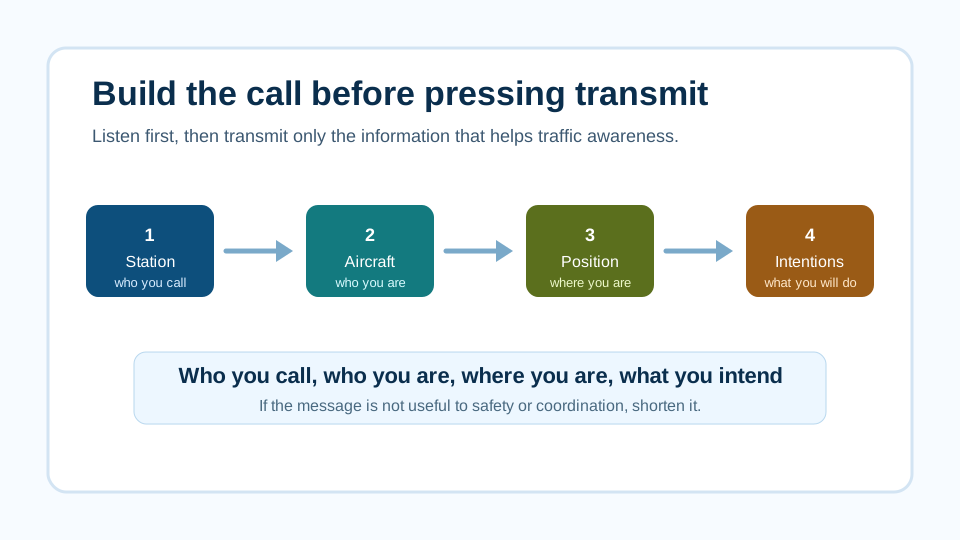
For CTAF-style traffic awareness, the useful shape is: station being called, who you are, where you are, what you are doing and any operational limit that helps other traffic understand the risk.
For example, a remote crew might prepare a call pattern such as: local traffic, drone team identification, operating location relative to a known point, maximum height, time or duration, and intention to remain clear of circuit traffic. The exact wording must be reviewed against current procedures before operational use.
Position reports should help another pilot find the risk
A position report is only useful if it lets another pilot picture the operation. For drone work, that may include distance and direction from an aerodrome or feature, maximum operating height, whether the RPA is stationary or moving, and whether the crew will remain in a defined area.
Avoid vague calls such as near town or around the paddock when another airspace user needs a clear mental picture. Use the reference points and wording approved for the operation.
Readback and clarification stop small errors becoming large ones
When a message contains critical information, the receiving station may need to read it back or confirm it. This is especially important for frequencies, instructions, positions, emergency details or any coordination that affects separation.
If the message is not clear, say so. Asking for a repeat is good discipline; guessing is not.
Pan Pan is urgency; Mayday is distress
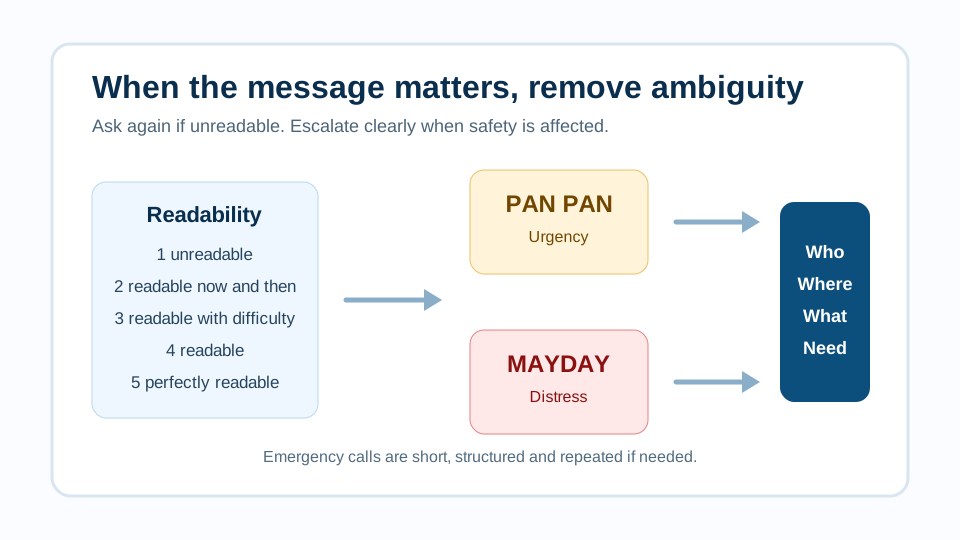
Pan Pan is used for an urgency condition where safety is affected but the situation is not yet distress. Mayday is used for distress where there is grave and imminent danger and immediate assistance is required.
For remote pilots, the decision should consider risk to people, crewed aircraft, property, airspace, aircraft control, battery state, flyaway risk and whether the RPA can be recovered safely.
An emergency call should answer who, where, what and need
A useful emergency transmission identifies who is calling, where the problem is, what is happening and what assistance or action is needed. If time permits, include information that helps other airspace users avoid the area or understand the hazard.
Keep the message plain. A remote pilot dealing with loss of control, flyaway, battery emergency or collision risk does not need a long speech. They need a call that helps others act.
Lost communications should have a pre-briefed plan
Lost communications can mean the aviation radio has failed, the crew cannot hear another station, the control-link situation is degraded, or the team has lost its normal internal coordination path. Each case needs a plan before launch.
The job brief should state who stops the operation, how the aircraft is recovered, what backup communication is available, who notifies the operator, and what post-flight reporting is required.
- If the required radio capability is lost before flight, do not launch until the operation is made compliant and safe.
- If required radio capability is lost during flight, recover or terminate according to the approved procedure.
- Record the event if operator procedures or safety reporting requirements require it.
Emergency practice should feel boring before it is needed
A pilot should not be inventing emergency phraseology during the emergency. Practise the call structure during training, rehearse who talks, and keep the radio notes accessible in the job pack.
A picture can still do the heavy lifting here. A simple call-flow diagram in the briefing pack can save a lot of thinking when workload rises.
Practice Questions
What is the best way to use a sample radio call in study?
- As a structure that must be adapted to the real operation and current procedure.
- As fixed wording to use in every situation without review.
- As a replacement for current ERSA or operator procedures.
- As a reason to stop listening to other traffic.
Answer: As a structure that must be adapted to the real operation and current procedure.
Sample calls teach structure, but real calls must fit the current operation and approved procedure.
What should a useful position report help another pilot do?
- Picture where the RPA operation is and what risk it creates.
- Guess the operator's internal job number.
- Ignore the operating area.
- Avoid checking the relevant frequency.
Answer: Picture where the RPA operation is and what risk it creates.
Position reports support traffic awareness only when they help others locate the operation.
When is Mayday broadly appropriate?
- For distress involving grave and imminent danger requiring immediate assistance.
- For a routine battery change.
- For every normal position report.
- Only to ask for a weather forecast.
Answer: For distress involving grave and imminent danger requiring immediate assistance.
Mayday is a distress call and should not be treated as ordinary radio traffic.
What should happen if required radio capability is lost during a flight?
- Recover or terminate according to the approved procedure and report as required.
- Continue the job normally and hope nobody notices.
- Transmit longer messages on the failed radio.
- Ignore the job brief.
Answer: Recover or terminate according to the approved procedure and report as required.
Loss of required communication is an operational control issue and should trigger the planned response.
Next step after study
Complete your Remote Pilot Licence training
The free study guide is a strong theory foundation. To actually be issued with a RePL, students still complete approved training, practical flying and assessment with a certified provider.