
Aeronautical Radio
Operator Certificate
AROC Certificate Requirements
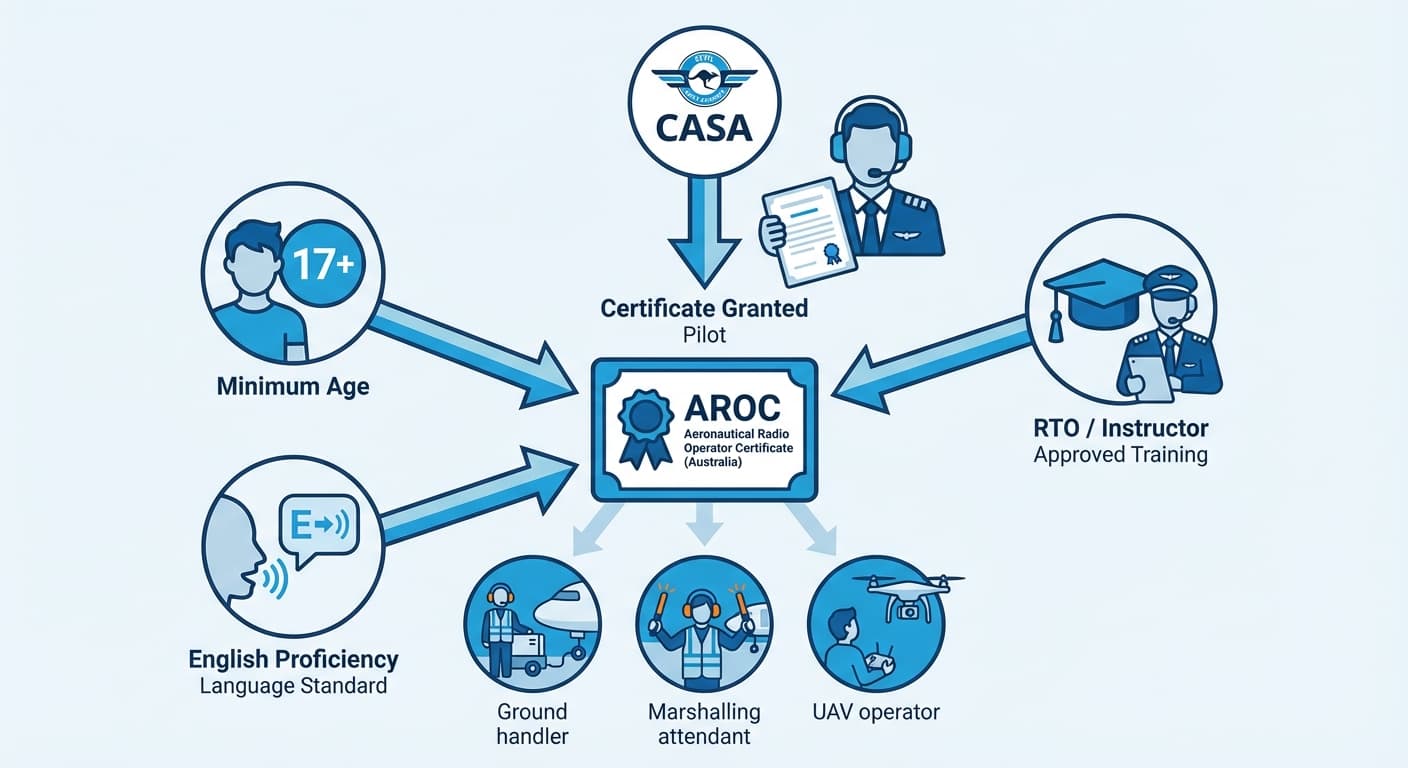
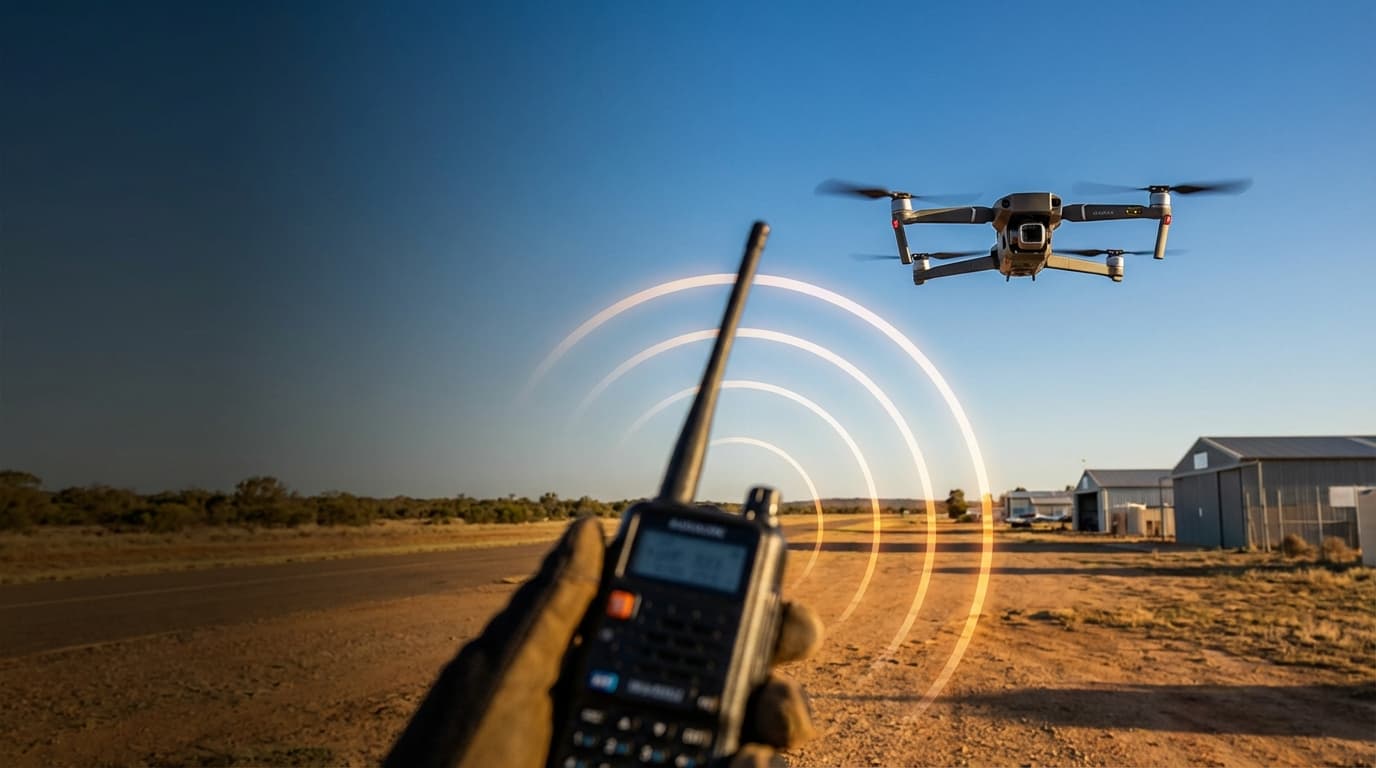
An Aeronautical Radio Operator Certificate (AROC) allows the holder to transmit on radio frequencies used for ensuring the safety of air navigation. Ground handlers, aircraft marshalling attendants, and UAV operators operating in certain circumstances are all required to hold an AROC.
The requirements for obtaining the certificate, along with eligibility criteria, are contained in the Civil Aviation Safety Regulations 1998 (CASR) Part 64. The training requirements and syllabus are contained within CASR Part 61.
To be eligible, a candidate must:
- Be at least 17 years old
- Have received training and assessment from a pilot instructor, a registered training organisation (RTO), or an otherwise CASA-approved person
- Hold a current aviation English language proficiency assessment
Once you complete the AROC training, pass the assessment, and meet the above requirements, CASA will issue your AROC.