How Much Do Drone Inspections Cost in Australia? 2026 Pricing Guide
30 March 2026
How Much Do Drone Inspections Cost?
Drone inspection costs in Australia vary widely depending on the type of asset, the deliverables required, and the scale of the project. A simple residential roof inspection might cost as little as $300, while a complex infrastructure survey with LiDAR, thermal imaging, and detailed reporting can exceed $5,000.
For most commercial and industrial applications, drone inspections fall in the $500 to $3,000 range. The three biggest cost drivers are:
- Asset type and complexity -- a flat commercial roof is straightforward; a transmission tower with multiple conductors and earth wires requires more time, skill, and specialised equipment.
- Deliverables -- raw imagery costs less than processed thermal reports, 3D models, or engineering-grade survey outputs.
- Scale -- inspecting one asset costs more per unit than inspecting a hundred. Volume programs deliver the best per-asset economics.
The figures in this guide reflect typical market pricing in 2026 for professional drone inspection services performed by CASA-certified operators with appropriate insurance and experience.
Drone Inspection Costs by Type
The following table provides indicative pricing ranges for common drone inspection types across Australia. Actual costs vary based on the factors discussed later in this guide.
| Inspection Type | Typical Price Range | Unit |
|---|---|---|
| Residential roof inspection | $300 -- $500 | Per property |
| Commercial/industrial roof inspection | $800 -- $1,500 | Per building |
| Powerline inspection (distribution) | $50 -- $150 | Per pole/structure |
| Powerline inspection (transmission corridor) | $500 -- $2,000 | Per kilometre |
| Solar panel inspection (thermal) | $500 -- $3,000 | Per array/site |
| Bridge and infrastructure inspection | $2,000 -- $10,000 | Per structure |
| Tower and vertical asset inspection | $1,000 -- $5,000 | Per tower |
| Thermal inspection (general) | $500 -- $2,500 | Per site |
| LiDAR survey | $2,000 -- $8,000 | Per site |
| Large area survey/mapping | $5,000 -- $30,000+ | Per project |
These ranges assume standard deliverables for each inspection type. Adding thermal imaging, LiDAR, or 3D modelling to a visual-only inspection will increase costs accordingly.
Roof Inspections
Residential drone roof inspections are among the most affordable drone services, starting from around $300 for a standard home. The cost reflects the relatively straightforward flight planning and data capture involved.
Commercial and industrial roofs cost more due to their size, the number of features to document, and the additional flight time required. Large warehouse and factory roofs at the upper end of the range often include thermal imaging to detect moisture ingress and insulation defects.
Powerline Inspections
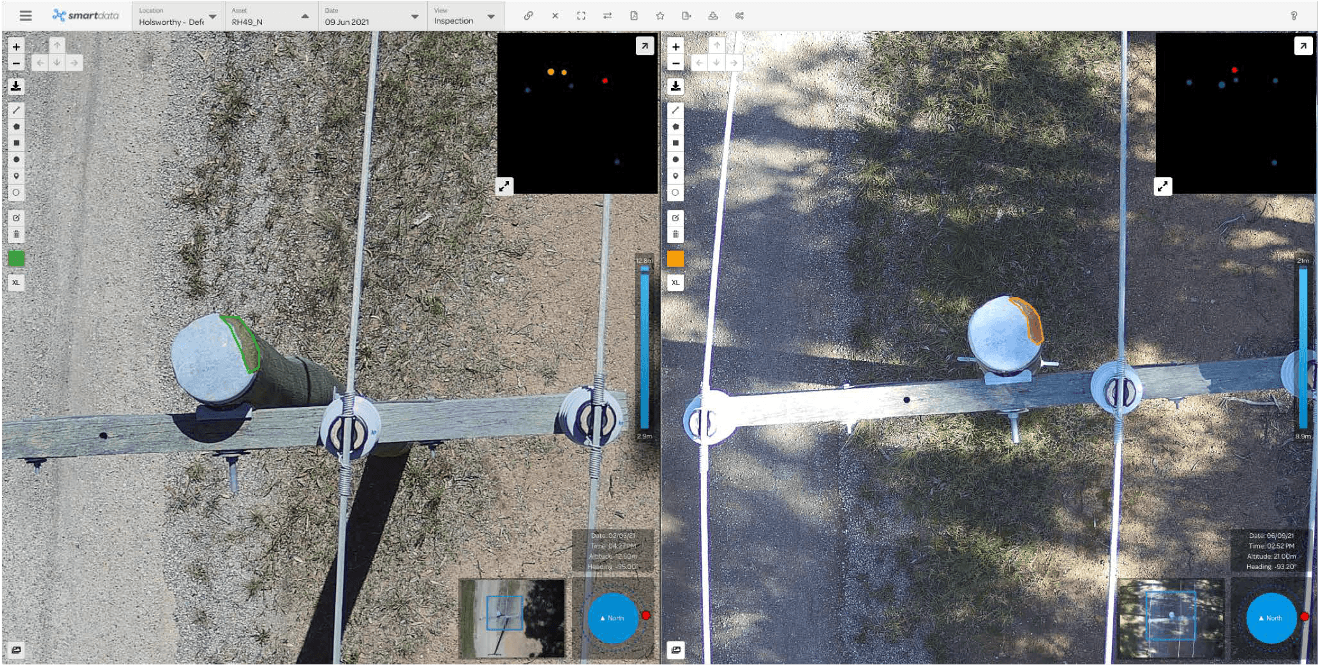
Powerline inspections are typically priced per structure or per kilometre, depending on the network type. Distribution pole inspections at the lower end involve capturing a set of standard images per pole, while transmission corridor inspections require more detailed data capture across longer distances.
The real value in powerline inspections emerges at scale. Utility companies inspecting thousands of poles per year achieve significantly lower per-asset costs than one-off inspections, and the data collected feeds directly into asset management systems.
Solar Panel Inspections
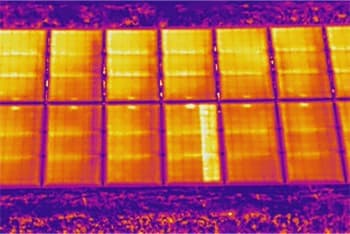
Drone solar panel inspections use thermal imaging to identify underperforming cells, hotspots, and connection faults. The cost depends primarily on the size of the array -- a rooftop residential system is at the lower end, while a utility-scale solar farm covering hundreds of hectares sits at the upper end.
Thermal data is processed to produce defect maps that pinpoint the location and severity of each issue, enabling targeted maintenance rather than blanket panel replacement.
Bridge and Infrastructure Inspections
Bridge inspections are among the more complex drone operations, often requiring flights in challenging environments -- near water, under deck structures, and around traffic. The cost reflects the additional planning, risk assessment, and specialised piloting skills involved.
Drones capture data that would otherwise require under-bridge inspection units, lane closures, or rope access teams. The cost savings compared to traditional methods are substantial, and the data quality is often superior.
Tower and Vertical Asset Inspections
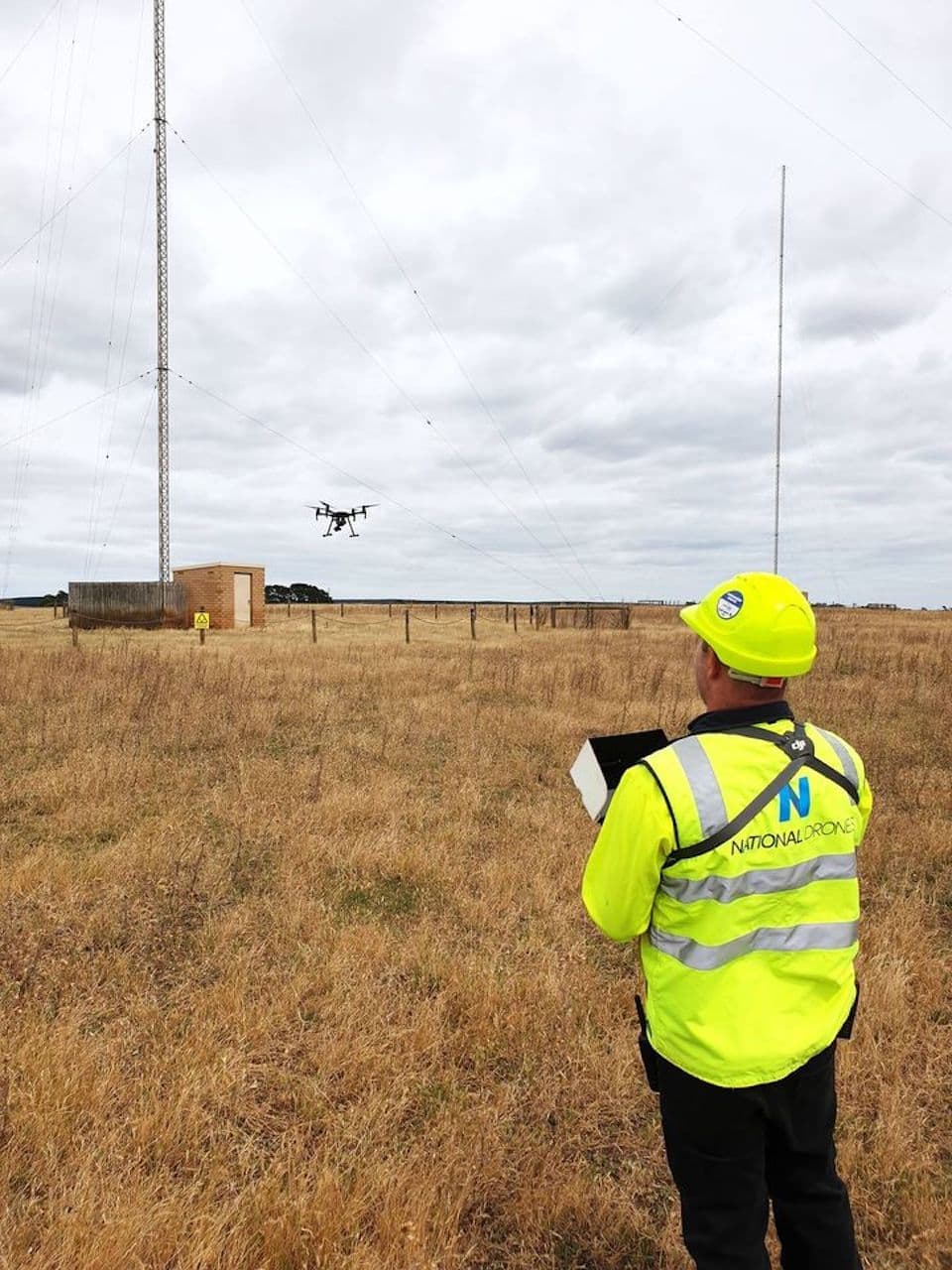
Telecommunications towers, chimneys, stacks, and other vertical structures present unique inspection challenges. Drones can orbit these structures at multiple heights, capturing imagery from angles that would be difficult or impossible for a human inspector.
Costs vary based on the height of the structure, the number of attachments and features to document, and any airspace restrictions that apply.
LiDAR Surveys
LiDAR drone surveys produce dense 3D point clouds that enable precise measurement and modelling. LiDAR is used for corridor mapping, terrain modelling, vegetation analysis, and structural assessment.
The higher cost reflects the specialised sensor equipment, processing requirements, and the technical expertise needed to deliver survey-grade outputs.
What Affects the Price?
Several factors influence the final cost of a drone inspection. Understanding these helps when comparing quotes and planning budgets.
Asset Type and Complexity
Simple, open assets like roofs and solar arrays are faster to inspect than complex structures like bridges, towers, or industrial plants with multiple features, restricted access points, and surrounding obstacles.
Number of Assets
Volume is the single most effective way to reduce per-asset costs. Inspecting one roof costs $300 to $500; inspecting 50 roofs in the same region brings the per-unit cost down considerably. Large-scale programs involving hundreds or thousands of assets -- such as powerline pole inspections -- achieve the most competitive per-asset pricing.
Deliverables
The type of output you need directly affects the price:
- Raw imagery -- lowest cost, suitable for quick visual assessments
- Annotated reports -- moderate cost, imagery with defect identification and commentary
- Thermal analysis -- requires thermal sensor and specialist processing
- 3D models and point clouds -- requires photogrammetry or LiDAR processing
- Engineering-grade survey outputs -- highest cost, requires survey-qualified processing and QA
Location and Accessibility
Remote sites incur travel costs. Sites in difficult terrain may require additional safety planning. Metropolitan jobs are generally more accessible but may involve controlled airspace considerations.
Controlled Airspace
Operating in controlled airspace near airports requires coordination with air traffic control and, in some cases, specific CASA approvals. This adds administrative time and cost to the inspection.
BVLOS vs VLOS Operations
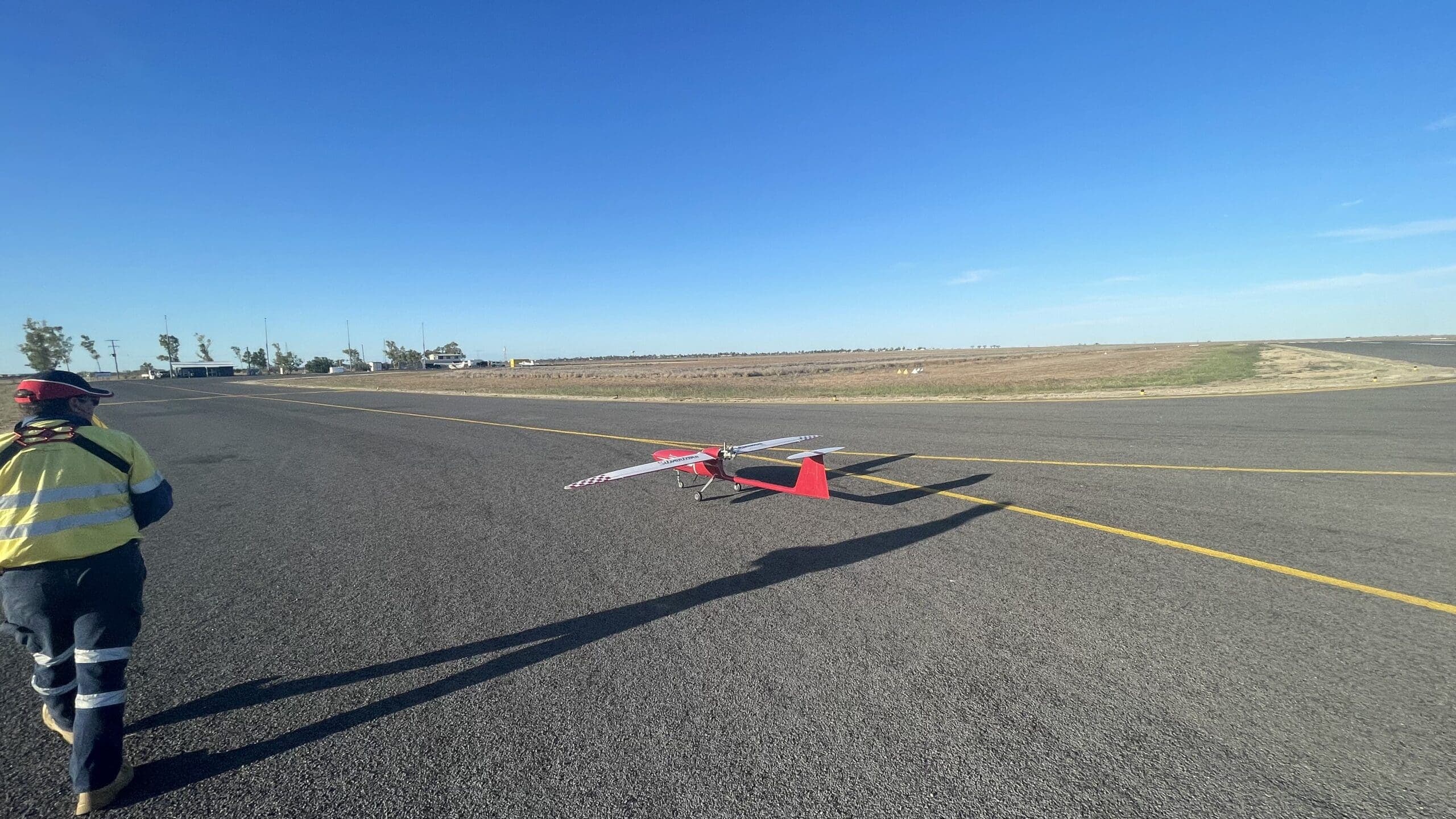
Standard drone inspections are conducted within visual line of sight (VLOS). Some large-scale programs benefit from beyond visual line of sight (BVLOS) operations, which allow a single crew to cover more ground per day. BVLOS requires additional approvals and safety systems, which adds to the upfront cost but can reduce per-asset costs significantly on large programs.
Drone Inspections vs Traditional Methods -- Cost Comparison
The cost advantage of drone inspections becomes clear when compared directly to traditional methods. Below are three common scenarios.
Roof Inspection
| Method | Typical Cost | Time |
|---|---|---|
| Drone inspection | $300 -- $500 | 30 -- 60 minutes |
| Scaffolding + manual inspection | $2,000 -- $5,000 | 1 -- 3 days |
| Elevated work platform (cherry picker) | $1,500 -- $3,000 | Half day -- full day |
The drone delivers a more comprehensive visual record at a fraction of the cost. For commercial roofs, the savings are even greater because scaffolding costs scale with building size.
Powerline Inspection
| Method | Typical Cost Per Pole | Time Per Pole |
|---|---|---|
| Drone inspection | $50 -- $150 | 5 -- 15 minutes |
| Helicopter patrol | $500+ | Variable |
| Ground crew with binoculars | $200 -- $400 | 30 -- 60 minutes |
At scale, the economics are decisive. Our 25,000 power pole inspection program demonstrated how drone inspections can transform asset management for utility networks.
Tower Inspection
| Method | Typical Cost | Time |
|---|---|---|
| Drone inspection | $1,000 -- $2,000 | 2 -- 4 hours |
| Rope access team | $5,000 -- $10,000 | 1 -- 2 days |
| Scaffolding | $10,000+ | Multiple days (including setup) |
Beyond cost, drones eliminate the safety risks associated with working at height. No harnesses, no edge protection, no exposure to energised equipment -- the pilot operates safely from the ground.
Safety as a Cost Factor
The cost comparison above focuses on direct expenses, but safety carries its own financial weight. Workplace injuries involve workers' compensation, lost productivity, regulatory investigation, and potential prosecution. Drones remove personnel from hazardous environments entirely, eliminating these risks and their associated costs.
When Are Drone Inspections Most Cost-Effective?
Drone inspections deliver value in most scenarios, but certain situations maximise the return on investment.
Large Portfolios
Organisations managing large portfolios of assets -- property groups, utilities, government agencies, mining companies -- achieve the best per-asset economics. When you are inspecting 100, 1,000, or 25,000 assets, the per-unit cost drops and the data consistency improves because every asset is inspected using the same methodology.
Hard-to-Access Locations
Assets that are expensive or dangerous to reach by traditional means deliver the greatest cost differential. Bridges over water, towers in remote locations, roofs on heritage buildings, and infrastructure in active mining environments all fall into this category.
Regular Maintenance Programs
One-off inspections are useful, but the real value compounds when drone inspections are part of a scheduled maintenance program. Comparing data from inspections conducted six or twelve months apart reveals deterioration trends, allowing maintenance to be planned proactively rather than reactively.
Time-Critical Inspections
After storms, floods, or other events, assets need to be assessed quickly. Drones can be deployed rapidly and can cover large areas in a fraction of the time required by ground crews. Our work on the Sydney rail network demonstrated how drones can accelerate post-event assessments across critical infrastructure.
How to Get a Drone Inspection Quote
Every inspection project is different, and accurate pricing depends on understanding your specific requirements. To get a quote:
- Describe the asset -- what type of asset, how many, and where they are located
- Define the deliverables -- what outputs do you need (photos, thermal data, 3D models, reports)?
- Specify the timeline -- is this a one-off inspection or an ongoing program?
We will review your requirements and provide a tailored quote that reflects the actual scope of work. There are no hidden fees or generic pricing tiers -- every quote is based on what your project genuinely requires.
Contact us to discuss your inspection requirements and receive a detailed quote.
National Drones Inspection Services
National Drones provides professional drone inspection services across Australia. Our team holds all required CASA certifications and carries comprehensive insurance. We operate across every state and territory, with experience spanning utilities, infrastructure, mining, construction, and property.
Our Services
- Inspections -- visual, thermal, and multispectral inspection services
- Thermal Inspections -- specialist thermal imaging for electrical, building, and solar applications
- LiDAR Surveys -- high-accuracy 3D scanning and point cloud generation
- Surveying and Mapping -- aerial survey, photogrammetry, and volumetric measurement
Case Studies
See how we have delivered inspection programs at scale:
- 25,000 Power Poles -- large-scale distribution network inspection program
- Bridge Inspections -- structural assessments without lane closures or under-bridge units
- Sydney Rail Network -- rapid post-event assessment across a major urban rail corridor