Drone Wind Turbine Inspections
10 October 2023
Drone Wind Turbine Inspections
Wind energy is a growing part of Australia's energy mix, with wind farms operating across the country. Maintaining these assets requires regular inspections of turbine blades, towers, and nacelle components -- work that traditionally involves rope access technicians, cranes, or ground-based telescopic cameras. Drones offer a faster, safer, and more detailed alternative.
Why Inspect Wind Turbines?
Wind turbines operate in harsh environments, exposed to:
- High winds and turbulence
- Rain, hail, and lightning strikes
- UV radiation and temperature extremes
- Airborne particles and debris (leading edge erosion)
- Salt spray in coastal locations
Over time, these conditions cause wear and damage that can affect turbine performance, structural integrity, and safety. Common issues include:
- Leading edge erosion -- The most common blade defect, caused by rain, hail, and particles impacting the leading edge at high speed
- Cracks -- Structural cracks in the blade shell, spar cap, or trailing edge
- Lightning damage -- Burns, punctures, and delamination caused by lightning strikes
- Delamination and debonding -- Separation of composite layers within the blade structure
- Surface defects -- Chips, scratches, paint loss, and gel coat damage
- Tower corrosion -- Rust and coating failures on steel towers
- Foundation issues -- Cracks or settlement visible at the tower base
Undetected blade damage can lead to reduced power output, accelerated degradation, and in severe cases, catastrophic blade failure.
How Drone Wind Turbine Inspections Work
A drone wind turbine inspection typically involves:
- Turbine shutdown -- The turbine is stopped and the rotor is locked in position. Each blade is inspected in turn, with the rotor repositioned as needed.
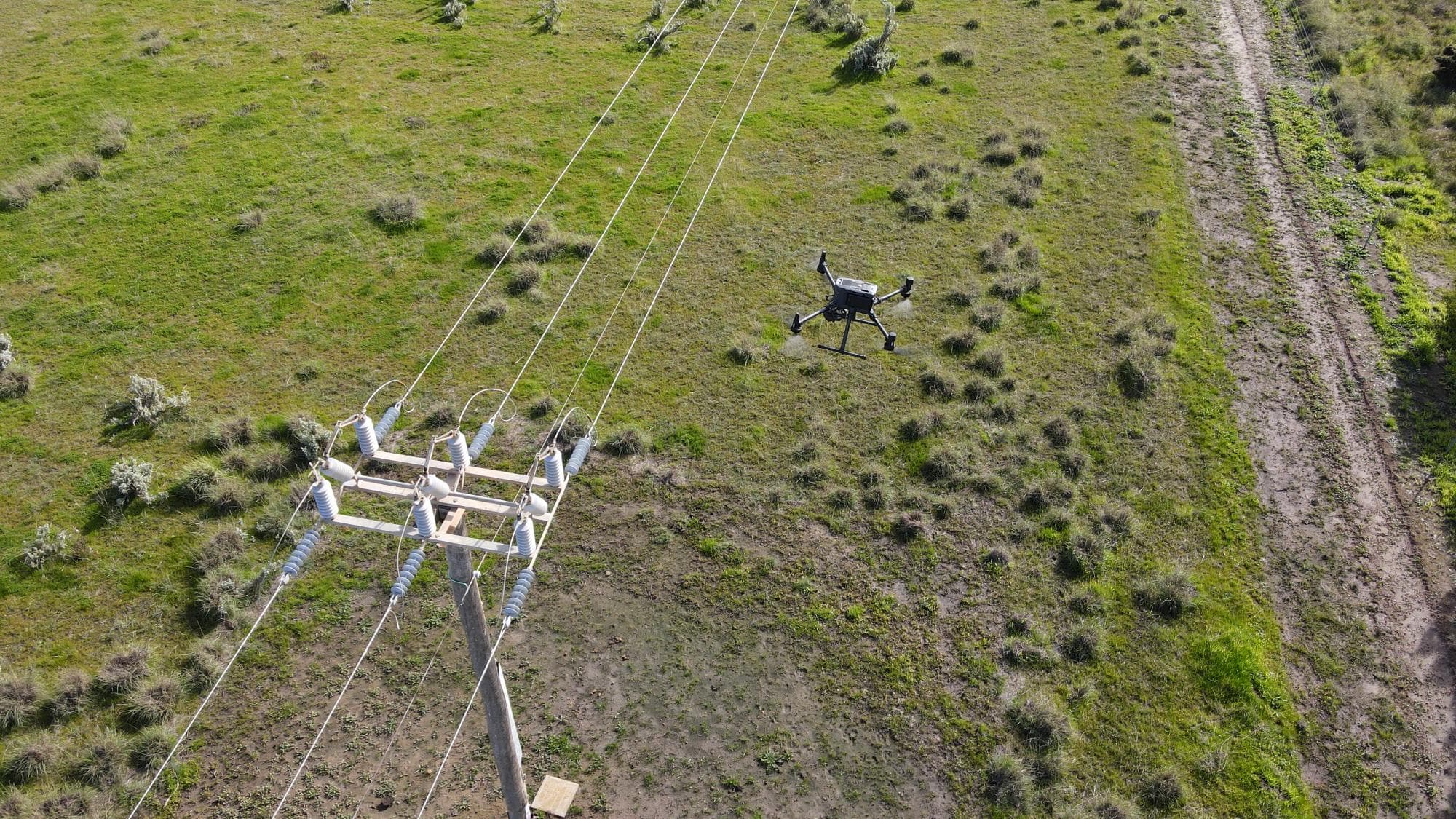
- Flight planning -- The drone pilot plans the inspection flight path to capture systematic imagery of every blade surface, the tower, and the nacelle.
- Data capture -- The drone captures high-resolution imagery of each blade from both the pressure side and suction side, as well as the leading edge, trailing edge, root, and tip.
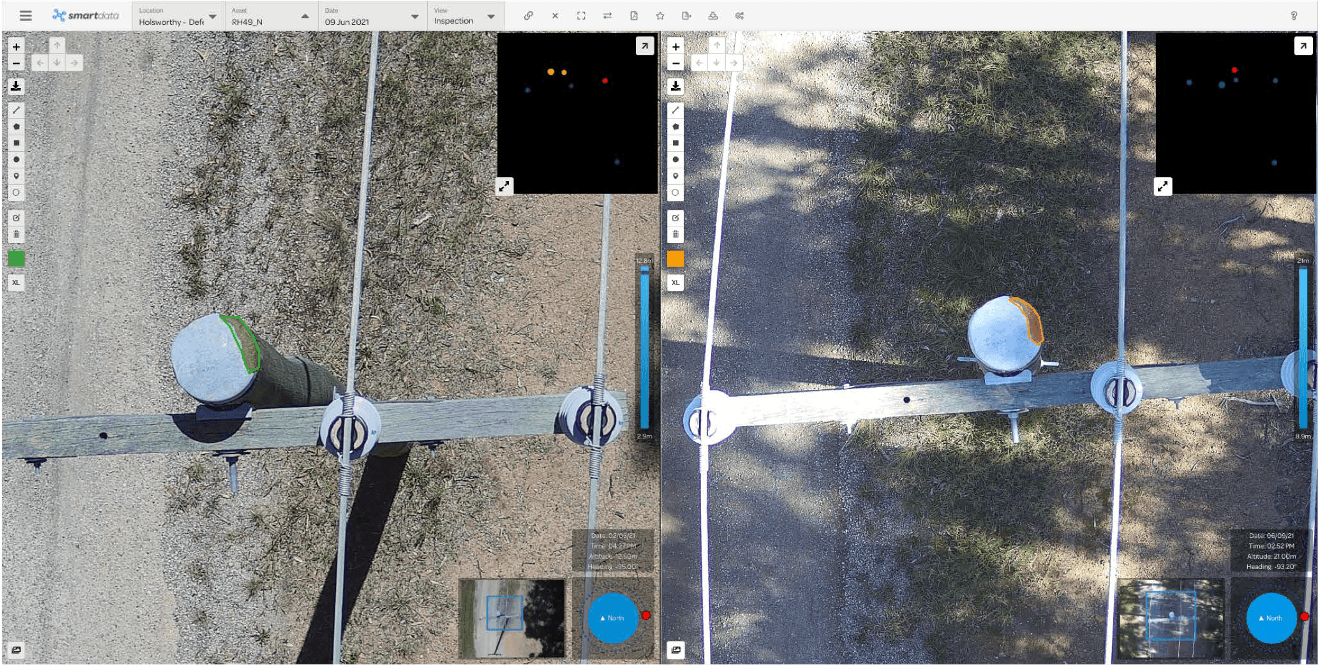
- Analysis -- Inspection imagery is reviewed by qualified analysts who identify, classify, and measure defects according to industry standards.
- Reporting -- A detailed report is produced for each turbine, including defect location maps, severity classifications, and maintenance recommendations.
Blade Inspection Detail
A thorough blade inspection captures imagery at sufficient resolution to detect defects as small as a few millimetres. The drone flies close to the blade surface (typically 3 to 5 metres), working systematically from root to tip on each side.
Key areas of focus include:
- Leading edge -- The most exposed part of the blade, prone to erosion and impact damage
- Trailing edge -- Susceptible to bonding failures and cracks
- Blade root -- High-stress area where the blade connects to the hub
- Blade tip -- Subject to the highest wind speeds and most severe erosion
- Lightning receptors -- Checked for functionality and damage
Tower and Nacelle Inspection
The drone also captures imagery of:
- Tower sections, flanges, and access points
- Nacelle exterior and cooling system intakes
- Aviation warning lights
- Foundation and base structure
Advantages of Drone Inspections
Safety
Traditional blade inspections require rope access technicians to work at heights exceeding 100 metres, often in exposed and windy conditions. Drones eliminate this risk entirely, keeping all personnel safely on the ground.
Reduced Downtime
A rope access inspection can take a full day per turbine. A drone can inspect a turbine in 1 to 2 hours, significantly reducing the time the turbine is offline and not generating revenue.
Consistent Quality
Automated or semi-automated flight paths ensure systematic coverage of every blade surface. The resulting imagery provides a complete, repeatable record that can be compared across inspection intervals.
Cost Efficiency
By reducing the need for rope access crews, cranes, and extended turbine shutdowns, drone inspections lower the per-turbine inspection cost while delivering equal or better data quality.
Digital Record
Every image is geotagged and linked to a specific blade, location, and defect. This digital record supports trend analysis, maintenance planning, and warranty claims.
Our Wind Turbine Inspection Services
National Drones provides wind turbine inspection services for wind farm operators and asset managers across Australia. Our services include:
- High-resolution visual inspection of all blades, tower, and nacelle
- Defect identification, classification, and measurement
- Defect mapping with blade position reference
- Severity assessment and maintenance recommendations
- Integration with CMMS and asset management platforms
- Inspection reporting to industry standards
- Ongoing inspection programs with consistent methodology
Getting Started
Protect your wind energy assets with regular drone inspections. Contact National Drones to discuss your wind turbine inspection requirements.