Drone Solar Panel Inspections
5 September 2023
Drone Solar Panel Inspections
Solar energy is one of Australia's fastest-growing industries, with thousands of megawatts of new capacity installed each year. As solar installations grow in size and number, the need for efficient, accurate inspection methods has never been greater. Drone-based thermal inspections have emerged as the industry standard for identifying faults and maintaining the performance of solar assets.
Why Inspect Solar Panels?
Solar panels degrade over time, and various faults can develop that reduce energy output without any visible sign of a problem. Without regular inspections, these faults can go undetected for months or years, resulting in:
- Lost revenue from reduced energy generation
- Accelerated degradation as faults worsen over time
- Safety risks from overheating cells and electrical faults
- Warranty claims that expire before faults are discovered
Regular inspections allow asset owners and operators to identify and address issues promptly, maintaining optimal performance and protecting their investment.
How Drone Solar Inspections Work
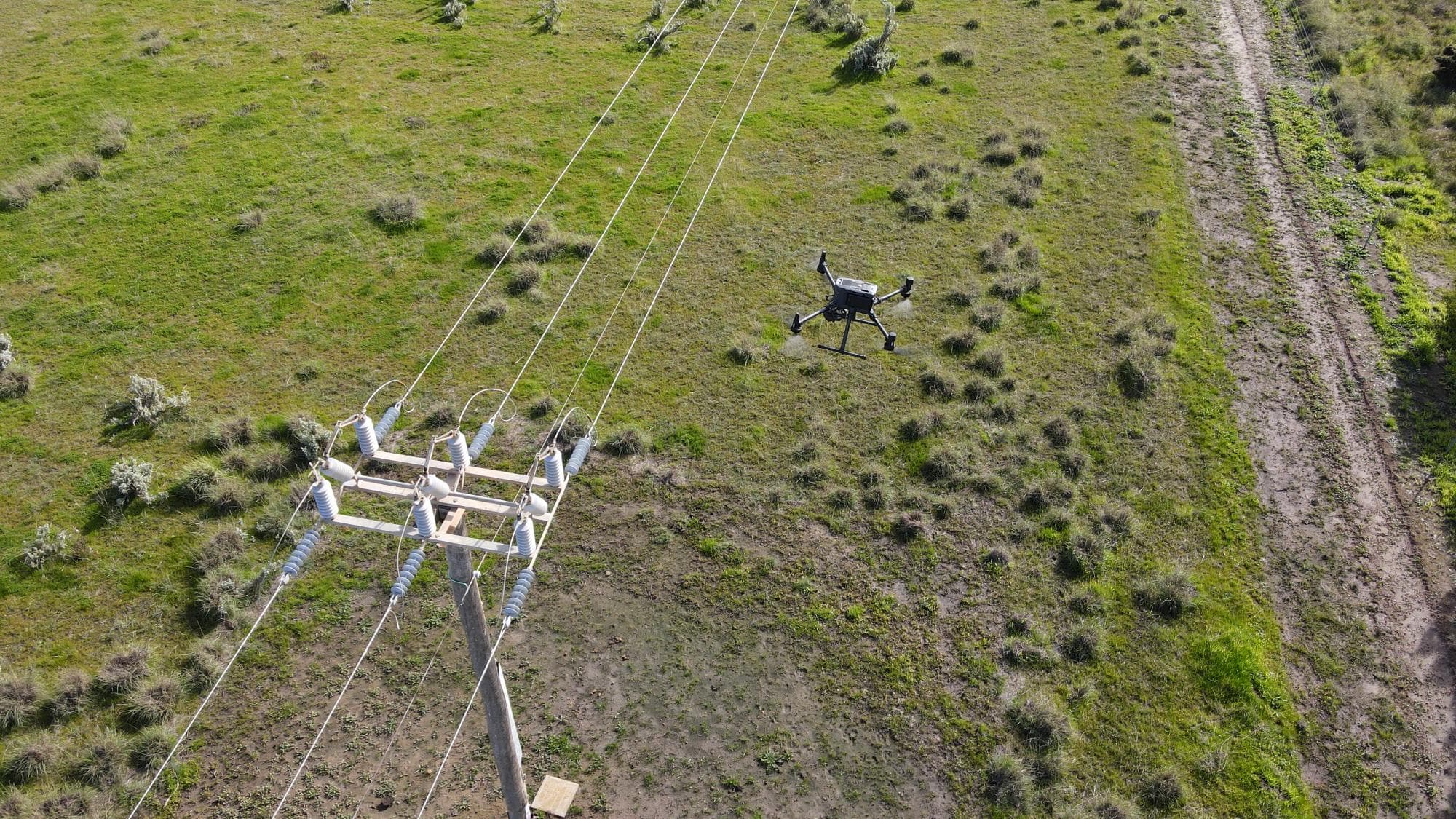
Drone solar panel inspections rely on thermal imaging to detect temperature anomalies that indicate faults. A drone equipped with a radiometric thermal camera flies over the solar installation, capturing images of every panel.
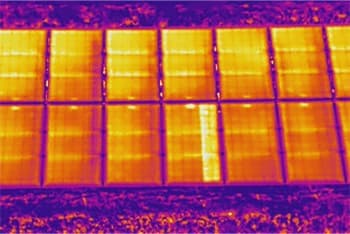
In a normally operating panel, all cells should be at approximately the same temperature. When a cell, string, or connection is faulty, it generates excess heat that appears as a hotspot in the thermal image.
The inspection process involves:
- Planning -- Defining the flight path to ensure complete coverage with appropriate overlap
- Timing -- Inspections are conducted during periods of sufficient solar irradiance (typically above 500 W/m2) to ensure thermal anomalies are visible
- Data capture -- The drone flies pre-programmed paths, capturing both thermal and visual imagery
- Analysis -- Thermal images are reviewed to identify, classify, and locate anomalies
- Reporting -- Findings are compiled into a report with anomaly locations, classifications, severity ratings, and recommendations
Types of Faults Detected
Cell-Level Faults
- Hot spots -- Individual cells overheating due to micro-cracks, manufacturing defects, or physical damage
- Cell string faults -- Groups of cells within a panel that are inactive or underperforming
- PID (Potential Induced Degradation) -- A gradual loss of performance that affects cells near the frame edge
Panel-Level Faults
- Bypass diode failures -- Diodes that have failed open or short, causing entire sections of a panel to overheat or shut down
- Delamination -- Separation of the panel's layers, which can trap moisture and accelerate degradation
- Glass damage -- Cracks or chips that may not be visible from the ground but affect performance
System-Level Faults
- String failures -- Entire strings of panels that are offline or underperforming
- Inverter issues -- Mismatches between expected and actual output that indicate inverter problems
- Connection faults -- Overheating at junction boxes, connectors, or cable terminations
- Soiling and shading -- Dirt, debris, bird droppings, or vegetation shading that reduce output
Advantages Over Manual Inspection
Speed
A drone can inspect a utility-scale solar farm of several megawatts in a single day. The same inspection using handheld thermal cameras and ground-based methods would take weeks.
Coverage
Drones capture imagery of every panel from a consistent angle and distance, ensuring nothing is missed. Manual inspections inevitably have gaps, particularly on large sites.
Safety
There is no need for technicians to walk between rows of panels, climb onto rooftops, or work at height. The drone operator remains safely on the ground.
Data Quality
Radiometric thermal images from a drone provide precise temperature data for every pixel. This allows for consistent classification of anomalies and meaningful comparison between inspection dates.
Cost
The speed and efficiency of drone inspections translate directly into lower inspection costs per megawatt, making regular inspections economically viable even for smaller installations.
Our Solar Inspection Services
National Drones provides thermal drone inspections for solar installations of all sizes, from rooftop systems to utility-scale solar farms. Our services include:
- Radiometric thermal imaging of every panel
- Simultaneous visual imagery for physical condition assessment
- Anomaly detection, classification, and georeferencing
- IEC TS 62446-3 compliant reporting
- Integration with asset management and CMMS platforms
- Trend analysis for sites with ongoing inspection programs
Getting Started
Protect your solar investment with regular drone inspections. Contact National Drones to arrange a thermal inspection of your solar installation.