
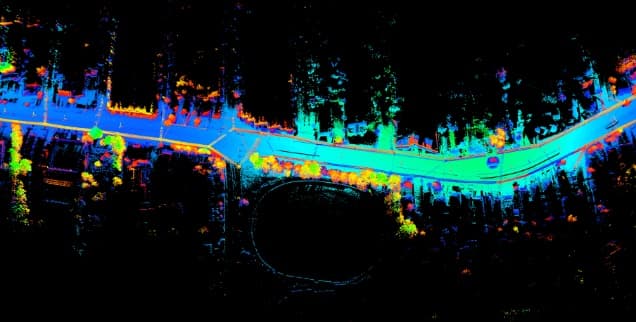
LiDAR Surveys
High-precision laser scanning for accurate terrain modelling and infrastructure digitisation
LiDAR — Light Detection and Ranging
Light detection and ranging (LiDAR) employs pulsed laser technology to measure distances. National Drones integrates this with drone hardware to produce precise 2D maps and scale-accurate 3D models. The technology generates millions of 3D points per second, combining to form rich three-dimensional representations of target objects or areas. Using Inertial Measurement Units (IMU) and GNSS receivers, each data point becomes georeferenced.
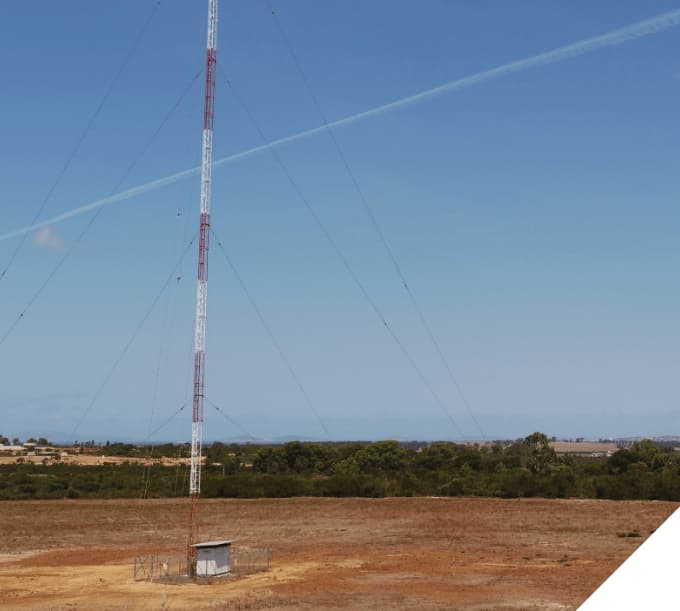
Penetrating Vegetation Coverage
Unlike aerial photogrammetry, LiDAR penetrates dense vegetation, enabling accurate Digital Terrain Models (DTM) for areas partially or fully covered by trees. Ground-level readings become possible where traditional survey methods struggle, making it essential for forestry, environmental, and infrastructure projects.
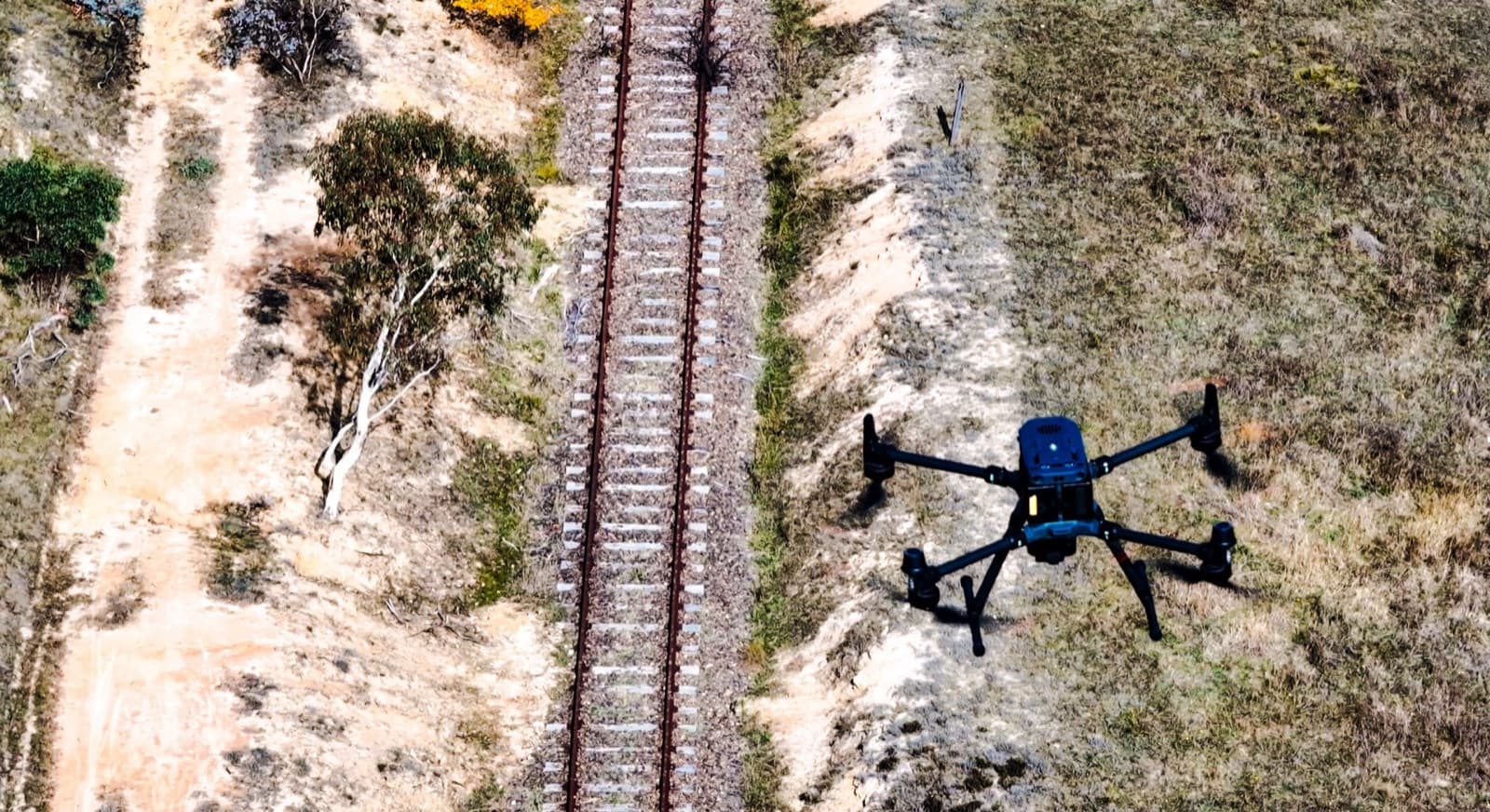
Infrastructure Digitisation
Point cloud data maps entire cities, assesses infrastructure, and verifies tolerances between planned and as-built construction drawings. Data streams through a browser-accessible cloud platform, eliminating on-site infrastructure needs and enabling stakeholder sharing across your organisation.
Key Applications
Power Network Analysis
Identify vegetation encroachment threatening electricity infrastructure, measure power pole and tower lean angles, identify power line sag, and check conductor height.
Low-Light Data Capture
Unlike photogrammetry, LiDAR captures data in low or no-light conditions. The system mounts to either drones for wide-area coverage or vehicles for corridor scanning.
Digital Terrain Models
Produce accurate DTMs for areas covered by vegetation where traditional aerial photography cannot reach the ground surface.
Corridor Scanning
Vehicle-mounted LiDAR for roads, rail corridors, and linear infrastructure with continuous high-resolution data capture.
Construction Verification
Verify tolerances between planned and as-built construction drawings with millimetre-precision point cloud data.
Cloud-Based Delivery
Data streams through a browser-accessible cloud platform, eliminating on-site infrastructure needs and enabling remote stakeholder access.
Real Results
See how we have delivered for clients across Australia.
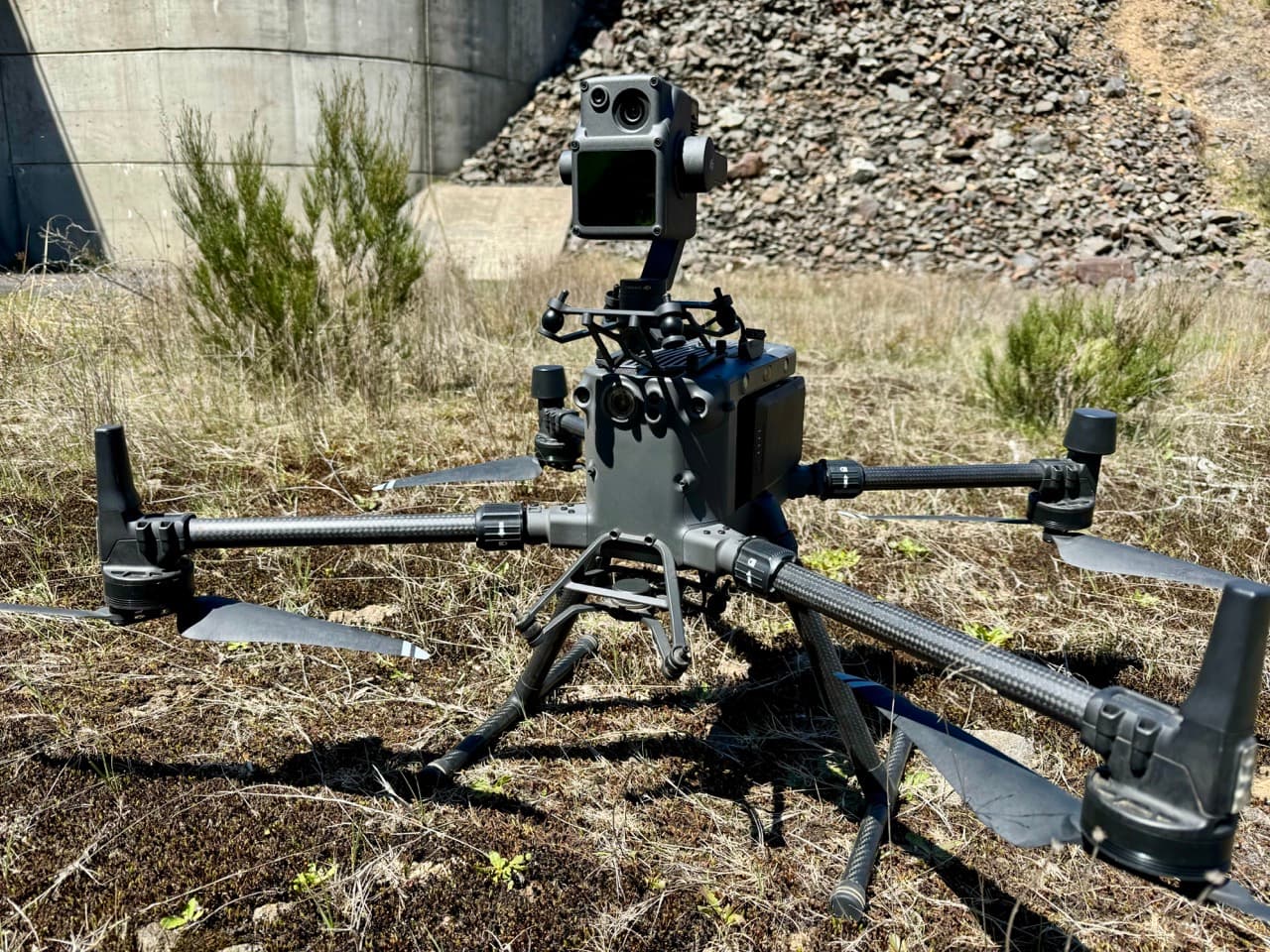
Infrastructure Engineering
Aurecon & Snowy Hydro
National Drones conducted comprehensive bridge inspections for Aurecon and Snowy Hydro, capturing high-resolution LiDAR and photogrammetry data across 38 bridges in NSW and ACT.
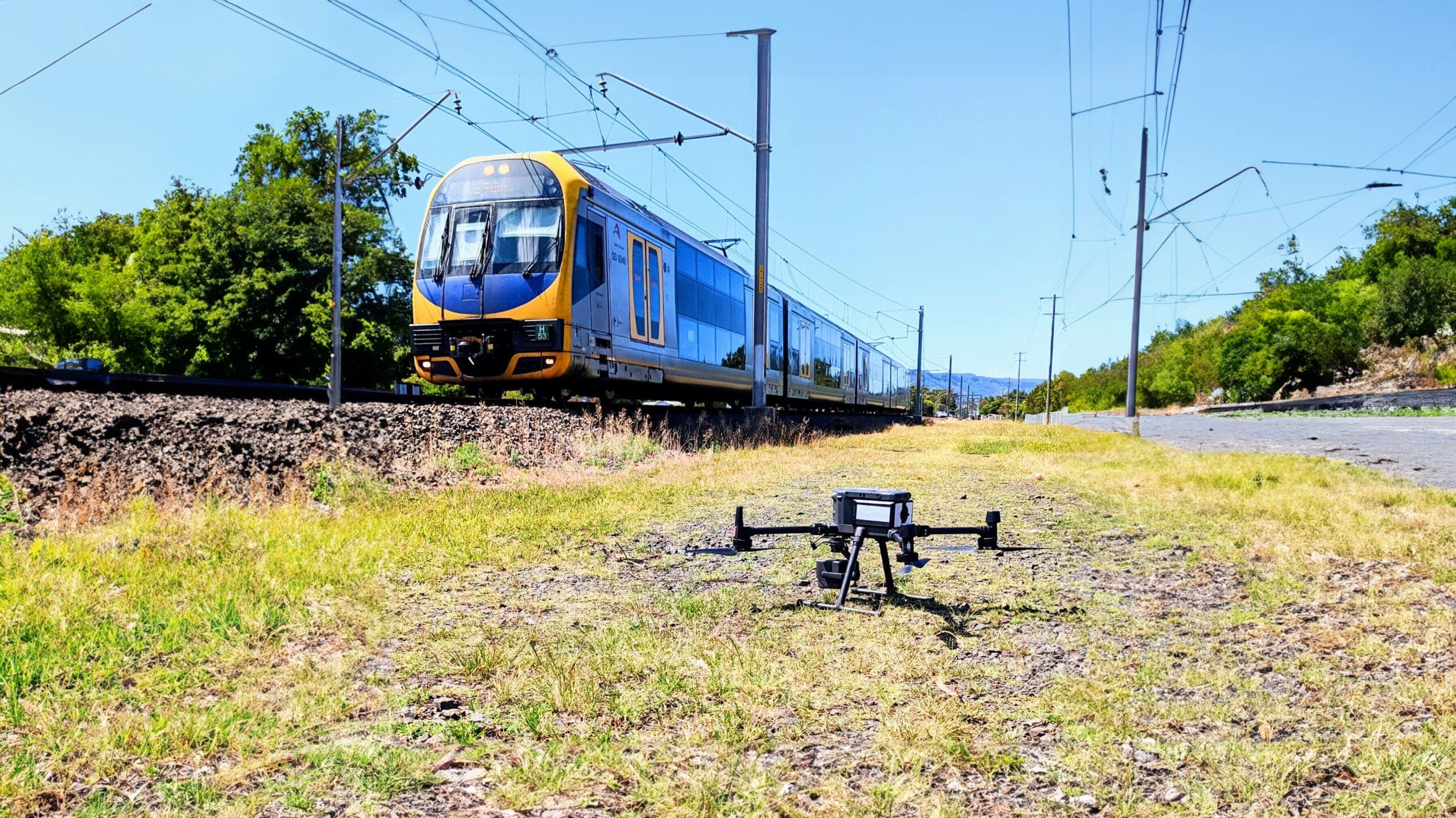
Rail Infrastructure
Aurecon (on behalf of Sydney Trains)
National Drones and Aurecon inspected 3,818 rail assets across Sydney's network using drone photogrammetry and LiDAR, covering 438 kilometres of rail corridor.
Frequently Asked Questions
- What is LiDAR and how does it work on a drone?
- LiDAR (Light Detection and Ranging) uses pulsed laser technology to measure distances with extreme precision. Mounted on a drone, the sensor fires millions of laser pulses per second while an onboard IMU and GNSS receiver georeference each return. The result is a dense 3D point cloud that accurately represents the terrain and objects below — even beneath tree canopy.
- When should I choose LiDAR over photogrammetry?
- Choose LiDAR when you need bare-earth terrain data under vegetation, when working in low-light conditions, or when millimetre-level accuracy is critical. Photogrammetry is often sufficient for open sites with good light. For vegetated areas, flood modelling, forestry, or power line corridor surveys, LiDAR is the superior choice because it penetrates canopy to map the ground surface.
- What accuracy can I expect from a drone LiDAR survey?
- National Drones' LiDAR systems achieve vertical accuracy of 2–3 cm and horizontal accuracy of 3–5 cm with ground control. Point densities typically exceed 100 points per square metre, providing highly detailed 3D models suitable for engineering design, volumetric calculations, and regulatory compliance.
Ready to See What Drones Can Do?
Tell us about your project and we'll send you a tailored proposal — most quotes are turned around within 24 hours.